
Michael Mack
Upon opening this book, the first thing that will no doubt strike the reader is the ambitious aims. It sets itself the not inconsiderable project of defining a ‘new literary theory’ which combines ethics with aesthetics, and represents a break with ‘the traditional approach (to literature) from Aristotle…

Nilanjan Bandopadhyay
This is an interesting and pioneering addition to the corpus of literature which exists on the family history of the Tagores. Its relevance lies in treating a theme which may be considered taboo to many Bengalis, that of the life of Rathindranath, the only surviving son of Rabindranath, and Rathindranath’s extra-marital friendship…
Fakrul Alam
In the year commemorating Rabindranath Tagore’s 150th birth anniversary, the highest gain has been in taking ‘Gurudev’ be-yond Bengal. The attractive and erudite volu-me, The Essential Tagore, edited by eminent scholars, Radha Chakravarty from India and Fakrul Alam from Bangladesh immediately makes…
Shouri Daniels
1978
Feelings and emotions, however trite, can never be classed as meaningless, but one’s way of portraying them can often fall short of an aesthetically acceptable standard. The Salt Doll is erotica without style. It is peopled with characters whose actions are largely conditioned by their own private compulsions…
Saros Cowasjee
Mulk Raj Anand’s first novel Untouchable was published in 1935. Anand, then a Bloomsbury intellectual, had written the first draft over a long weekend in 1930: ‘the book poured out like hot lava from the volcano of my crazed imagination’. He revised the book after a short stay with Gandhiji…
Nabaneeta Dev Sen
This is the first novel of a writer who has so far been well known to Bengali readers as a poet. But her novel is not poetic in the usual sense of the term.In a style that is cerebral as well as graceful, Nabaneeta Deb Sen writes of a situation uneasily familiar…
Nigel Harris
The principal purpose of Nigel Harris’ book seems to be to attack some of the more durable prejudices underlying urban policy in India. The analysis of Bombay’s problems is merely an instrument for putting forward what could be described as a radical economist’s view of city planning…
Bruce A. Lohof
I read Through the Eyes of the World with a growing sense of frustration harassed by the thought that none of the contributors really came to grips with the American phenomenon. It is difficult enough to come to an understanding of, say, Japan or France, nations made up, for the most part…
Jug Suraiya
I had never been much of a fan of Jug Suraiya’s column in the Sunday Times of India (STOI). It seemed dull, self indul-gent, trite and even pointless at times. His sense of humour escaped me and the satire was lost on me at the time when I did read his column…
Rakhshanda Jalil
This is a tough one: there are several collections of Munshi Premchand’s translations in the market, and to at-tempt a new ‘best of’ is a daunting challenge to take on. But Rakhshanda Jalil takes on this tricky task ably: her translations of seventeen short stories…
Lakshmi Kannan
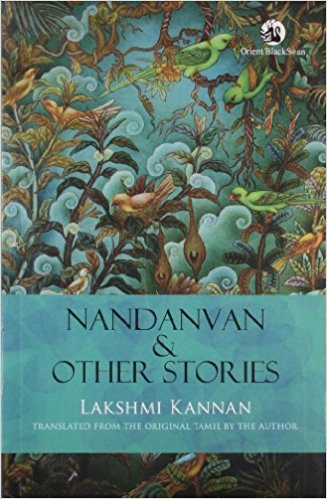
This collection of stories (originally written in Tamil and translated into English by the author herself) brings to the reader slices of life tinged with courage, pathos, humour, in short, situations and expe-riences that we can identify with in a myriad ways…
Tabish Khair
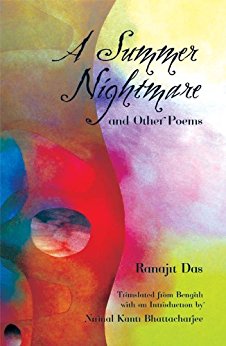
Going by this illuminating statement, let us look at the poems themselves. The very first poem gives the reader a foretaste of what is to come. ‘Egomobile: An Ad’ is like a mock-advertisement of an automobile. Almost all human preoccupations and passions are squee-zed into this tight structure…
Ranajit Das. Translated from the Bengali by Nirmal Kanti Bhattacharjee
To me, poetry is the recording of the emotional world structured by the intellectual reinforcements of indivi-dual subjectivity, through images, metaphors and sculpted words and phrases of specific aesthetic relevance. Even Wordsworth’s well-known descriptions of poetry…
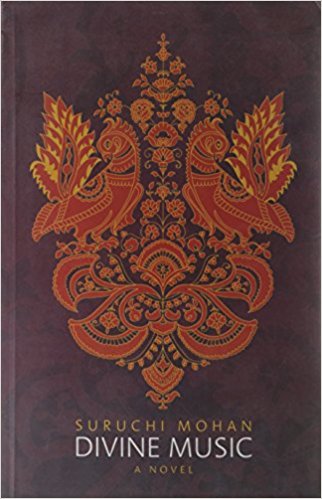
Suruchi Mohan
It is rarely that one comes across a full fiction based on music. In Indian Bhasha literature, one immediately remembers S.L. Bhyrappa’s Saraswati Samman winning Kannada novel Mandra and Bani Basu’s Bengali novel Gandharvi…
K.R. Ranadive
Academic economics in the capitalist world is in a state of confusion. The recent mathematical reformulations of the theory have been unable to solve it. The theory of income distribution is not an exception to this. But there is one difference, unlike the theory of production, it has been the least emphasized discipline…
Rajesh Shukla
In the post-Mandal debates, one commonsensical understanding has emerged that the dalits (Scheduled Castes/Tribes) are more disadvantaged and deprived than the Other backward Castes/Classes (OBCs) and therefore their demands for reservations can be justified but not of the affluent OBCs…
Ashwini Deshpande
Until sometime back caste was viewed as a kind of odd subject, something which primarily concerned scholars interested in the traditional social order of Indian society, social anthropologists and sociologists. Economists who engaged with the processes of planning…
Narayan Lakshman
The book under review is a vital addition to the scholarly writings on Indian political economy, though sadly it engages with the familiar puzzle regarding why and how poverty persists among various social groups of India even after more than six decades of India’s freedom…
Rana Behal
Rethinking Work: Global, Historical and Sociological Perspectives, is a collection of essays which explores the theme of work as a separate conceptual category that exists apart from labour. In doing so the contributing authors provide a perspective on the factors that define the contours of the meaning of work and the reality of its experi-ence…
Kokila Rangachari. Consulting Editor, Kishore Singh
This is a glossy coffee table book commemorating 60 year of diplomatic relations between France and India brought out under the aegis of FICCI, with messages from the presidents of both the republics, and a foreword by the president of FICCI. However, the introduction…