

My introduction to Vinod Kumar Shukla’s works happened only in recent years. The scarcity of books in Hindi in contemporary bookshops has turned the act of finding them into a fine art. Discovering writers and poets, new and old, within the small section allotted to the language is another challenge altogether. The thing with cities is this— they run on the currency of the dominant language, and no matter how much we speak in one tongue, we often end up reading in another. Ironically, my first encounter with Vinod sahab was not in the language he writes in, but through his works translated into English. That encounter stirred a curiosity in me to read him more deeply and to seek out his writings. To my delight, I discovered that he had written for children as well. The two books I take up in this review have been rendered with rare delicacy by Tazeen Ali.
Having read these two books in Hindi, I found that the translations move between the two languages with a fluidity and grace that feels entirely organic. One does not deny that reading the original is an experience beyond words, yet translations are equally vital: they allow readers entry into worlds that might otherwise remain closed. Literature, after all, knows no boundaries.
In The Jungle in a Pot (Gamle Mein Jungle), he writes with such simplicity that the words themselves seem transparent; yet what they reveal is profound enough to take one’s breath away. In just a few pages, a quiet philosophical insight emerges. This is not a book only for children— it is one for adults too, to sit with slowly, to breathe in, and to return to, again and again.
In this book, the engagement with the interior is not confined to the material world alone. It extends beyond what is written on the page. For a child, the questions the book poses are arresting; thought-provoking ones that invite young minds to linger over words rather than skim past them. For an adult, the book opens into a deeper engagement. It is not merely about what is said, but it compels one to attend to what remains unsaid. The illustrations by Chandramohan Kulkarni honour this little book beautifully; the brushstrokes fill the pages, refusing to confine colours to neat compartments. Lines appear to define boundaries, only to dissolve into one another, creating a sense of interconnectedness that is impossible to ignore, and rightly so. Just as the words blend and flow into one another, the illustrations evoke that same unity in a quietly magical way. Three artists converge in the making of this remarkable book: the poet, the translator, and the painter.
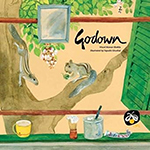
The connection with nature persists in another work; a short story titled ‘Godown (Godam)’, again translated by Tazeen Ali.
Here, the writer guides us through his personal journey of finding rented spaces to live in, bound by a singular, non-negotiable condition: there must be a tree nearby. That requirement shapes the narrative, highlighting the houses that meet his criterion and those that fall short. The bond he shares with trees, especially with the one outside his current residence, emerges with remarkable clarity and intensity in this book.
‘Monsoon had set in. One day, the landlord said, “You’ll have to vacate the house within a month.”
“Please don’t ask me to vacate now. The rains are here,” I said.
“But we need the space where you stay.”
“It’s hard to find a place on such short notice.”
I had to restrain myself from saying, “It’s hard to find a place with a tree on such a short notice.”’
Once again, the sensitivity with which he navigates his writing shines through, and in a profoundly heart-rending way. Without resorting to grandiose or lofty language, he dismantles the reader gently, narrating simple stories in simple words. For children, this sensitivity is preserved and emerges with remarkable clarity. Once again, the translation succeeds in retaining and conveying the emotions that the original evokes.
The illustrations by Taposhi Ghosal are tender and luminous. Scattered across the pages, they resemble patches of sunlight filtering through leaves, mirroring the gentle illumination of the story itself. Taposhi has captured the essence of the narrative with remarkable subtlety, giving visual form to the emotions the text evokes.
These two books are a gift of a lifetime for the children who encounter them. For adults, the depth of meaning expands with age, growing richer as readers themselves grow older.