
For the Beginners
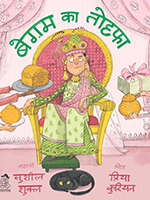
By Sushil Shukla. Illustrations by Priya Kurian Eklavya
2026
Two spreads, in particular, deserve to be lingered over. They are crowded with people—men, women, children, shopkeepers, passers-by, animals, faces and gestures, all caught in the middle of their own small activities. At first, the eye sees a crowd. Then, slowly, individual stories begin to emerge. Someone is looking at someone else; someone seems to be talking; someone is busy with his own work; someone has stopped simply to watch.
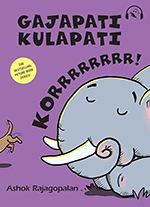
Written and illustrated by Ashok Rajagopalan
The villagers then try to sing him back to sleep, all with their own songs. Everyone from the banana seller to the postman fails and only manage to distract him further from sleep. The grandmother then steps in with a soft lullaby to help our gentle jumbo fall asleep. But now there’s a new problem—his snores! Luckily they are quite soothing, and the village is soon fully asleep again.
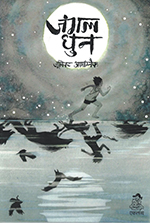
Written and Illustrated by Juliette Armagnac
In Jungle Dhun, French author and illustrator Juliette Armagnac presents a wordless story about a young protagonist awakened by a loud sound in the forest at night, immediately setting him off in search of its source. Created during her residency with the Eklavya Foundation through Villa Swagatam, an Indo-French cultural residency programme, the work features…
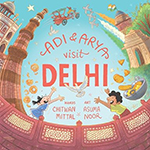
Both by Chitwan Mittal. Illustrated by Asuma Noor
Adi & Arya Visit Kolkata is just as lively. The city’s trams share the street with autos, yellow cabs, and jhalmuri vendors, all captured in a single, crowded, cheerful spread. The children admire St Paul’s Cathedral, take a horse-drawn carriage past Victoria Memorial, and visit Mullick Ghat, one of the largest flower markets, where garlands and gajras take shape before their eyes. A mangrove safari brings a glimpse of the Bengal tiger, while a sunset boat ride on the Hooghly passes under Howrah Bridge.
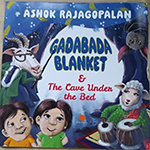
Written and illustrated by Ashok Rajagopalan
Growling bat, Batappa, disturbed in his sleep, scowls as both slide down a rock, slide through a windy tunnel confronting Gyanesh Goat, the quizmaster. Moving into another tunnel the twins face more creatures as they search for Sangeeta sheep to convey Batappa’s message—a song for his beauty sleep. It works and gets for them the magic to reach their bed. All inside the blanket.
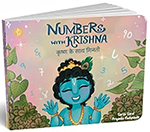
By Sarita Saraf. Illustrations by Priyanka Pachpande
This is yet another of the delightful books by AdiDev Press meant for very small children, those who need to grasp their books with their tiny fingers and perhaps even test their tiny teeth upon them. If reading has a primordial stage, it is to that stage this book caters. The concept by Chitwan Mittal…
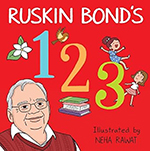
Illustrated by Neha Rawat
2026
Three sparrows hop and chirrup on one page; six girls play together on another. Numbers emerge naturally from these familiar scenes rather than sitting apart as abstract symbols.
The book also incorporates subtle visual search elements that turn counting into a hunt for detail. The page for number 8, for instance, features eight different sports balls, including a cricket ball,
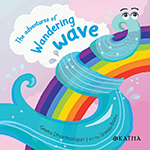
Both by Geeta Dharmarajan. Art by Sreeja Basu
At the end, the book provides an opportunity for children to engage in an activity, reflecting an effort to inspire them to write stories themselves. You read the story, and then you write one too. Thus, the wave’s voyage concludes with a journey of reading and writing combined. The narrative has a strong foundation, but it could have been made more engaging by tightening the storyline and streamlining some of the details. A more concise narrative would have helped maintain momentum and make the key moments and themes stand out more effectively. Nevertheless, this adventurous book is available in both Hindi and English.
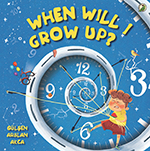
By Gulsen Arslan Akca
2025
The author has written this story with great sensitivity, and the illustrations in the story bring out Bunty’s mood and emotions just as strongly. The illustrations have shades of blue, red, and gold, which show what Bunty is thinking and feeling. You can also see clocks here and there, indicating that time moves at its own pace.
How does a child experience the passing of time? This unfolds page by page in the story. The fun part is that Bunty also makes plans to spend this time. While reading this story,
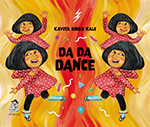
Story and Illustration by Kavita Singh Kale
she takes flight into the boundless sky of her imagination. With a ball on her nose, she transforms into a clown; wearing a cardboard box, she becomes a robot; and with unique antennae on her head, she turns into an alien. Amidst the music and its melody, she shifts fluidly from clown to robot to alien. All this unfolds through the rhythm and movement of the illustrations.
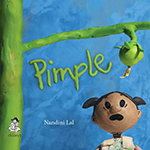
Written and illustrated by Nandini Lal
2026
The story is a kissa, as we say in Hindi: a small incident, sweet enough to be worth telling. It reminded me of a friend’s little cousin who loved bhindi. Every time they went to the market, he would point at a vegetable and announce, ‘Bhindi!’ ‘No, beta, that’s mirchi.’ Another one: ‘Bhindi!’ ‘No, beta, that’s kundru.’ This went on until he finally held up a real bhindi. My friend was about to say no, thinking he was still showing the wrong vegetable, and that is what made it so funny. Children learn this way: they form a schema,
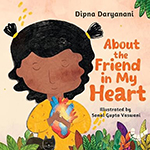
By Dipna Daryanani. Illustrated by Sonal Gupta Vaswani
This, then, is the special something this book has managed to achieve in the simplest of ways. We would all like to encourage kindness and compassion in children but the author has managed to do so in a charming manner without preaching or moralizing so as to get the message across. Of course, she has been greatly assisted by the bright and colourful illustrations by Sonal Gupta Vaswani–and together, they make this an absolutely ideal book to be read to young children—4 years and above—even before they can read it themselves.
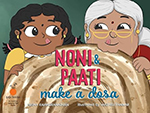
By Nisha Ravindranathan. Illustrations by Maithili Panikar
The story has Paati giving step-by-step instructions to Noni on how to make the perfect, buttery-crisp, yummy dosa. The whole process is beautifully described, using a lot of rhyme and onomatopoeia, making it very lyrical. One wonders if Noni, or any child listening to or reading this story, will be able to fall asleep without getting hungry and needing to eat a real dosa!
Incidentally, this story reminds me of my childhood days,
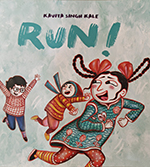
Written and illustrated by Kavita Singh Kale
2024
A big Himalayan sheepdog chases three children, who come face to face with it and, terrified by its loud bark, start running through the hills. When they reach the edge of the cliff they are met with a furry surprise. The illustrations are colourful and vibrant and little ones would want to see them repeatedly.
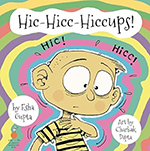
By Esha Gupta. Illustrations by Charbak Dipta
He asks if his sister is missing him, but she is busy reading. He meets his chachu, who isn’t missing him either, but he reminds him of someone else. Bittoo searches everywhere for this mysterious family member who might be missing him, but cannot find him.

All four written by Shruthi P. Illustrations by Crafting Crimson
Tale of Two Birds is about two birds who set out for a mountain, one wanting to go straight up and the other looking at the height, afraid. So they go the way a small bird can—to the first tree, then the next, resting on every branch until the mountain is near enough to reach. In this gently illustrated nature board book for children, little readers follow a climb taken one step at a time, and find that going slowly beside someone is its own kind of brave.