
From its inception, we have considered photography as a tool that reflects reality and provides evidence. For some unknown reason we have overlooked its performative side.
Portraiture, one of the first genres that came with the advent of photography, was a performance in a studio where the subject had the choice to choose the look it wanted to project in the image being made. The desire to be portrayed with an elevated status was immense and that technology had arrived which could make you look the way you wanted, not the way you were. Nowadays the studio has moved out from its designated indoor space; photographers bring their conceptual ideas outside and use the landscape along with the collaboration of the subject to project ideas that are diverse.
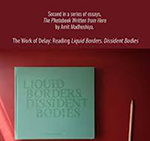
Liquid Borders. Dissident Bodies is a coffee table book that uses the genre of portraiture photography to provide an appreciative gaze at the sex worker through its over eighty sparkling colour images.
This book has been made possible by CREA, a nonprofit, feminist human rights organization that has been working at the intersection of gender, sexuality and rights for over twenty-five years. It has strived to bring together voices across South Asia on a platform so that they are heard and are given given their legitimate due.
Anita Khemka is an acclaimed documentary photographer who has been photographing for over three decades. Her work with marginalized communities, especially transgenders earned her early recognition. In May 2024, CREA convened ‘Renew: South Asia Workers’ Summit’ at Kathmandu and invited Anita to be a participant. This is where the idea for this book germinated as she put up a small makeshift studio at the venue to photograph the participants. Here she realized the greater potential of this humble effort and suggested to the organizers the need to take the studio out in the open where she saw greater and more creative possibilities of representing the sex workers from India, Nepal, Pakistan, Bangladesh and Sri Lanka. Being a photographer who was aware of the agency of her subject, she knew that a collaborative exercise in image-making on the street would give her a greater chance to draw out her creative potential as well as allow the subject to pose the way they wanted to. CREA backed her to the hilt and gave her a go ahead for a project that at first looked very ambitious for logistical reasons, as it was impossible for an Indian to travel to Pakistan as well as Bangladesh, which was undergoing political turmoil.
What has finally emerged is a magnificent collection of portraits that are shot over three countries (India, Nepal and Sri Lanka) where the subjects pose for the open-air studio that is spread out in locations as varied as busy streets, the façade of derelict buildings, the sea front and many other attractive backdrops. The framing allows each shot to breathe with space where one encounters many layers of stories playing with each other. If the subject is sprawled on the floor in the best skin-hugging dress, the walker by in motion with a helmet over his head gazing casually as the night lit signage of the shop behind stares down with an inviting look. Or, in the lush green environs of what could be an exterior of a church-like building, the subject clad in a kurta and jeans, looks directly into the camera, whereas far away on the right edge of the frame is a woman in white bridal attire walking with her back to the camera just turning around, as if she is saying, ‘Can we exchange?’.
Cats and dogs define our urban landscape. Their incidental presence in many pictures is charming and evocative. One can read stories in these performative images that have the sex worker as the main subject but interesting elements that draw our attention happen on the periphery. Frames get magical as slow shutter speed either blurs the elements that are in motion or gives them a trail of light. Anita has photographed all the pictures with mixing the studio flash in available light, hence making the mise en scène look like a cinema set, this helps in enhancing the colour palette of each frame.
An interesting part of the book is a detailed conversation between the photographer and photo-historian Sabeena Gadihoke. This conversation is spread in bits and pieces across many pages of the book. Gadihoke draws out the photographer to speak about the processes in making these images. Anita tells us how the inability of an Indian artist to travel to Pakistan to shoot brought about the idea of bringing the sex worker from Pakistan to a neutral location that was Nepal. She was struck by the idea of placing a part of the Pakistani landscape behind the protagonist. This was done by hanging large pictures with prominent locations of their city—Lahore, Karachi, etc., printed and placed in the centre of a Kathmandu street. It reminds us of the practice of the painted backdrop which was and still is a part of studio photography of small-town photo studios and village fairs in the subcontinent.
Similarly, as travel to Bangladesh was restricted due to the political unrest there, it was necessary to bring the sex workers to another country. This turned out to be Sri Lanka, where the photographer found the ocean as the common element for the two countries. She photographs the Bangladesh sex workers against the backdrop of the sea and gets some of my favourite images that form the end pictures of the book. Farida Parvin, an elderly lady, seems at ease looking into the camera perched delicately on the shore rocks, as the mighty ocean spreads behind her and a thin layer of black cloud cuts the frame horizontally. Our attention is drawn to the flower tucked in Farida’s henna-coloured hair that matches the colour of her saree. In the interview with Gadihoke, Khemka tells us that the flower was the subject’s last-minute choice. The last picture is of Shahnoor Khanum who, stands confidently with both her arms on her hips atop a small fishing boat parked on the dry shore right at the edge of the sea. The setting sun behind her creates a strong amber hue. Interestingly, the photographer gives this photo the look as if it has been done in artificial light inside a photo studio!
The photographer’s technical prowess with the medium is evident along with an aesthetic continuity where she controls the intensity and colour saturation of each image. Mostly horizonal frames in a 3:4 ratio look attractive in the large coffee table book format which is square shaped and hard bound; a green jacket with its title embossed elegantly. A few vertical frames leave some pages looking empty and bare. Credit is given to the protagonist of each image at the end pages of the book by placing thumbnails of the pictures with their respective names. This emphasizes the erosion of taboo from a profession that is still associated with being anonymous in most parts of the world. The book is a major effort at providing agency to the people for whom sex work is a means of livelihood by choice. Yet while looking, one plays a guessing game in figuring the country to which the subject belongs, or the locale of a frame which is best decoded by certain visual markers that give us its clue.
But then, after all, the book is about liquid borders and the identities remaining fluid.
Sohail Akbar is Associate Professor, Photography, AJK Mass Communication Research Center, Jamia Millia Islamia, New Delhi.