
The book begins with the striking line: ‘A boy in a burn ward is a thing of pity.’ It makes the reader pause and think. Burn wards are usually filled with women victims of dowry burns, acid attacks, or violence. So, a boy in that space feels unusual, and this opening immediately catches our attention.
Burns Boy tells the story of Guru, a 15-year-old boy who is admitted to the burn ward after an accident. The novel unfolds through three voices—Guru, his mother, and his younger sister Aparna.
Guru struggles with the trauma of the accident, his anger, and his broken relationship with his mother. His mother is weighed down by guilt, family responsibilities and social expectations, while trying to hold life together. Aparna, the younger sister, feels sidelined and wrestles with her own identity, as the family’s attention shifts toward Guru.
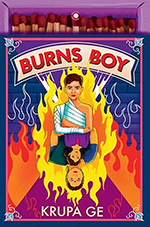
The title Burns Boy goes beyond physical scars. It also speaks of emotional and mental burning. Guru burns in one way, his mother and Aparna in other ways. The cover beautifully depicts this idea: a lit matchbox, with Guru burning directly in the flame, while his mother and Aparna appear upside down—burning indirectly.
The novel reminds us that physical scars often come with emotional ones. The real tension lies not just in the accident but in the guilt, blame, and emotional distance between family members. Guru, his mother and Aparna, each carry a different version of events, their own ‘truth’. Readers are left to decide who is responsible.
Since much of the story is about inner thoughts and memories, the pace sometimes feels slow. But this also gives the book depth and richness.
Overall, Burns Boy is a thought-provoking novel. It asks hard questions about love, guilt, silence, and memory. It stays with you long after you’ve finished reading.
Kavita Tiwari is the Associate Editor of Chakmak, a children’s magazine published by the Eklavya Foundation. She translates and edits children’s books as well as science and math articles.