
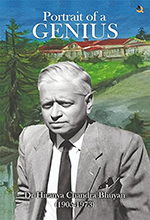
Assam, in the post-Independence years, witnessed significant scholastic growth that resulted in major developments in the academic, scientific and administrative landscape. The growing demand for higher education in the North East pushed the government to undertake initiatives to establish an educational system that aimed at promoting literacy and ensuring collective access to education by all. As a result, Assam’s academic landscape saw a rapid expansion of schools and colleges. From a State with one university in 1948 (Gauhati University), Assam soon transitioned into a State of multiple universities, schools, colleges as well as central institutions like IIT and AIIMS. The academic, scientific and administrative scenario of post-Independence Assam has benefitted immensely from the contributions of many well-known scholars and academics such as Krishna Kanta Handique, Sanskrit scholar and philanthropist Nabakanta Barua, renowned novelist and poet Mamoni Raisom Goswami, celebrated novelist Bhabendra Nath Saikia, writer and academic and Marxist historian Amalendu Guha, and Dr Hiranya Chandra Bhuyan, a man whose intellectual legacy shaped modern Assam’s educational landscape, and India’s North East.
Unfortunately, Ramaswamy and Narayanan, have failed us by presenting an over-hyped view of LLMs and not critically examining what LLMs really do. Or their impact on all of us, as they are in the hands of a few very large global monopolies, who focus narrowly only on their profits.
Divided into nine sections, the book documents the many phases of Dr Bhuyan’s life and career. Arup Kumar Dutta’s introductory essay, ‘The Outelier Genius: A Sketch’ locates Dr Bhuyan in the intellectual and academic ambience of Assam in the years before Independence and highlights Dr Bhuyan’s childhood years. The essay delves into Dr Bhuyan’s tryst with the legendary CV Raman, him being the only Assamese teacher-scientist to be taught by Raman. Later, he joined his research team at the Indian Association for the Cultivation of Science, Kolkata. His excellence in scholarship is attested to by the publication of his single-authored paper titled ‘Effect of Light on Diamagnetic Susceptibilities’ in the prestigious Nature journal in 1935. He was a glowing example of ‘moral discipline, a training of the mind in truth-seeking’, one who Kamalendu Deb Krori, former Principal of Cotton College, hails as a ‘great genius’.
Dr Bhuyan’s decision to return to Assam was fuelled by familial responsibilities but more by his desire to build a research-intensive environment in his beloved State. At Cotton College, Dr Bhuyan oversaw the construction of the first two-storeyed structure of the new Physics building. His enterprising efforts to inculcate a cosmopolitan scientific environment also resulted in the establishment of the Gauhati Science Society on 13th February 1953, later renamed as Assam Science Society in 1956. It is under his able tenure as Vice Chancellor of Gauhati University that the Institute shifted to the new campus in Jalukbari, with facilities for research, residence and recreation. He disseminated his ideas through many public lectures accompanied by self-prepared illustrative slides. Dutta highlights key moments that were seminal to the shaping of the educational scenario in Assam and Dr Bhuyan’s significant role in the same.
Section II and III contain essays that delve into the life and legacy of Dr Bhuyan. The publication of Bigyaan Jeuti (The Light of Science) under the aegis of the Assam Science Society was a milestone in this direction. His belief in the need of a strong educational foundation for students resulted in the establishment of the Arya Vidyapeeth ME school that was later upgraded to a secondary school and finally into a college. His involvement extended to his contribution in designing comprehensive curricula that incorporated new ideas and methodologies. His radical ideas irked many; yet, despite the challenges, he determinedly strove to introduce contemporary thoughts to enlighten young minds. Former colleague Giridhar Sarma reminisces on Dr Bhuyan’s continuous efforts to upgrade the facilities at Cotton College that included the opening of a cooperative canteen for faculty and students, and constructing the boundary wall of the college.
Dr Bhuyan’s warm personality as friend and educator finds expression in Sections IV and V with colleagues and students reflecting on his unique methods of teaching, clarity on the subject and ease of language in explaining difficult topics. Noted astrophysicist Dhruba Jyoti Saikia acknowledges his magnanimity and large-heartedness in actively engaging in designing framework and mechanisms to ensure that the light of science reaches the remotest corners of Assam. Section VI and VII contain personal reflections by Dr Bhuyan’s siblings, children and grandchildren who remember him as a strict but gentle disciplinarian who encouraged them to find something to learn even in everyday ordinary activities. Leeta Hazarika reflects on her father’s large and expansive library where books ranging from science to literature including the Bhagavad Gita were neatly arranged. He encouraged reading to develop the ‘mental equilibrium’ necessary to cultivate a positive approach to life. Dr Meeta Deka highlights Dr Bhuyan’s punctuality and meticulousness, his love for gardening and his life-long desire to make learning easy and accessible. His book, Konmaanor Dharapat, contained the basics of Mathematics for little children. He also developed dustless chalk and a glass blackboard that, he believed, would make teaching in the classroom easier.
Sections VIII and IX are devoted to the teacher and mentor who worked tirelessly to ensure that the intellectual needs of the students are met. Firm and persuasive in approach, he encouraged students to intervene and question ideas. He would often tutor underprivileged students for free.
Portrait of a Genius brings together memories of a person, whose excellent scholarship transformed Assamese intellectual space and society. It also draws attention to Dr Bhuyan’s indomitable spirit that continued to work for a progressive society despite inadequate infrastructure and several administrative and bureaucratic hurdles. This is the reason Dr Binoy Kumar Tamuli states that Dr Hiranya Chandra Bhuyan perhaps considered himself ‘to be like Tagore’s “river that had lost its way”’. Anecdotal in tone, the volume ‘seeks to highlight, like a rotating crystal, his multifaceted genius’ whose scholarship was premised on service to society.
The book blends biography, memory and history to accentuate the unparalleled contribution of a scholar and scientist who had ‘the elements so mixed in him, that Nature might stand up and say to the world, this was a man.’
Kalpana Bora is Assistant Professor, Department of English, Cotton University, Guwahati, Assam.