
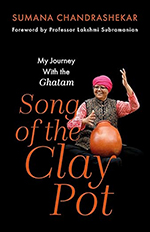
By Sumana Chandrashekar
Even occasional listeners of Carnatic music may be familiar with the pot occupying the stage. After the great success of Vikku Vinayakam, the ghatam has become a part of the pantheon of percussion instruments in classical and experimental music. Sumana is part of that extraordinary narrative, of courage
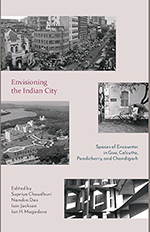
Edited by Supriya Chaudhuri, Nandini Das, Iain Jackson and Ian H. Magedera Jadavpur
Helle Jørgensen is an honorary research fellow at the Department of History, University of Birmingham. She analyses the urban landscape of Pondicherry as a postcolonial palimpsest by examining its three symbolically significant features: first, the memorial traces of the mid-18th century French Governor-General Joseph François Dupleix; second, the sole Hindu Manakula Vinayagar Temple in the ‘White Town’;
By Vidyadhar K. Phatak
From chapter 16, the reviewer has compiled an arbitrary list of Mumbai’s planning agencies, plans (some with World Bank support), and acts: the Municipal Corporation of Greater Mumbai (MCGM); Bombay Building Repairs and Reconstruction Board (1969); Maharashtra Slum Improvement Board (1973), later renamed Maharashtra Housing and Area Development Authority (1976); the Development Plan (1964); Maharashtra Regional and Town Planning Act (1966); Bombay Metropolitan Regional Planning Board (MMRDA, 1967),
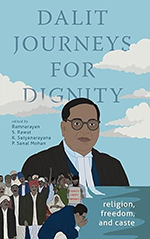
Edited by Ramnarayan S. Rawat, K. Satyanarayana and P. Sanal Mohan
In the second essay, Ramnarayan S Rawat demonstrates the significance of the 16th century Dalit saint-poet Ravidas, whose legacy inspired the Chamar led Sant-Mat community of north India in the 1920s to seek paths to dignity. Through the mediation of the spiritual leader Swami Achutanand
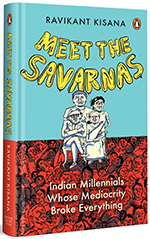
By Ravikant Kisana
…I have attempted, foolhardily, to document and narrativize the pathologies of the hyper-visible yet perennial blind spot that is the world of elite ‘savarnas’, who critique everyone and everything but never themselves. No matter what method I use, this venture is doomed to fail in many savarna eyes. They will inevitably find clever and creative ways to dismantle its mediocrity in ways that I cannot imagine.
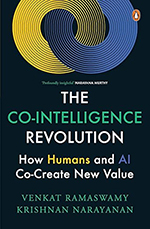
By Venkat Ramaswamy and Krishnan Narayanan
Can we reach an understanding of reality through only language models and with perhaps a little plus of something else? I would have liked the authors to have given us some overview of these and other issues, rather than simply reproducing the marketing hype of AI, particularly from those who seek continuous investments in their companies, such as Sam Altman of OpenAI. Remember how
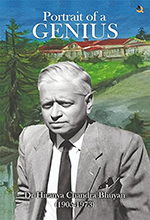
By Jayanta Bhuyan
Dr Bhuyan’s decision to return to Assam was fuelled by familial responsibilities but more by his desire to build a research-intensive environment in his beloved State. At Cotton College, Dr Bhuyan oversaw the construction of the first two-storeyed structure of the new Physics building.
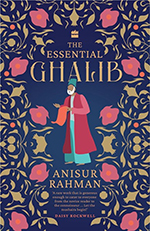
Translated by Anisur Rahman
2025
As a genre, ghazal poetry is performative, highly conventional and its public recitation (mushaira) is governed by an elaborate protocol that has evolved over centuries. The poet does not recite the two lines of a couplet in quick succession; he will recite the first line, often making a proposition, then there will be a meaningful pause, allowing for repetition and appreciation by the audience through wah wah and mukarrar, and then when the suspense is at its apex, deliver the second line almost like a punch that will bring the proposition to a logical end, even though that logic may, sometimes, be far-fetched.
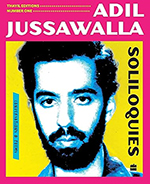
By Adil Jussawalla
2025
Jerry Pinto’s crisp and meaty introduction opens The Diamond-Encrusted Rat Trap: Writings from Bombay. ‘The 1970s were Bombay’s 1960s,’ he recalls Imtiaz Dharker’s words. The book gathers Jussawalla’s prose from 20 years, beginning 1980. There are articles, reviews,

By Vishwas Patil. Translated from the original Marathi by Nadeem Khan
The portrayal of Shivaji himself is layered and complex. Unlike in nationalist hagiography, Shivaji here is charismatic yet humanly vulnerable, ruthless to his enemies yet calculating, aware of legitimacy even as he embraces brutality when necessary. The novel situates him in a dense web of shifting alliances—with Bijapur, the Mughals, local chieftains, and coastal powers—thereby emphasizing that sovereignty is relational,
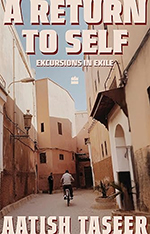
By Aatish Taseer
Does each of us human beings experience an identity crisis? Perhaps not to a cataclysmic degree where it could become existential. However, at some point in all our lives, we do, hopefully, seek to know ourselves better. And what truly constitutes this ‘me’ that we seek deeper understanding of?

By Afsar. Translated from the original Telugu by Alladi Uma and M. Sridhar
These stories explore a range of themes, including forced relocations, destabilized social relations, caste-related violence, harsh political realities, and larger identity questions. They are all deeply rooted in cultures and belief systems that have been lost, redefined, defied, and reclaimed. The protagonist, who narrates most of these eleven stories, revisits his village, his childhood, and his people from a different perspective, in the light of not only his personal experiences but also the general, larger, and global changes that have influenced even the minutest details of everyday life.

Selected and Translated by Aruna Chakravarti. Foreword by Meena Kandasamy
Issues of migration are addressed in Nakul Mallik’s ‘Illegal Immigrant’. The formation of Bangladesh spurred the movement of Madhab’s family from a nation in formation to India and back. Extreme poverty once again pushes the family to migrate to India. Madhab settles down with Shefali but is picked up as an illegal immigrant and sent back to Bangladesh, a pregnant Shefali is left alone to fend for herself.

By Catherine Thankamma
The story ‘Madhu’ touches upon a theme we all like to believe to be a thing of the past, untouchability. As much as all of us would like to believe that we have moved past this inhumane concept, reality hits us in the face with a woman and her cup that no one else touches.

by Ritu Menon
Pinto deepens this terrain into a gendered critique of leave-taking, arguing that the very notion of leaving is profoundly shaped by patriarchal imagination. While women may harbour the desire to leave, this longing is routinely romanticized or appropriated by men, rarely granted the legitimacy of action.
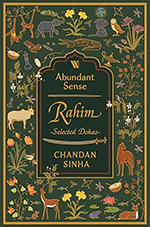
By Chandan Sinha
The extensively and admirably researched introduction not only serves its stated purpose of introducing Rahim’s time, place and persona to readers like me who may not be familiar with all the fascinating details of the multiple contexts and sites from which these dohas emerge and must be read to be fully understood

Translated from the original Bengali by Malati Mukherjee
The difficulty of the translator of poetry from an Indian language into English comes from the music of the words. As a reader, the translator is a sahrday in the world of rasa which Tagore dives into to find formless gems: ‘I have dived into the ocean of form’, he says, ‘in search of a formless gem.’

By Mukunda Ramarao. Translated from the Telugu by M Sridhar and Alladi Uma
‘How can I Deal with You, My Dear?’ refers to the daughter’s fear, who is dependent on father’s protection, but once she becomes an adult, she has to learn to walk in darkness and live with evil spirits in the external world. Where does this evil come from if not criminality and various types of exploitation? ‘Wrenching of Heart’ portrays the eternal wait of the parents for their missing son.

By Priya Sarukkai Chabria
Perhaps the most powerful and poignant piece of Chabria’s text is intertwining Earth stories with Indian mythologies, to reimagine the most well-known stories from apocalyptic, climatic or environmental perspectives. Pishachas, flesh-eating demons in Indian folklore are reconceptualized as survivors of a nuclear winter they caused on their planet (p. 61). The stories of Pishachas come with a warning to the human race;

By Noor Juman
Where the novel shines is in Oleksiy’s fraught relationship with his childhood friend-turned-enemy Ruslan. Their history is marred by betrayal yet punctuated by unexpected loyalty. It adds genuine complexity, exploring how masculinity, loyalty and moral choice are entangled within systems of power.