

By Lissa Coffey. Illustrations by Rajesh Nagulakonda. Edited by Sarita Saraf
Arjuna’s question is wisely tackled by Krishna. Another natural feeling that Arjuna expresses is about the winning team’s happiness in getting the trophy and the other team’s sadness in losing it. Here, too, the child-comprehensible words spoken by Krishna are commendable. They showcase the philosophy of the Gita in a simple way.
Meaningful words in rhyme,

By Aparna Kapur. Illlustrations by Ogin Nayam
2024
At the end of the book, the author writes a coda in which she talks about why she wrote the story of Divya. In her childhood, she had not washed her hair for ten days. In this period, she made many imaginary friends. This experience has kept the narrative alive in her mind, giving her the conviction that telling it is critical.
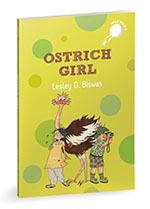
Ostrich Girl opens up with a bird call. ‘CHA-KE-KE-A-KE-KE-AAAAAA….’ echoes through the pages of this irregular narrative. Biswas tries to look at worldly issues through the lens of children. What Ostrich Girl deals with is the ask of the century; the question that environmentalists have seldom answers to. Integral to children’s literature, the author provides ample agency to the characters of her narrative.

By Sathya Achiya and Janan Abir
Technology and tradition unite in this picture book to inspire confidence in a little girl. Priya lives in the western world but is ethnically a Kodava from Kodagu in the lush rainforests of the Western Ghats. She has a dance recital coming and will perform as a ‘jungle dancer’ thanking

The range of books on music reviewed brings into question the category of music itself, for it is difficult to define music in singular ways. Grappling the plurality of music has generated a range of approaches. The hermetic field of musicology has had to shed its exclusivity. Gone are the days when it was thought that the proper study of music and music criticism should address classical music only.

Apart from the vocation of (formal and informal) teaching to which she remained devoted her entire life, Sadhana Bhattacharyya cultivated, not always without the usual familial and related difficulties though, her keen interest in art and culture, literature and most importantly, music. In this, she had her husband’s support who was equally invested in reading, writing, calligraphy, painting, sculpture and music. Music, in particular, meant the world to both. While she was not trained formally in it, her husband was (in Indian classical music).

By Meenakshi Prasad. With a Foreword by Late Pandit Birju Maharaj
The author has explored the relationship between psychology, aesthetics and pedagogy throughout the book. The relationship between the self and aesthetics according to her is a condition of stability and conformity where values of family and context are important. Humility plays a big role here. Her teacher Savita Devi told her that ‘the original tune and lyrics of a composition exist unaffected by time and space’.

By Satyasheel Deshpande
Is Deshpande’s musical thought antithetical to the above? Like Tembe, Deshpande too is critical of the scientific method of classifying and categorizing musical knowledge. For example, the mathematical discussions on the microtones (shruti) in music. But, unlike Tembe, Deshpande celebrates the analytical attitude of Maharashtrian musicians. He interprets the last segment of the Punjabi proverb as a belittling of the analytical efforts of the musicians in Maharashtra. In a nutshell, his musical thought may be summarized as the celebration of individuality-identity framed by and simultaneously made possible by the musical form and its elements.

By Vipul Rikhi
However, the last few decades have witnessed an unprecedented interest in the words and philosophy of these medieval poets. Today, multiple Kabir yatras are held throughout the country, flocked mostly by an English-speaking urban crowd. They gather to listen to the folk voices singing Kabir. More importantly

Edited by Ashok Vajpeyi and Piyush Daiya
This is significant for it gives us access to different vantage points for looking at the musician. For instance, many articles argue that his practice marks a radical departure from existing musicianship and a pathway towards something new. Ashok Vajpeyi calls this a reinvention () of tradition, while articles of Pandharinath Kolhapure, Shriram Sangoram and Chaitanya Kunte try to defend his experiments as interrogations within tradition.

By Terada Yoshitaka
Most rasikas of South Indian Classical music do not often grow up understanding the finer points of the relationship between Carnatic music and the various traditions it is born from or relates to. In this book the author takes us on a journey from an appreciation of the complexities of its tradition. The Nagaswaram has played an important part of all rituals, but Nagaswaram players were lower in the caste hierarchy and subject to all the taboos

Translated from the original Bengali by Indrani Haldar
Tagore had considered his song-lyrics his best creative offering because in them he expressed himself spontaneously and unabashedly, freeing himself from the conscious process of literary crafting that marked most of his fictional writing which was subjected to stiff literary criticism. Written in chalit bhasha or conversational Bengali, he did not have to adhere to any expected literary standard. He could be inspired by classical musical tradition for instance, and yet defy its prescription for the individual ragas;

By Rajiv Vijayakar
What do I mean by this? There are examples galore throughout the book; here are some: Laxmikant Kudalkar, the son of a mill worker and Pyarelal Sharma, the son of a renowned musician Pandit Ramprasad Sharma, were an unlikely pair. Laxmikant’s father sensed his son’s love for singing and entertainment and started classical music lessons for him. Pyarelal’s father was a Hindustani classical musician but wanted everyone,

By Soubhik Chakraborty and Ranjan Sengupta (with co-authors: Anirban Patranabis, Vidhi Salla, Apoorva Chakraborty, Pranjala Shukla, Lopamudra Dutta, Sudakshina Bhattacharjee, Moupali Mitra and Sulochana Lamichaney)
Returning to the book. It is divided into two parts, the first part is a biographical study, which consists of three essays, one each by three of the co-authors. These three essays could easily have been one. The essays repeat very well-known basic biographical facts, including her date of birth that is mentioned several times in each essay, including multiple times on the same page. The replication is not confined to specific facts.

By Richard David Williams
Williams puts together a picture of a man of complex and varied tastes: an innovator rather than a curator of past practice. The textual evidence is formidable. The collections of song-texts that Williams examines show the Nawab’s close collaboration with his senior Begum, Khas Mahal, and include dhrupad, hori, sadra, khayal and tarana

By Radha Kapuria
Ethnographical studies in the region remain an inescapable methodology due to the subcontinent’s knowledge systems embedded in oral traditions. There is also an institutional lack of a proper archival system. For most scholars in the past, ethnography had led them to innovative revelations, unlike the archives which have revealed partial information with politics of power inclined towards the educated elites of the society.

By Abir Bazaz
To the perceptive reader, Nund Rishi: Poetry and Politics in Medieval Kashmir is a sombre book. This impression starts to build right from the rather symbolic jacket, which bears a photograph of a gloomy Charar-e Sharif mausoleum on an overcast winter day. This monument, belonging to that solitary strand of Kashmiri Sufism which once drew…

By Lakshmi Subramanian
Mohandas Gandhi was no musician. Subramanian herself acknowledges (p. 188) he was ‘neither a patron nor a connoisseur of music’, and that he was attracted to it solely for its ‘power as a medium of affect’. His engagement with music was correspondingly restricted to employing its powers of affect for his larger political and social…

Edited by Tejaswini Niranjana
These essays serve an important purpose in setting the stage for the next section, ‘New Musical Publics and the Formation of Taste’ which deals with the unfolding of the complex question of aesthetic pleasure and the creation of different public spheres around the problem of taste. Although the players and the narratives within which they operate are different, these two essays offer a key turning point in the book where we encounter the ‘surpluses’ of publicness in all its complexity.

By Sumangala Damodaran and Ari Sitas
Damodaran, much to the relief of the reader immediately reduces scope. And what is lost in ambition is gained in clarity. She talks of Jatts becoming Zotts in Iran and how they would influence the Luri. She talks of the Haul, Qual and Maqam systems.