

By Kuldeep Kumar
Kumar’s commentary on Pandit Kumar Gandharva is particularly noteworthy. He observes that while reinventing Kabir, Kumarji was simultaneously reinventing himself, envisioning an artist, a thinker, and a rebel within. Kuldeep Kumar highlights Kumarji’s departure from blind adherence to gharanas, quoting Pandit BR Deodhar, Kumarji’s guru
In the first phase, the author foregrounds the role of two books: Sangita Taranga (1818) by Radhamohan Sen Das and Sangita Rasamadhuri (1844) by Jagannath Prasad Basu Mallik that had set the course of musical scholarship in Bengal for the future authors and scholars. The author shows that while Sangita Taranga was mainly influenced by Indo-Persian musicological texts like Tohfat-ul-Hind (1675), Sangita Rasamadhuri attempted to establish Hindustani musicology preferably in Hindu terms.

By Scott Timberg
Timberg experienced such instability and its impact on creative jobs first hand. Laid off by the Los Angeles Times just before his fortieth birthday, he endured the disintegration of a stable middle-class life, ultimately losing his home and being forced to leave Los Angeles. Scott Timberg died by suicide in 2019 at age fifty.

By Kunal Purohit
The term ‘H-Pop’, conceptualized by Purohit, provides a potent analytic that connects ‘local’, ‘small’ phenomena with mainstream, national discourse. A direct reference to the South Korean popular musical form K-Pop, Hindutva Pop is less a hybrid genre and more a theoretical framework to navigate the currents of a communalized public, from the ground up. The work gains from this critical framing, allowing the metanarrative of toxic, high-volume, public emotions, and communal violence, to become the backdrop and trope.

By V.R. Devika
Devika has, with great ingenuity, titled the chapters to coincide with the Margam, or a graded Bharatanatyam performance, starting from Mallari and ending with Thillana and Mangalam. In a way, you journey through Rukmini Devi Arundale’s life in the same pace and rhythm that you would progress through the performance of a dance form that became her life’s work.

By Dr. Sonal Mansingh
2020
From the expansiveness of collective consciousness to the privacy of life’s travails is not an easy transition, yet Sonal Mansingh in the chapter called ‘Dwijaa’ (twice born) bravely describes her period of critical illness in Germany and Canada. A highway accident left her nearly paralysed, so much so that she was given a choice between a surgery where the outcome was unknown and a bed-based recovery where too the outcome was unknown. She instinctively chose the latter, and with the help of a medical team in Montreal,

By Shalini R. Ayyagari
his book conceptualizes the musicians’ attempted negotiation and intermingling of the two value systems, feudal and neoliberal—the former requiring them to be subdued and localized and the latter competitive and entrepreneurial—as resilience, a concept theoretically established in several disciplines including ethnomusicology, but one Ayyagari also aptly translates from the indigenous term ‘lachila’.

By Tarun Tahiliani
It is exciting that these days, exhibitions of India in the West are not just of objects from our museums but of contemporary Indian design, be it the one on the ‘Offbeat Sari’ in London recently, or the ‘Fabric of India’ a few years earlier. Dastkar was fortunate to develop products for the ‘Handmade in India’ exhibition hosted by the Crafts Council of UK.

Compiled and edited by Lakshmi Swaminathan. Foreword by Satish Kumar
Traditional wisdom had to observe what was at hand and to learn what did or did not harm…there are no universal rules…in all ancient traditions, they honour the elements…water is Apanswarupa. She sustains all being…Water is a divine gift.

By Anita Bharat Shah
It is always fascinating to read about the meaning underlying the imagery in Nathdwara paintings. For instance, the different aspects of shringara are related to the season and time of the day, and the rasa that they choose to evoke, leading to ultimate ananda in devotees. Shringara of Shrinathji features an essay by Amit Ambalal, which gives a comprehensive view of the symbolism in the painting related to the Pushtimarg tradition.

By Reema Desai Gehi. Foreword by Krishen Khanna
A new biography by journalist Reema Desai Gehi provides a long overdue examination of the cultural arbiter. Gehi conducted extensive research, delving into archival material, interviewing people who knew Rudy, visiting his friends and family in Europe, to piece together a portrait of the man who did so much to support the artists who forged a new visual arts language in the early 20th century.

By Janeita Singh
While I continued to interact personally with SH Raza, MF Husain, and KH Ara of the Progressive Artists Group, Souza remained an elusive personality—though I gravitated towards all his distinct canvasses and drawings at every exhibition or collection.

Translated from the original Hindi by Richard J. Cohen. With Essays by Naman P. Ahuja, Vivek Gupta & Qamar Adamjee
2024
When his daughter Chanda is born to Rao Mahar Sahadev, her beauty is extolled far and wide and at the age of four she is betrothed by her father to another chieftain’s son named Bavan. When she arrives at her husband’s home at the age of 12, she finds Bavan to be one-eyed and impotent. Her virtue thus intact, she returns to her father’s home where she whiles away her time sighing from balconies, where she is thus espied by a passing bard who now sings passionately of her beauty, his stirring verses reaching the ears of Rao Rupchand in Rajpur.

By Sanjoy Patnaik
On the face of it, this absence of reference material hinders any serious study of cinema in Odisha. However, the ‘black hole’ in Odia cinema’s history throws up uncanny silver threads. Patnaik turns to personal memories of men and women who literally embodied Odia cinema from its halcyon days in the 1960s and ‘70s to its present.

By Smita Banerjee
A long introduction sets out the contour of the work in which the ‘endeavour is to map the varied formations of the modern that the Suchitra-Uttam films articulated and to trace these responses to these formations in the reception circuits and journalistic discourses’.

By Ashis Ghatak
The Musical Maverick: An Authorized Biography of Shankar Mahadevan by Ashis Ghatak chronicles the life of the versatile music director, singer, and performer who has played a critical role in scaling up the soundtracks of not just Bollywood films but also genres like fusion jazz, Indipop, and a modern, refurbished aural universe of devotional music.
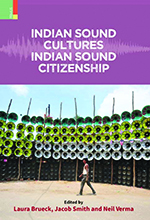
Edited by Laura Brueck, Jacob Smith and Neil Verma
The third section of essays is ‘Post-cinematic Flows’. The title of this section hints at the changing nature of the cinematic medium and its viewing whether in public, semi-public or entirely private settings and transformations in its circulation and consumption. Madhuja Mukherjee’s essay on balances at play in video making in the Manbhum region of Bengal
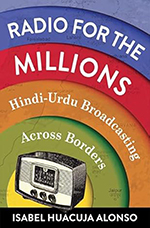
By Isabel Huacuja Alonso
The politics of listening and sounding extends from Pavitra Sundar’s work to Rangan et al’s discussion on accent—common to both is the figure of the xenophone. The interdisciplinary volume on accent draws upon contributions ranging from literature and linguistics to anthropology and media studies—opens up the accent as an unstable element, one that ‘raises questions about power, hierarchy and difference’ (p. 3). Accent, for the volume’s authors and editors

Edited by Rahaab Allana
Prashant Panjiar started as a photojournalist in a newspaper and went ahead to do photo assignments for two of India’s prominent newsmagazines when print was the primary medium. He has spoken about his engagement with the changing socio-economic landscape of the Indian subcontinent that he experienced working in print.
Sunil Gupta’s work transcends borders as he brings his diasporic lens to look at issues of gender, sexuality, racial discrimination across continents in India

Edited by Rashmi Devi Sawhney
The third section of essays is ‘Post-cinematic Flows’. The title of this section hints at the changing nature of the cinematic medium and its viewing whether in public, semi-public or entirely private settings and transformations in its circulation and consumption. Madhuja Mukherjee’s essay on balances at play in video making in the Manbhum region of Bengal