
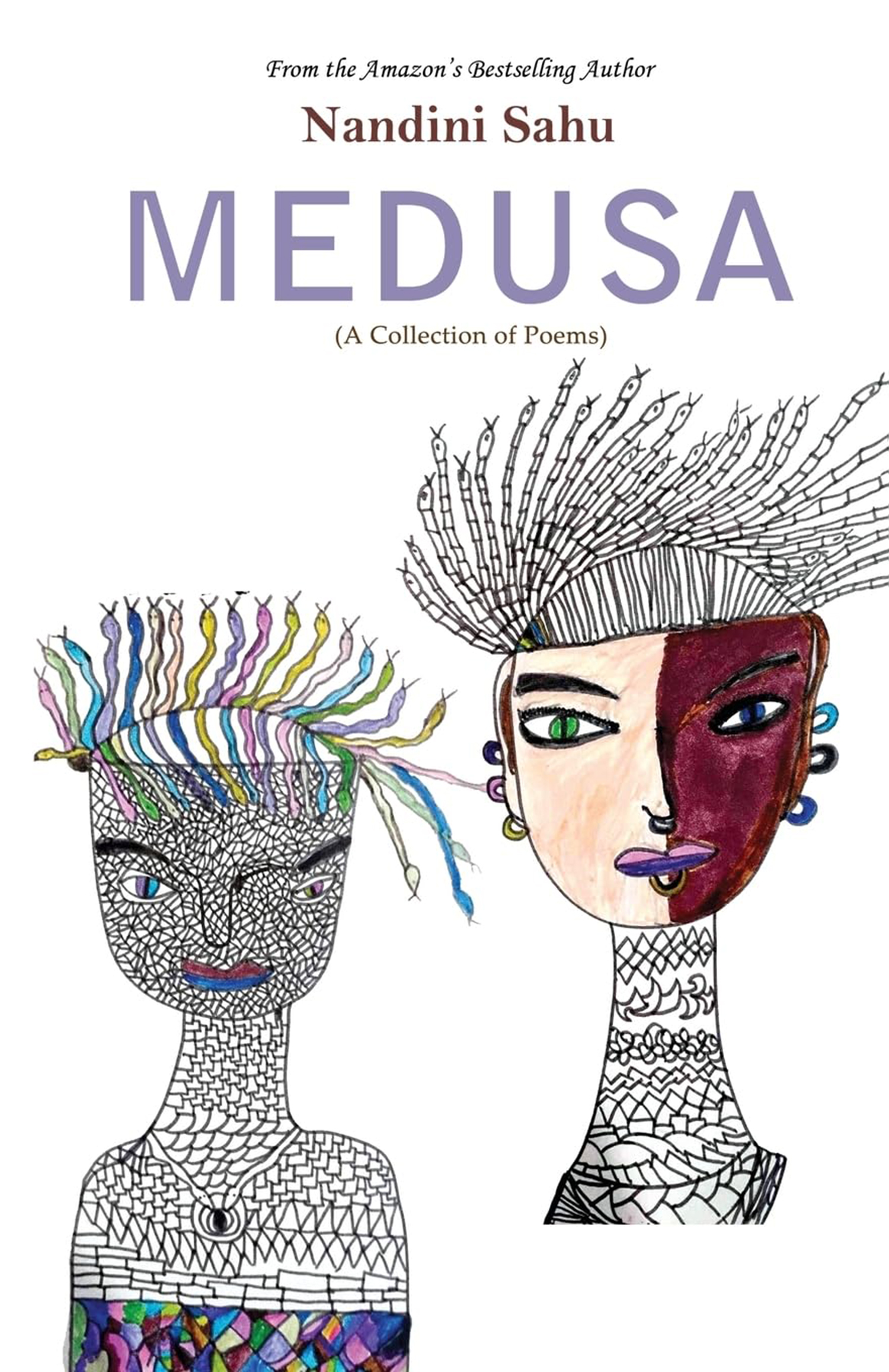
By Nandini Sahu
The collection opens with the titular poem ‘Medusa’ and immediately the poet wrests the narrative back with the announcement, ‘I will never reduce the illumination of my sparkling eyes./ Because you claim, my eyes have been your solitary gain’, followed by the declaration that ‘My “ecriture feminine” takes encounters/ with conformist patriarchal schemes.’ While making these assertions and refusing to be reduced to just a body part

By Sukrita
Such poems don’t lead you to a ‘deterministic’ meaning, rather they allow the reader to explore and find his/her own. The poet lets the reader embrace them as his/her ‘own’ poemlet. It’s as if the poet is side stepping, allowing the reader to take over and participate in the process of building up of a poem while reading it. It is both creative and courageous on her part to use a Hindi word

By Dr. Intaj Malek
Virtually all readers of this collection will recognize the many themes in these poems that tie into the well-known stories told about Krishna such as his childhood playfulness, his love for Radha, and the philosophical wisdom shared with Arjuna in the Bhagavad Gita. This poem builds on the boundless love of the Gopis,
Edited by Shweta Singh and Amena Mohsin
Gendered populism, as discussed in the third section, is masculine in its very essence and is often a key element of Right-Wing populist movements. It relies heavily on the politics of exclusion and ‘othering’; and governments use it to moralize political conflicts, demonize their political opponents, thereby mobilizing the masses. The final section, ‘Militarism and Militarisation’,
By Kamal Nayan Choubey
Recent academic works have increasingly sought to critically engage with the complex and contested process of tribal identity formation in India. Much of this discourse locates the origins of such identity constructions in colonial epistemological and administrative frameworks. Early colonial representation depicted tribal communities as primitive, uncivilized, and as vestiges of a pre-Aryan, non-Vedic past.…
Edited by Yatindra Singh Sisodia and Pratip Chattopadhyay
There are a few chapters in the book which present a systematic study on issues which have been rarely discussed in the academic discourse of electoral politics in India. For example, Ashutosh Kumar’s ‘Election Economy in India’ is one of the most crucial chapters in this volume, which discusses the advancement and working of election economy in India after Independence.
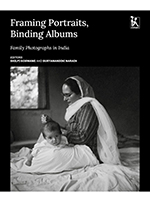
Edited by Shilpi Goswami and Suryanandini Narain
This is seen clearly in one of the most interesting essays: Suryanandini Narain’s ‘Yatra Chitra/Parivar Chitra: Mrs Gupta’s Photographic Record of a Family amidst a Changing Nation’. Mrs Gupta lived in Brindavan with her husband, the Principal of a local college, and their three children—Guddu, Guddi and Dabloo. Her photo albums of her family’s holidays in the 1960s to historical places of interest show the historic/tourist sites plus the whole family, which, according to Narain, ‘frame Mrs Gupta’s aspirations of looking at the family and nation as part of the same continued trajectory…’.
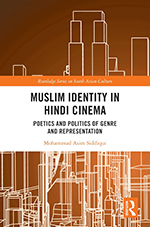
By Mohammad Asim Siddiqui
Organized in six incisive chapters, the book draws on concepts and methods from new critical close reading, deconstruction, and semiotic as well as discourse analysis to generate important insights into Hindi cinema. The opening chapter titled ‘From “History” to Circus: Politics of Genre and Muslims’ Representation in Hindi Films’, examines the representation of Muslims in historical films, war narratives, and biopics of Urdu literary figures. It contrasts the inclusive vision once embodied in films such as Mughal-e-Azam (1960), with more recent works that employ history to promote a Hindutva-oriented perspective wherein Muslims are depicted as ‘the other’.
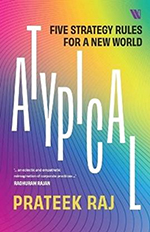
By Prateek Raj
In Rule 3 titled ‘Hear the Atypicals’, the author highlights the importance of how activities and products are ‘Designed’, which in turn will decide for whom the ‘design’ is suitable and/or how inclusive it is. The author provides an interesting chart (spread over pages 120 to 124) that lists industries in one column, the externalities that are specific to that industry in the second column,
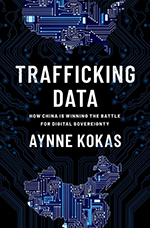
By Aynne Kokas Oxford University Press
Based on this event, Kokas lays out her premise with clinical clarity. The global movement of data constitutes more than a privacy concern. American firms, driven by profit and often blind to the policy implications of their actions, have enabled Chinese regulators to assert digital sovereignty far beyond their borders. In the process, user data becomes not just a commercial asset, but a tool of statecraft.
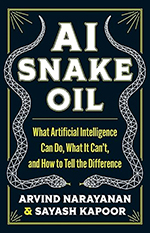
By Arvind Narayanan & Sayash Kapoor
2024
Narayanan and Kapoor urge readers to resist the temptation to think of AI systems as fundamentally ‘unknowable’, as a priori hype obstructs accountability from people making billions by deploying AI tools to predict complex social phenomena. Prediction here also suffers from what is called ‘teaching to the test’ (p. 22), where the training occurs on the same data that is later used for evaluation to achieve high-performing results.
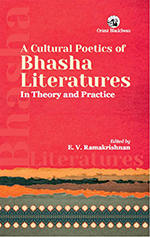
Orient BlackSwan
This approach is further developed in Sachin Ketkar’s piece (‘World Literature and Literary Historiography of Pre-colonial South Asian Vernaculars: Towards a Methodological Model’) on Marathi literary historiography, which interrogates the colonial portrayal of decline during the Islamic period by revisiting the intercultural richness of figures like Namdeo.
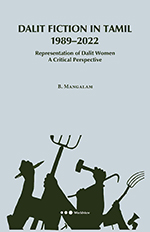
By B. Mangalam
The introductory chapter traces the rise of Dalit consciousness in the Tamil literary world, exploring how Dalit writing moved away from a Marxist and Periyarist framework and carved its own space. The author marks the fall of the Soviet Union in 1989 and the centenary celebrations of Dr BR Ambedkar’s birth in 1990 as significant events that impacted the Tamil literary discourse.
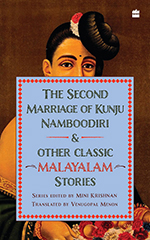
Series edited by Mini Krishnan. Translated from the original Malayalam by Venugopal Menon
The collection also contains short stories written by women writers, and here the overarching theme is the dynamics between men and women and the patriarchal attitudes which impact such interactions. The story ‘I Felt Ashamed’ by Kalyanikutty, reputed to be the first ever story written by a Malayali woman, deals with a woman’s aspiration for marrying the man she wants to, but caste restrictions prevent her and thus in her dream state, she sees the future she cannot have in real life. In ‘Witless Woman’ by M Saraswatibhai,

Series Edited by Mini Krishnan. Translated by Leelawati Mohapatra, Paul St-Pierre and K.K. Mohapatra
Consider for example Fakir Mohan Senapati’s ‘Rebati’, published in 1898. Hailed as a double triumph, ‘Rebati’ not only inaugurates the first modern Odia short story, but also subtly advances a reformist vision through a young girl’s desire for education. The story, however, unfolds as a quiet tragedy and not as a tale of triumph. Rebati’s aspiration to study is portrayed as the spark that sets in motion a catastrophic chain of events.

By Vincent Delecroix. Translated from the original French by Helen Stevenson
2025
Delecroix’s choice of the naval officer as the protagonist of this work is a refreshingly intelligent one as it simultaneously hooks the reader—who is now keen to understand the rationale behind the narrator’s actions which have been largely interpreted as monstrous—and also opens up other critical and reflexive possibilities. Contrary to our expectations, the narrator does not accede to responsibility for the migrant deaths or express guilt of any kind. She defends her attitude and actions on multiple grounds including the objective and logical disposition which her professional training as a naval officer demands, and other technical arguments such as that the migrants were in the English territorial waters and not that of the French when the boat capsized.

Edited by Angelie Multani, Swati Pal, Nandini Saha, Albeena Shakil and Arjun Ghosh
2024
Sub-theme IV has three chapters dedicated to ‘Translation and Transcreation’. In ‘An Equal Music’, CS Lakshmi offers a personal reflection on translation both as a creative process and as a relationship between the author and translator. Somdatta Mandal in ‘Translation, Interpretation, and Transcreation’ explores the various dimensions of translation in the Indian context and also raises important questions about the concept of the ‘ideal translator’.

By Ruth Vanita
In the unstaunchable proliferation of interpretations and re-interpretations of Shakespeare’s plays and personae, it is not always possible to convince critics of the new, and while the book offers many provocative highlights, all may not be fully persuasive. For instance, while Vanita’s close attention to Celia and Rosalind’s bonding is suggestive (Shakespeare plays up ambiguities everywhere) but selective;

By Ruchir Joshi
The novel is driven by its varied and eclectic characters—from the idealistic Nirupama, bound in her Left ideology, to Imogen, the young English lady, and Kedar, the art lover, to Gopal—the street-smart pickpocket turned gangster. Their lives, as different as they are, intertwine with others at the hotel—Jeremy Lambert, working on war intelligence, the French chef Paul Bonnemaison, and others who frequent the titular hotel, including sex workers. This wide variety of characters ends up creating a dynamic interplay between personal ambitions, history and memory. Their lives are framed by a first-person narrator, the son of Nirupama,

By Alina Gufran
Thematically, No Place to Call My Own is a palimpsest of pressing concerns—gender, religion, and the precariousness of artistic ambition in a mercurial world. Gufran situates Sophia’s personal travails against the backdrop of seismic socio-political upheavals: the #MeToo movement, the Citizenship Amendment Act protests, and the global pandemic. These events are not mere historical markers but active agents that exacerbate Sophia’s sense of unbelonging.