

By Naresh Saxena. Illustrated by various artists
But Papa, I did not cry.’ In another story, science and wonder walk side-by-side. From ice cream to Einstein’s Museum, relativity is explained so simply that even children can see its lightness. Yet beyond science, kindness, and rescue shine.

Cover illustration by Priya Kurian
2024
Suno Kahani 2 unfolds with ‘Badi Hokar Main Hawai Jahaaz Banungi’ where a mother and daughter turn the everyday into sky-bound play, and imagination acts as both—wings and the destination. In ‘Khoya Hua Haathi’, an elephant wanders into town— for the crowd it is a spectacle; for the elephant, a lost path back home.

By Udayan Vajpeyi. Illustrated by Taposhi Ghoshal
Yet in sharing it, he transformed that private gift into one that now belongs to countless children. The book does not ask its young readers to follow a strict order. Chapters can be read like leaves plucked from a branch. In this playfulness lies the essence of childhood, discovery without boundaries, freedom without rules.

By Neel. Illustrated by Kavita Singh Kaale
Ek tha Ramu is a tender tale of human-animal companionship. This book tells of a man’s love for a stray dog and the grief that follows its loss. Ashok Seksariya’s narrative is simple yet moving, while Neelesh Gahlot’s illustrations, though limited in number, add warmth and poignancy. The story introduces children to the intensity of attachment and the inevitability of mortality in a manner both gentle and memorable.

Story and Illustrations by Indu L. Harikumar
2025
Being left-out, alone, hurt, rejected— most of us have felt some or all of these emotions at some time or the other; for a short time or for longish periods as well. The protagonist in this book is a little girl who is constantly trying to be noticed and appreciated by her peers, whether in games or at school, or any other occasion. She feels there is nothing ‘good enough’ or ‘special’ about her that will win her their appreciation.

By Farah Azeez. Illustrated by Rajiv Eipe
2025
With an amazing concept and creative as well as colorful illustrations, this picture book is well worthy of all the awards and recognitions coming its way. The illustrations have very innovatively played around with the many words with ‘bb’/‘ee’ sound in the end.

Written and illustrated by Roshni Vyam
The story Pet Mein Chhupi Kahaniyaan belongs to the folktale genre, in which a friend comes to the rescue of another friend— but what is the threat? This story has ‘stories’ as anthropomorphized characters which take on animal forms to seek revenge on their wrongdoer. The consequences of sleeping on a story could be ghastly. But it is also a story of friendship saving the day.

By Lavanya Karthik. Translated by Seema. Illustrated by Anarya
2025
Rooted in facts about elephant migration, told from the perspective of elephants, and accessible to readers as young as 6-7 years when read aloud to them, Mari ka Safar is thoughtfully crafted. It successfully employs storytelling to create awareness about elephant migration and arouse empathy towards elephants. Additionally, a note at the end of the story explains and emphasizes the need to protect elephant corridors.

By Paro Anand. Illustrated by Proiti Roy
2025
n the former, young readers are taught to empathize with the challenges of moving places and leaving behind familiar settings, and the opportunities of growth that are brought to the forefront, along with themes of sporting spirit and its role in self-confidence.
The simple current of the tale rolls on highs and lows, stalling on expressions emphasizing, ‘All for a Roar’, drifting into a tide of speedy actions affected by the roar and finally, the soothing efforts towards a cordial transformation. From the first word to the end, the author, Nandini Nayar, excels in maintaining a velvety flow of words lending a readable quality to the text. Young readers would read aloud the story effortlessly.

By Virendra Dubey. Illustrated by Mayukh Ghosh
In all, there are thirteen stories of animals, people, bees, birds, thieves and disappearing words, some realistic as well as some imaginative. Most of the stories are brief and crisp, dealing with amusing topics—all quaint, intrinsically funny, fantastic and elementary.
This being said, we need to think of translation differently from the dominant western paradigms, which are steeped in the grammar of “target language”, “source language”, and “fidelity”. In the multilingual, multicultural, and multiethnic milieu of India, where every individual speaks more than one language, we need to think of translation and the publishing and reviewing of translation beyond the readily available vocabulary of ethno-nationalism. In addition, there is a need to recognize translation as rooted in its moment of production, encapsulating characteristics symptomatic of history wherein, in Walter Benjamin’s words, “past comes in constellation with the present”.’
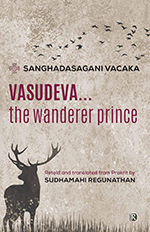
By Sanghadasagani Vacaka. Retold and translated from the original Prakrit by Sudhamahi Regunathan
Vasudevahindi also contains the story of the Ramayana, nestled in a chapter called ‘Madanavega Lamba’, narrated by someone called Dadhimukha who in the Valmiki Ramayana, is a minor monkey whose only role is telling Rama and Sugriva that the monkeys who are returning from the south must have been successful because drunk on honey, they have just destroyed the grove which was under his protection.
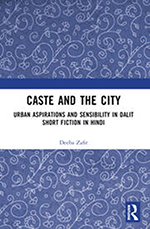
By Deeba Zafir
Chapter 1 provides the much-needed historical overview and discusses the contribution of lesser-known pioneers in this domain. While it is a critical commonplace to posit Hindi Dalit Writings as a post-Mandal phenomenon, Zafir traces, in a historical overview, Dayanand Batohi’s short stories, pre-dating them to even Satish’s ‘Vachan Baddh’, published in 1975 (hitherto believed to be the first Dalit short story in Hindi).
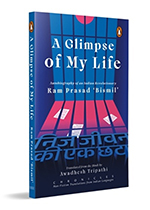
Translated from the original Hindi by Awadhesh Tripathi
The book encapsulates the vision of a man whose faith in the spirit of oneness guided all his actions. It was his motherland that mattered to him. He was convinced that religious animosity and distrust must go, and caste barriers should be annihilated. Part one, ‘Self Portrait’, is a vivid account of Bismil’s childhood, life at home with his parents, adolescent years and the influence of his Gurudev Swami Somdevji. He also writes about his relationship with his mother. She was a constant source of encouragement to him.
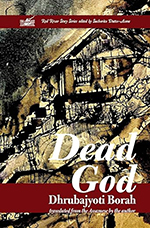
By Dhrubajyoti Borah. Translated from the original Assamese by the author
2024
The novella also situates the miners’ struggles within the volatile identity politics of the region. Parallel to the strike, political agitation in distant Shillong against ‘infiltrators’ portrays the labourers’ demands for safety as an existential threat to the rights of indigenous tribals. The workers who are already marked as outsiders, become scapegoats for broader anxieties over demographic change.
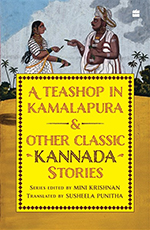
Series edited by Mini Krishnan. Translated from the original Kannada by Susheela Punitha
‘The Idol that Chennappa Destroyed’ by Yarmunja Ramachandra shows us a picture of contemporary politics of the time. This is about Periyar’s ‘idol-breaking’ mass movement that originated in Tamil Nadu. It becomes a fanciful notion in the head of a wealthy, idle young man with no real ideological convictions. The poverty-stricken maker of clay idols in the village is sucked into this drama.
Edited by Amit Chaudhuri
2025
Any reader who has relative familiarity with the Bollywood film industry is sure to enjoy the next entry in this collection featuring Bollywood filmmaker Anurag Kashyap. In this interview excerpt, Kashyap candidly narrates the creative backstory of some of his box-office successes and misses such as Dev D (2009), Udaan (2010), The Lunchbox (2013), Sacred Games (2018), Lust Stories (2018), and more.
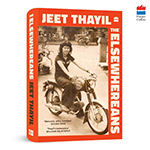
By Jeet Thayil
2025
While Ammu experiences ‘Elsewhere’ as a kind of ‘spiritual calling’—an inward choice rather than an external imposition—for others, it represents not merely a physical location, it is also a condition of unbelonging (p. 88). To be elsewhere is to be outside: of nations, of relationships, of language, of continuity. The primary narratorial voice belongs to Jeet, the son of Ammu and George. Like his parents, he is an Elsewherean, equally shaped by displacement and dislocation. Jeet retraces paths already taken: working for the Hong Kong magazine his father once led

By Shabnam Virmani
A word now on sources and translations. As clearly perceptible from the quoted excerpts of the poems, Virmani’s translations are focused on capturing the spontaneous wit and crackling immediacy of Kabir’s vani. Towards this end, she dispenses with debates on literary translation; her endeavour is to get as close as possible to the lived, current idiom in the English translation so as to bring Kabir to non-Hindi audiences.