
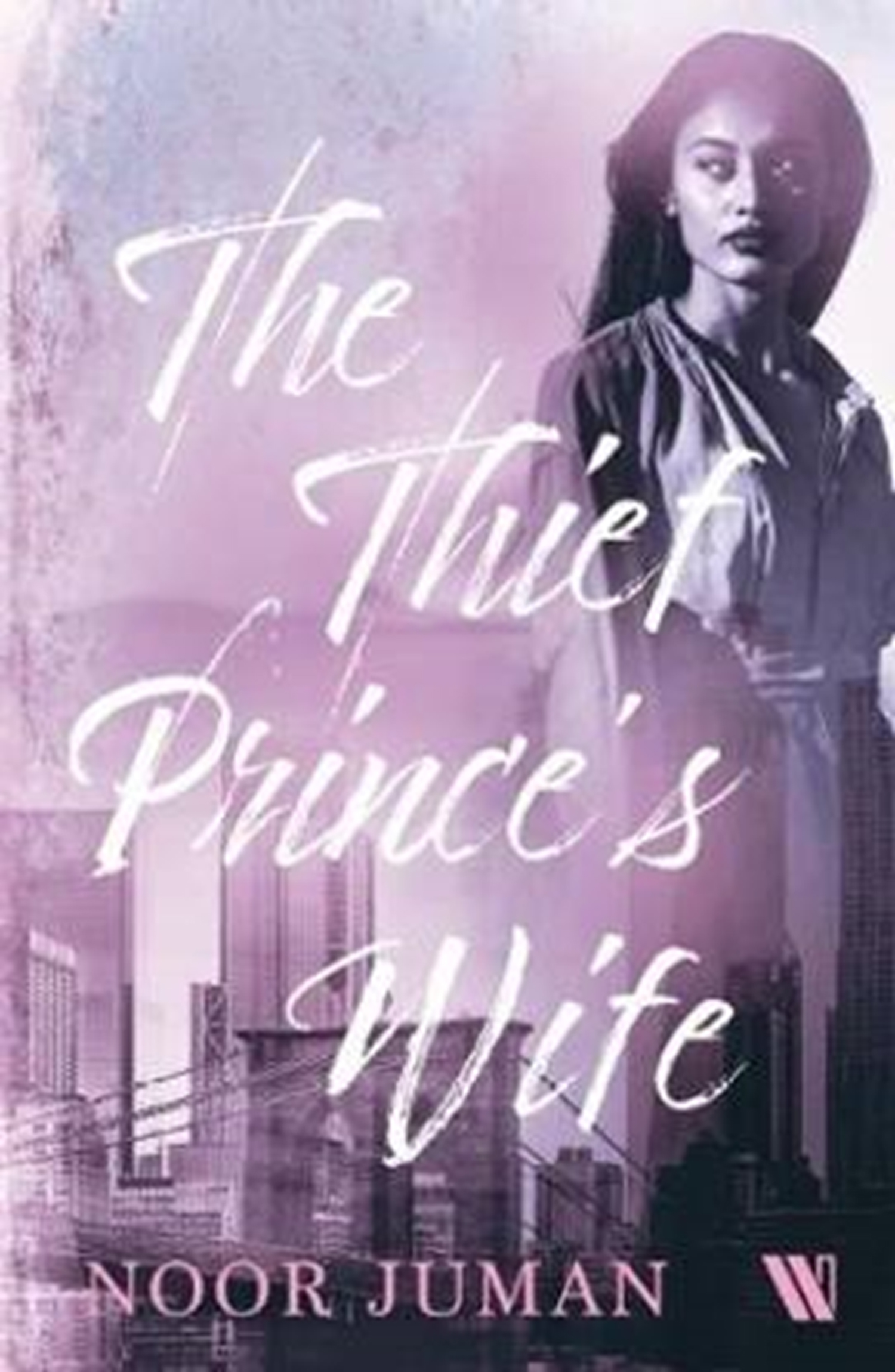
In an increasingly saturated field of contemporary romance, Noor Juman’s The Thief Prince’s Wife positions itself as a new addition to women’s erotic fiction. It is a work that draws on the conventions of the mafia romance while seeking to transcend them. Building upon A Summer Lesson in Romance (2021) and An Autumn Guest Checks In (2024), this third novel displays Juman’s growing narrative confidence and thematic ambition.
Noor Juman takes special care with the characters. Payal Lohani is undoubtedly the novel’s triumph. Juman crafts her with a realism rare in genre fiction. She is pragmatic, intelligent and painfully self aware. When faced with mortal danger, Payal’s decision to enter into an arranged marriage with a Ukrainian mafia prince is neither romantic fantasy nor feminist failure. It is survival enacted through compromise. This moral greyness lends the novel its emotional resonance. Her defiance of the damsel archetype is refreshing. But at times her stoicism edges into detachment.
Juman’s handling of Payal’s Indian-American identity remains one of the novel’s most nuanced achievements. The cultural markers like tense mother-daughter exchanges during the wedding preparations to the unspoken guilt of diasporic aspiration, are deftly rendered without exoticism. Still, these powerful fragments sometimes feel isolated rather than organically integrated into the broader mafia narrative. It feels like a missed opportunity to make cultural identity a fully dynamic force in the plot rather than an evocative backdrop.
Oleksiy Karmazin is the titular ‘thief prince’. He emerges as an intriguing counterpoint to Payal’s pragmatic resilience. Juman attempts to subvert the archetypal alpha male by presenting a man burdened by his lineage. He is the reluctant heir to a Ukrainian criminal empire who seeks legitimacy through community work and ethical entrepreneurship. The amnesia plotline is psychologically rich but it wavers between insight and contrivance. Juman’s prose captures the pathos of memory’s unreliability, yet the narrative occasionally relies too heavily on this device to sustain tension, diluting its emotional impact.
Where the novel shines is in Oleksiy’s fraught relationship with his childhood friend-turned-enemy Ruslan. Their history is marred by betrayal yet punctuated by unexpected loyalty. It adds genuine complexity, exploring how masculinity, loyalty and moral choice are entangled within systems of power. Unfortunately, the resolution of their conflict arrives a touch too neatly, sacrificing emotional ambiguity for closure.
Juman’s dual-perspective structure allows for compelling contrasts between Payal’s clear-eyed pragmatism against Oleksiy’s fractured recollection. The pacing is commendably restrained, and she avoids the breathless speed typical of romantic thrillers. Yet there are moments when introspection veers toward repetition. The novel’s middle section risks losing momentum as the plot pauses for reflection. Still, the climatic confrontation with antagonist Gavrill Kogan restores narrative intensity. It balances psychological stakes with physical peril.
Few contemporary romance writers integrate multicultural sensibilities as naturally as Juman. The novel’s dual cultural worlds in the form of the Indian-American domestic sphere and the Eastern European underworld, intersect with surprising harmony. The Thanksgiving dinner, where both families’ traditions intermingle uneasily, encapsulates the book’s larger project of searching for belonging amid dissonance. Yet, the novel’s cultural hybridity sometimes risks thematic overload and feels imposed. Juman’s admirable ambition to treat love, identity and redemption all at once occasionally blurs the novel’s emotional focus.
Beneath its romantic premise, The Thief Prince’s Wife engages with pressing social questions about agency and survival. Payal’s decision to ‘choose’ safety over freedom exposes the gendered calculus of self-preservation in a precarious world. Likewise, Oleksiy’s rehabilitation programmes for former criminals provide an ethical counterweight to the glamourized violence of the mafia setting. But here again, Juman’s moral clarity can verge on didacticism. The compassion for the marginalized sometimes feels more asserted than dramatized.
Juman’s prose carries a quiet elegance balancing accessibility with lyricism. Her dialogue rings true. It is brisk, witty, emotionally charged without being overwrought. The romantic and sensual scenes, while sensitively handled occasionally risk idealization. They are more polished than raw, more cinematic than lived-in. Still, the author’s restraint is preferable and the tenderness amidst the protagonists feel earned.
The Thief Prince’s Wife occupies a fascinating tension of both embracing and resisting the conventions of the mafia romance. Juman’s refusal to glamourize criminal power, her insistence on consequence and conscience lends the work a gravity rare in the genre. Yet, the novel’s moral and emotional architecture occasionally strains under its own aspirations. The ending gestures toward redemption with almost too much symmetry and feels unreal.
Despite its imperfections, The Thief Prince’s Wife is a bold, thoughtful contribution to contemporary romance. It especially centres a woman’s sexual agency and provides her with both voice and opinion. Juman’s ambition sometimes outpaces her control, but her sensitivity to character, culture and the wounded human heart makes this novel linger beyond its final page. It is both a love story and a study of moral endurance. Such a story reminds readers that even in a world of violence and deceit, tenderness can remain the most subversive act of all.
Parvin Sultana teaches Political Science at Pramathesh Barua College, Assam.