
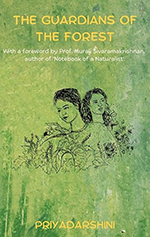
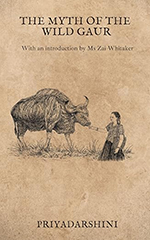
 From the development of tea estates and irresponsible tourism to encroachment of wildlife corridors and plastic pollution, a variety of reasons have contributed to environmental degradation and current human-animal conflict in different parts of India. Some communities have paid a greater price for this ‘development’ than others. Author and schoolteacher Priyadarshini Panchapakesan sets her recently published novels, The Guardians of the Forest and The Myth of the Wild Gaur, against this lamentable backdrop. However, her books aren’t motivated by current ecological concerns alone. They are also born out of a love for the natural wonders nestled in the Western Ghats, particularly the Nilgiri Hills—a sentiment that comes through most strongly in her latest book, Thulir’s Stroll. Together, the three books are a window to the fauna and flora of that region. Her writing focuses on environmental care, conservation, children’s agency and is sensitive to issues pertaining to gender inequality. Ashlin Sara Paul, a visual storyteller, is a steady presence in the three books, through their distinctive signature-style illustrations. Ashlin’s artwork appears minimalistic and detailed at the same time. I was reminded of the enduring beauty of monochrome sketches while admiring Ashlin’s drawings in the two novels.
The Guardians of the Forest, a middle-grade adventure novel with a touch of magic realism, is set in a fictional Blue Mountain. The story is focused on a bunch of eighth graders, including the anonymous narrator, enjoying their last day as middle-schoolers before they transition to high school. One can tell that they are a tight-knit group of friends and their school holds a special place in their lives for each of them. Adventure and thrill pick up momentum in the story when one of their friends, Megham, goes missing during one of their shenanigans. Soon after the group find Megham, they are confronted with a series of challenges that take them deeper into the forbidden wilderness adjoining their school campus. As they navigate their way out of the situation, they visit enchanting places, make new friends, and realize that they are not only bound to each other through friendship but a shared purpose as well. The themes of friendship and environmental consciousness are central to the plot.
In The Myth of the Wild Gaur, the protagonist, a young tribal girl named Theni, and her school-friends join hands to protect their environment and help restore the ‘golden web of balance’ in the Megham Mountains, when a local industry threatens the habitat of the wild gaurs living in the region. The most unique aspect of this short adventure novel is that it spotlights the Indian bison, a wild creature that’s as majestic as elephants and tigers but rarely spoken or written about in children’s fiction. It’s also listed as a vulnerable species on the IUCN Red List. Priyadarshini has also employed the ‘golden web of balance’ as a central ecological and cultural concept in her story, and granted the narrator’s voice certain values, ideals and an outlook towards the relationship between humans and Nature.
Besides the fast-paced and engaging plot, Priyadarshini’s thoughtful approach is also evident in her portrayal of Theni, a girl child from a local honey collector’s tribe. Not only are Theni and her community acknowledged as knowledge-bearers in regard to the ways of the forest, but they are also granted an equal footing with the town-dwellers in matters concerning the mountain they cohabit. However, I wish the author had developed Iniyan’s character (Theni’s sibling) a bit more. Another aspect of the story that’s handled creatively and carefully is the relationship between Theni, her school-friends and their teacher. In spite of differences in their sociocultural background, role and age, it’s difficult to pin down any power dynamic between any of the characters. Although it does not reflect the current reality, the portrayal of a group of curious-minded, eco-conscious, quick-thinking and supportive children provides an aspirational model for our young readers today. The book can be read by children aged 8 years and older.
Thulir’s Stroll, as the name suggests, is a wonder-filled walk through the wilderness of the Western Ghats. This slim collection of playful and rhythmic poems gives a glimpse of the landscape and describes some of the most spellbinding fauna and flora of the region, including species like the eucalyptus trees and the Malabar giant squirrel. I was overjoyed to discover verses about the rare neelakurinji flowers, which are in bloom in Munnar this year. It consists of 14 poems that can be read and recited by children aged 6 years and above. I particularly enjoyed the riddle-like ending of some of the poems. Ashlin’s illustrations, done in watercolour and ink, are vibrant and colourful to match the mood and tone of the verses.
Out of the three books, The Myth of the Wild Gaur stands out for its originality, realistic plot, respectful portrayal of the honey collector’s tribe, and the window it offers into the growing human-animal conflict in the context of the wild gaur. Overall, the artist-writer duo of Ashlin and Priyadarshini appear to be promising contributors to contemporary Indian children’s literature.