
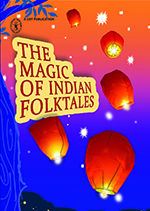
The Magic of Indian Folktales is the latest addition to the CBT’s Golden Set series of collected stories and folktales. This book is an anthology of twenty-four lesser-known tales drawn from the length and breadth of India, from Ladakh to Kerala and from Manipur to Gujarat. The stories move across different regions but are also set within very different cultural contexts and include a Santali myth and a tale from the Parsi community.
Each of the stories is narrated and illustrated by members of the Association of Writers and Illustrators for Children (AWIC), which provides a rich diversity of styles and even genres from the folktale tradition including the fable, stories of enchantment, romance, legend, trickster tales and myth. Many of the illustrations enhance the story and capture a distinctive sense of place and mood. Subir Roy, Ajanta Guhathakurta and Deepak Harichandan’s images are particularly striking though unfortunately in some stories details of a single picture are used multiple times.
A number of the stories highlight the close relationship between animals and humans. One story from Meghalaya, ‘The Day Sun Did Not Rise’, tells of how a poor, kind-hearted farmer shares his crop with a family of hungry sparrows and how later the birds work together to change the farmer’s fortunes and even succeed in blocking the rays of the rising sun to save him from the king’s wrath. Another story tells how scruples about pollution are overcome when a scruffy street dog prevents the theft of the ‘sacred bull’ that is traditionally the only animal honoured in the precincts of the Fire Temple!
While some stories reinforce stereotypes where women are portrayed as peevish, jealous and scheming (for example, Rewa in ‘Made for Each Other’), there are also examples of women who show initiative and courage. One such story is ‘Siaposh’. It describes how Jamal, the daughter of the Sultan, defies social norms and risks her life by coming to the court in disguise to defend her lover, Hiramal, the son of a rich Bania, when she learns that he has been sentenced to death as an intruder into the women’s quarters. The Sultan is persuaded by his daughter’s wisdom to allow the marriage to take place.
There are some delightful tales of wit and wisdom, tricksters and fools, gentleness and cleverness but there are also two or three dark stories that anyone–child or adult–might find troubling. ‘Pi’s Little Girl’ ends with the sacrifice of a young girl to save her village and appease her father. ‘The Bayberries are Ripe’ ends with the accidental murder of a daughter falsely accused of disobedience and her mother’s remorse.
There are certainly many folktales that tell of hardship, neglect, injustice and hunger but mostly they do imagine a time when suffering is over and innocence and goodness triumph. Within the folktale tradition the voluntary sacrifice of an individual for the greater good of the community in times of crisis is often celebrated but in selecting stories for young children some discernment is needed to determine what might be too stressful to process.
It would have been helpful to have acknowledged the sources of the folktales. The contents could have included the region of the story for easy reference; and a glossary of unfamiliar words would have made the text more accessible to readers across India.
The oral tradition of sharing folktales is waning in our contemporary society, but this book succeeds in making such stories accessible for the next generation. The blending of fantasy and reality in these magical tales invites children to explore their fears and anxieties but also enjoy encounters with unlikely characters such as an old man who, to the embarrassment of his family, cannot resist a wedding feast, or the whistling Yeti who insists on a young boy playing the flute through the night!