

Jugnu Prakashan, the publishing imprint of Ektara Trust, has created excellent work in children’s Hindi literature with a diverse set of new titles.
The strength of Bantu Batoley Ki Karamati Kursi lies in its simple, captivating premise. The story focuses on Bantu, a boy whose imagination transforms an ordinary chair into a miraculous vehicle. The book doesn’t rely on complex plot twists. Instead, it uses the chair as a device to explore the limitless nature of a child’s mind. The writing, by Rajesh Joshi, captures the way a child’s thoughts jump effortlessly from one grand adventure to the next. The narrative is engaging without being overly dramatic, focusing on the sheer joy of internal exploration. The illustrations by Bhargav Kulkarni are a major part of the book’s appeal. The style gives the visuals a sense of immediacy, almost mirroring a child’s own drawings. This choice works well, reinforcing the book’s central theme: that the greatest magic is found in daydreams. It’s an essential read for young readers, affirming the power of their own curiosity.
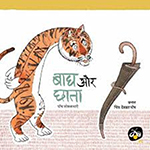
Bagh aur Chhata is a collection of five folktales that brings the humour and wisdom of rural Indian storytelling to the page. The compilation, put together by Prabhat, is direct and unpretentious— preserving the classic feel and moral clarity of traditional narratives. The stories generally focus on the theme of wit overcoming brute strength. The central figure of the tiger, especially in the title story, is portrayed with a sense of amusing bewilderment, struggling to understand human customs and objects, like the umbrella. This perspective makes the stories humorous and accessible. The pacing is effective, delivering satisfying, concise tales that are ideal for short reading sessions. The visuals by Debabrata Ghosh complement the writing perfectly. This volume is a valuable addition to a home library, offering a crucial link to traditional Indian storytelling.
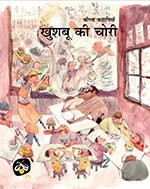 This lineup guarantees diverse and well-crafted stories. The collection offers a range of literary experiences, moving smoothly from quiet, thoughtful narratives to instances of playful mischief, like the story, ‘Aalasi Chor’ (The Lazy Thief). The key success of the book is the translation, which, according to the publisher’s note, retains the unique flavour and rhythm of the Bengali language in its Hindi form. This anthology is ideal for readers who enjoy variety and are ready to appreciate different narrative styles. It confirms that core childhood themes—such as loyalty, curiosity, and the thrill of a good secret—are universal. It is a well-curated collection that should be read to introduce children to a broader range of quality Indian storytelling.
This collection stands out for its high-quality production and varied subject matter, offering both original narratives and translated folktales that will appeal to a wide range of young readers.