
Economics

Paul Tucker
This book is about Geo-Economics (the intersection of economic and geo-political objectives) and self-confessedly examines issues from a Euro-centric, or even at times, from a narrower Anglo-American perspective. It examines what, from this perspective, is the central question which bedevils global policy today: ‘How can liberal democracies maintain their values even as they find themselves interdependent with powers whose traditions and attitudes stand at odds with their own?’

C. Rangarajan
This book is the story of India’s monetary policy and its economic dilemmas written by a true savant and patriot who had to deal with a whole lot of crises. Dr Chakravarty Rangarajan, until his retirement in 2014, at the age of 82, devoted his entire life to serving the country in one capacity or another. He has been Deputy Governor at the Reserve Bank of India, member of the now abolished Planning Commission, then RBI Governor, the Governor of erstwhile Andhra Pradesh, and Chairman of the Prime Minister’s Economic Advisory Council. He is currently the Chairman of the Madras School of Economics.

Rajesh Veeraraghavan
The history of welfare provision in post-Independent India has been replete with stories of failure and leakages. Almost every public welfare programme will throw up a side story on how only a fraction of the largesse has reached the intended beneficiaries. India is known for, what Jean Dreze calls, the ‘percentage system’ under which a fixed part of the money is siphoned off as bribe by a wide range of intermediaries across the system.
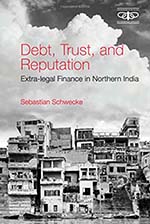
Sebastian Schwecke
The popular image of the village moneylender is often that of a rapacious scoundrel who impoverishes people by lending money at exorbitant rates, a monopolist who retards the development of free market forces, someone who needs to be eliminated in the name of progress. This line has been propagated both by the government (right from the colonial times through enactments such as the Usurious Loans Act) and the Reserve Bank of India.
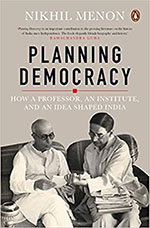
Nikhil Menon
Around the time India became independent, almost everybody who was anybody within the country agreed, or at least pretended to, that India’s economic development required a strong dose of centralized economic planning. Big Business wanted planning to provide import protection and Keynesian demand management, even some redistribution to ward off Communism.
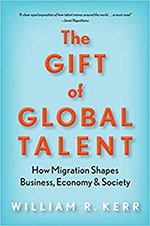
William R. Kerr
This racy, jargon-free yet well researched book, interspersed with interesting anecdotes and illuminating facts, demonstrates quite convincingly how foreign talent that found a welcoming environment in the US has transformed American society in general and its science and engineering in particular. It is the author’s contention that recent happenings in the US, particularly the hostility against immigrants, consequent to growing inequality within the US and across the globe.

Preet S. Aulakh and Philip F. Kelly
Aulakh and Kelly provide readers with a brilliant conceptual framework to situate the themes of interdependent capital and labour mobilities. The choice of Asia is dictated by the latter’s phenomenal economic growth in the last couple of decades, it being both the source and destination of significant new migration corridors, as well as its distinctive institutional arrangements created to regulate these mobilities. Besides mapping the standard forms of capital mobility, the authors emphasize the significant role that remittances play in economic development at both local and national levels in the countries of origin of Asian migrants.