Orient BlackSwan

This approach is further developed in Sachin Ketkar’s piece (‘World Literature and Literary Historiography of Pre-colonial South Asian Vernaculars: Towards a Methodological Model’) on Marathi literary historiography, which interrogates the colonial portrayal of decline during the Islamic period by revisiting the intercultural richness of figures like Namdeo.


Reviewed by: Kamalakar Bhat
By B. Mangalam

The introductory chapter traces the rise of Dalit consciousness in the Tamil literary world, exploring how Dalit writing moved away from a Marxist and Periyarist framework and carved its own space. The author marks the fall of the Soviet Union in 1989 and the centenary celebrations of Dr BR Ambedkar’s birth in 1990 as significant events that impacted the Tamil literary discourse.


Reviewed by: Aazhi Arasi A
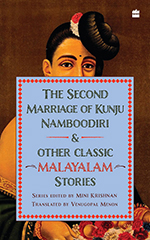
Series edited by Mini Krishnan. Translated from the original Malayalam by Venugopal Menon

The collection also contains short stories written by women writers, and here the overarching theme is the dynamics between men and women and the patriarchal attitudes which impact such interactions. The story ‘I Felt Ashamed’ by Kalyanikutty, reputed to be the first ever story written by a Malayali woman, deals with a woman’s aspiration for marrying the man she wants to, but caste restrictions prevent her and thus in her dream state, she sees the future she cannot have in real life. In ‘Witless Woman’ by M Saraswatibhai,


Reviewed by: Jubi C John
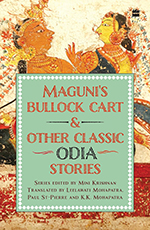
Series Edited by Mini Krishnan. Translated by Leelawati Mohapatra, Paul St-Pierre and K.K. Mohapatra

Consider for example Fakir Mohan Senapati’s ‘Rebati’, published in 1898. Hailed as a double triumph, ‘Rebati’ not only inaugurates the first modern Odia short story, but also subtly advances a reformist vision through a young girl’s desire for education. The story, however, unfolds as a quiet tragedy and not as a tale of triumph. Rebati’s aspiration to study is portrayed as the spark that sets in motion a catastrophic chain of events.


Reviewed by: S Deepika
By Vincent Delecroix. Translated from the original French by Helen Stevenson

Delecroix’s choice of the naval officer as the protagonist of this work is a refreshingly intelligent one as it simultaneously hooks the reader—who is now keen to understand the rationale behind the narrator’s actions which have been largely interpreted as monstrous—and also opens up other critical and reflexive possibilities. Contrary to our expectations, the narrator does not accede to responsibility for the migrant deaths or express guilt of any kind. She defends her attitude and actions on multiple grounds including the objective and logical disposition which her professional training as a naval officer demands, and other technical arguments such as that the migrants were in the English territorial waters and not that of the French when the boat capsized.


Reviewed by: Ann Susan Aleyas
Edited by Angelie Multani, Swati Pal, Nandini Saha, Albeena Shakil and Arjun Ghosh

Sub-theme IV has three chapters dedicated to ‘Translation and Transcreation’. In ‘An Equal Music’, CS Lakshmi offers a personal reflection on translation both as a creative process and as a relationship between the author and translator. Somdatta Mandal in ‘Translation, Interpretation, and Transcreation’ explores the various dimensions of translation in the Indian context and also raises important questions about the concept of the ‘ideal translator’.


Reviewed by: Anita Singh
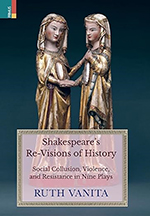
By Ruth Vanita

In the unstaunchable proliferation of interpretations and re-interpretations of Shakespeare’s plays and personae, it is not always possible to convince critics of the new, and while the book offers many provocative highlights, all may not be fully persuasive. For instance, while Vanita’s close attention to Celia and Rosalind’s bonding is suggestive (Shakespeare plays up ambiguities everywhere) but selective;


Reviewed by: Poonam Trivedi
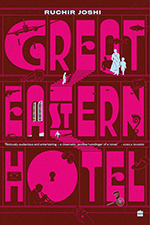
By Ruchir Joshi

The novel is driven by its varied and eclectic characters—from the idealistic Nirupama, bound in her Left ideology, to Imogen, the young English lady, and Kedar, the art lover, to Gopal—the street-smart pickpocket turned gangster. Their lives, as different as they are, intertwine with others at the hotel—Jeremy Lambert, working on war intelligence, the French chef Paul Bonnemaison, and others who frequent the titular hotel, including sex workers. This wide variety of characters ends up creating a dynamic interplay between personal ambitions, history and memory. Their lives are framed by a first-person narrator, the son of Nirupama,


Reviewed by: Madhumita Chakraborty
By Alina Gufran

Thematically, No Place to Call My Own is a palimpsest of pressing concerns—gender, religion, and the precariousness of artistic ambition in a mercurial world. Gufran situates Sophia’s personal travails against the backdrop of seismic socio-political upheavals: the #MeToo movement, the Citizenship Amendment Act protests, and the global pandemic. These events are not mere historical markers but active agents that exacerbate Sophia’s sense of unbelonging.


Reviewed by: Intaj Malek
By Siddharth Dhanvant Shanghvi

All three works share a concern with moral ambiguity. Their characters are not heroes or villains, but flawed individuals navigating a world where ethical clarity is a luxury. Whether it is the grieving artist in The Lost Flamingoes of Bombay, the conflicted investigators in Affairs of Deception, or the scheming insiders of Party to a Crime, the protagonists are all bound by the consequences of choices they can neither fully justify nor entirely regret.


Reviewed by: Sunat and Tamana Aijaz Khan
By Saharu Nusaiba Kannanari

The novel is narrated by seventeen characters, with the notable exception of Burhan, the voiceless victim, with several narrating multiple chapters; over thirty-three unnumbered ones, being opened and closed by Nabeesumma and Reyhana in that order. Nabeesumma, who is a character as important as Reyhana,


Reviewed by: Babu Rajan PP
By Vidya Krishnan

The prose in White Lilies is tender and fluid: one paragraph cites statistics on India’s annual road accidents, the next slips into ghazal-tinged reverie. The alternation lends the narrative form a delicate balance. It unfolds in untitled vignette, field notes, lyric shards, infused by black and white images in between. These visual gaps in the narrative let the reader breathe, inhale shocks and ponder over loss.


Reviewed by: Shazia Salam
Edited by Madhumita Chakraborty, Anuradha Ghosh and Mukesh Ranjan

The book is divided into eight sections with each section containing essays pertaining to a particular theme, by a galaxy of academics (35+) whose lives has been influenced by Professor Narang is some way or the other. The essays cover a wide range of subjects that have been close to Professor Narang’s heart including literature, culture, and translation.


Reviewed by: Saba Mahmood Bashir
By Meenakshi Bharat

Studies of Hindi cinema’s depiction of India-Pakistan conflicts often engage acts of selective remembering and forgetting, reinforcing the dominant ideological narratives that shape national identity, otherness, and historical memories through hegemonic cinematic frames and frameworks. What distinguishes Bharat’s book, however, is its resistance to reduce cinematic narratives to simplistic binaries of ‘us’ versus ‘them’. Instead, she frames the affective entanglements and shared cultural imaginary that persist despite political partition.


Reviewed by: Nishat Haider
By Yasser Usman

What have been the decisive influences on Dutt’s style of filmmaking? Although he had produced eight films and acted in sixteen, his main claim to critical and popular appreciation is his directorial talent exhibited in eight of them (Baazi, Jaal, Baaz, Aar-Paar, Mr & Mrs 55, Sailaab, Pyaasa, and Kaagaz Ke Phool) made during 1951-59. The book does not throw much light on this aspect. What role did Hollywood or the French masters play?


Reviewed by: Amitabha Bhattacharya
By Akhil Katyal

The poet delves into the facets of relationships and the many selves that surface at each turn on the journey of life. The book also serves as an ode to Delhi, where the architecture and roads transform into spaces Katyal makes his own. The city sheds its unfamiliarity, becoming a sounding board for the yearnings it evokes and the memories that quietly settle into places like these.


Reviewed by: Semeen Ali
Edited by Priya Sarukkai Chabria and Mrinalini Harchandrai

Applying reviewer privilege here which translates into the academic training that I inevitably bring to all my writing, and consequentially to bear upon this review as well, will not amount to an interpolation. What I craved for while imbibing this compilation was organizational finesse. Apart from the linguistic arrangement as per alphabetical order, none other exists.
While this may accord with the editor’s idea of not hampering through excessive signposting with readerly pleasure, classification as per timeframe would certainly have made the reading and imbibing process so much more of a cognitive experience. Adding to that was the gnawing absence of context (of course, the internet is always at hand) regarding the background of the authors.


Reviewed by: Simran Chadha
By Janaki Nair

Meanwhile, the fate of the secular perspective on women’s rights was sealed with Muslim leaders opposing a uniform code due to concerns about the survival of the Muslim community after a violent Partition. The reform of personal law for women thus, could not escape religious identity with the Muslims


Reviewed by: Rashmi Pant
By J.N. Sinha

Sinha marks this episode as the beginning of Sahi’s long-running guerrilla resistance, a struggle which sustained for over two decades, made possible in part by the enduring strength of a hereditary local magnate. The author traces Sahi’s lineage from Mayyur Bhutt, who is said to have lived either during the time of the Buddha or under the reign of Harshvardhana, down to ancestors (with a thousand-year gap) who were granted the titles of Raja, Maharaja Bahadur,


Reviewed by: Anas Zaman
By Kavitha Rao

The book traces the personal histories of the Chattopadhyays in Calcutta, their home city and in Hyderabad, the city of their education and profession; Chatto’s turning towards revolutionary activities under the influence of radical Indian nationalists at the India House, London3; his initiative to create the Berlin Indian Committee with the help of Indian pan-Islamists and to obtain the support of the Ameer of Afghanistan.


Reviewed by: Jawaid Alam
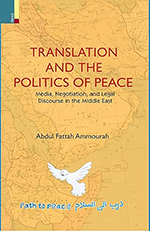
By Abdul Fattah Ammourah

Language, the author contends, does more than convey information. It reflects values, ideologies and social norms. Nuance is often lost in translation, and this becomes more problematic during periods of crisis when clarity is essential. In such moments, misinformation can spread rapidly and undermine communication. The saying, ‘truth is the first casualty of war’ serves as a stark reminder of the importance of precise translation in volatile situations.


Reviewed by: Abu Zafar
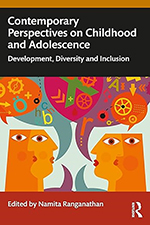
Edited by Namita Ranganathan

Each chapter explores different dimensions of childhood and adolescence, tracing concepts and theoretical insights historically. ‘Understanding Development and Diversity: Key Concepts and Ideas’ by Ranganathan summarizes the principles of development and key classic cognitive development theories, foregrounding their relevance in the contexts of education and schooling. ‘Childhood or Childhoods?’ by Ravneet Kaur brings out the findings of a twelve-family contemporary study to present the nature of childhoods in different income-group families in the Indian context, highlighting the diverse and ‘non-monolithic Indian childhood’.


Reviewed by: Kinnari Pandya
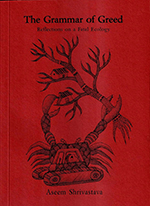
By Aseem Shrivastava

The modern subject is not just isolated, but curated; nudged toward desire and performance, rather than presence or reflection. The result is a public that appears connected and expressive, but is internally alienated, disoriented, and incapable of deep solidarity. This is the quiet violence of neoliberal modernity: the substitution of relationality with curated experience,


Reviewed by: Soumyajit Bhar
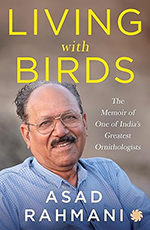
By Asad Rahmani

Navigating the various chapters, one gets a true sense of the wildlife crisis and the need for its management in a developing country. Rahmani is a scientist as well as a policy maker who has to deal with government agencies and explain to the powers that be the need for bringing in certain laws and banning some activities for broader welfare and conservation. But more often than not,


Reviewed by: Sohail Akbar
Edited by Kamlesh Mohan and Saurav Kumar Rai

Arabinda Samanta’s essay ‘Imagining an Epidemic: Literary Representations of Plague in Colonial Bengal’ studies Saratchandra Chattopadhyay’s novel, Srikanta, Rabindranath Tagore’s novel Chaturanga and Premangkur Atarthi’s Mahasthabir Jatak to make his arguments. One thing common in these novels is the deep distrust of the colonial state that they reveal. Second is the fact that the horrors of the plague bring out the worst and the best in people.


Reviewed by: Mohan Rao
By Sunetra Sen Narayan and Shalini Narayanan

The investigation of WhatsApp’s characteristics by the authors reveals its significance in dismantling traditional professional hierarchies of top-down communication flow. The call structures outside the purview of the official work space bring in an element of a casual approach in comparison to official emails. However, in stringent professional sectors like administrative services and the army,


Reviewed by: Twinkle Siwach and Mehak Dua