
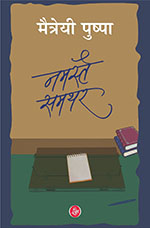
Maitreyi Pushpa
2021
This Hindi novel is a recent composition of the renowned Hindi novelist Maitreyi Pushpa who is widely known as the author of Idamnamama (that is, Idam Na Mama or ‘It is not mine’) and Chaak (Potter’s Wheel), and many other novels. She also made news with her subversive autobiographical narratives and is known as a feminist novelist who has based her writings on women’s issues.
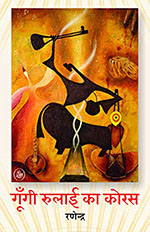
Ranendra
Ranendra’s is an important—and bold—signature in contemporary Hindi literature. As a novelist, who also happens to be a poet, he enters the landscape of his creation with nuanced, almost poignant, sensitivity to map the existential, ideological and, by extension, ontological contours within contemporary spaces. While in his earlier novels—Global Gaon ke Devta (2006) and Gayab Hota Desh (2014)—he had etched the excruciating reality of the tribals.
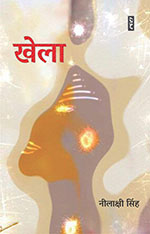
Neelakshi Singh
2021
To say that Neelakshi Singh’s novel Khela or play is about the play of power-that-be in this civilization, controlling the price of crude oil and the collaterals of religious fundamentalism and terrorism would be less than half-truth. It is mostly about the journey of a middle-class girl, Vara Kulkarni, peeping through the jute-sacks of partition of a joint family to look at the estranged family’s life to her looking into a world riddled by conspiracies, violence and displacement.
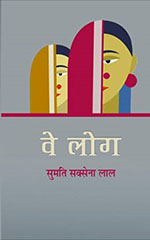
Sumati Saxena Lal
2021
Sumati Saxena Lal writes in the preface to her novel Ve Log (2021):My village is located in my imagination. I have tried to make it appear credible to my readers. In this age and fragile health condition, it was impossible to experience village life first-hand and then write about it—the pandemic acted as a source of terror too.This terror is not simply about falling prey to the pandemic, but also inscribes the crises of the literary imagination during the said period.
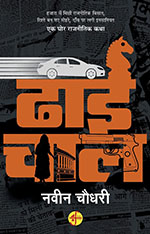
Naveen Chaudhury
2021
Dhaai Chal is the second novel by the writer of Janta Store, and resumes the tale told before with an action-filled look at the political manoeuvres that look deep inside a world riddled with allegations of rape, rape before marriage, kidnap, elopement, intent to push a minor into flesh trade, micro-managed bid at self-immolation, and murder, only to be further complicated by caste, religion, power play, and media, to indulge in corruption, betrayal, and bloody revenge.
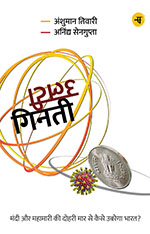
Anshuman Tiwari
The global crisis witnessed during the COVID pandemic was terrifying in many ways. Not a single bullet was fired but more people died than in the two World Wars. There were no earthquakes or floods but crores lost their livelihood and were forced to migrate. At the time, many believed that the world would never be the same place again but with COVID-19 virus losing its virulence with each passing day.
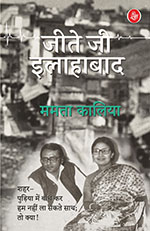
Mamta Kalia
2021
Jeete Jee Allahabad is a written documentary of the literary world of Allahabad composed with wit and nostalgia of heart-wrenching intensity. They are the hallmark of Mamta’s oeuvre. Allahabad has a super special place in her psyche. The documentation starts with the Chayavadi era of Nirala, Mahadevi Verma and Sumitra Nandan Pant and ends with the post Nai Kahani era ruled by Gyanranjan, Ravindra Kalia and Kashinath Singh
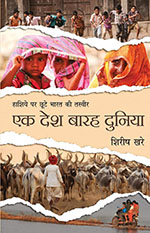
Shirish Khare
Shirish Khare is a well-known journalist whose reports have received recognition, and his book Ek Desh Barah Dunia is a reportage based on his personal travels. In this book, he aims to paint an accurate and fascinating picture of marginalized people, tribals, and poor communities. There are many distinctions and variations between rural and urban India which are discussed in this book
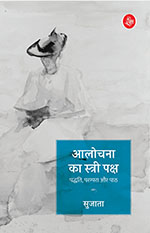
Sujata
Sujata is a poet, novelist, critic and an academic. She writes in Hindi. Her earlier works—Antim Maun ke Beech (poetry collection, 2016), Ek Bataa Do (novel, 2019), Stree Nirmiti (criticism, 2019)—showcase a passionate mix of the experienced and the envisioned, the felt and the thought. If her creative writings chart the contours of feminist spaces imaginatively, her critical writings enter the seams of conventional canonicity to reconfigure this space ideologically, empirically and academically.
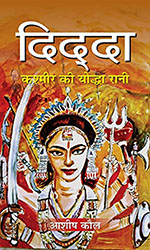
Aashish Kaul
This is the story which has been buried in the rubble of history of twelve hundred years ago of a warrior Queen, who was brave and beautiful and intelligent. She was a legendary queen of Kashmir, who ruled from 950 to 1003 AD. She became a legend for her valour. Her father was the ruler of Lohar, a hill principality near Kashmir. Didda was physically handicapped due to polio and because of that her parents neglected her and she was jeered at by other members in the palace.
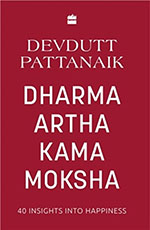
Devdutt Pattanaik
The sudden rise in the number of Self-Help books, Ted talks, motivational write ups is a sign of human malaise that needs sorting out. A distinct connect between consumerism, capitalism and crisis of communication has shown a demand for value-oriented knowledge systems that teach you to be good and do good unto others. Devdutt Pattanaik is one such motivational writer and speaker whose books sell, and ideas instill wisdom.
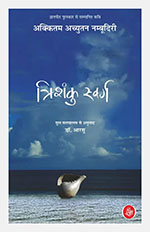
Akkitham Achuthan Namboothiri
Akkitham Achuthan Namboothiri’s poems emanate from a peculiar and intense turmoil of the soul. Their existence is a manifestation of the expansive human consciousness traversing the realms of ideation and affect. f=”kadq LoxZ, the Hindi translation of Namboothiri’s select Malayalam poems by Dr. Arasu, brings together fifty-one poetic compositions, each of which is a journey, a myth, a fragment, a thought, a reminder of the untranslatable, and an epitome of the inevitable dilemmas
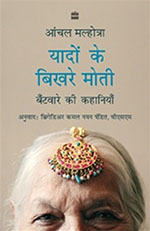
Aanchal Malhotra
Material object has gained currency as a subject of renewed attention in the second half of the twentieth century in academic fields like anthropology, history, cultural studies, sociology, archaeology and art history among others. The title under review can be seen as part of this new trend in scholarship that seeks to tease out the complex and dynamic roles object/thing plays in the personal, socio-economic, cultural, political, and civilizational life of humans.
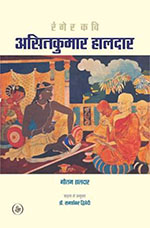
Gautam Haldar
Hindi readers have long been unaware of the cultural and literary genius of other Indian languages. The same perhaps could be said with equal authority about other Indian language readers. The only process that can make it possible is translation. However, translation in India has largely been limited to a one-way traffic, from various Indian languages to English. Translation between and among Indian languages has been patchy and irregular.

Rachna Bisht Rawat
This book provides a glimpse into the persona of the Indian Armed Forces. Rachna Bisht, the wife of an army officer, has put together seventeen stories which discuss an unusual episodic journey of several characters, as the title suggests. It depicts bonds that are less frequently spoken about, such as grief at the untimely death of a subordinate, the cross-border friendship that began in Siachen or a dog’s rescue mission during a deadly snowstorm, etc.
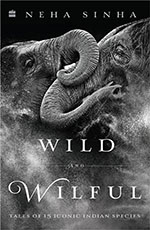
Neha Sinha
This beautiful book grips one at the cover, and the title. Having just returned from a workshop that engaged with ecology—cultural, political, and conventionally ecological—and exploring its location in spaces of interiority, the blurb by Sumana Roy, author of the lyrically meditative How I Became a Tree, resonated: ‘Neha Sinha’s language is one of addiction, of enthusiasm, of trust—for life and in the living. This book reminds us that only a vocabulary of intimacy with the living will save us, and them.’
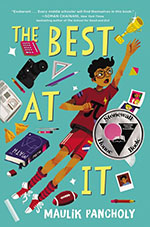
By Maulik Pancholy
2021
Our teenage years are truly formative. They shape us in ways we do not realize and the experiences of that time stick with us for the rest of our lives. The Best at It brings one such beautiful teenage tale to light. As it is, growing up is not easy; every single child constantly feels excluded and conscious of her own self. And if a child visibly looks different from classmates and friends, another layer of consciousness gets added.
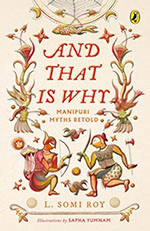
L. Somi Roy.
Manipur means the Land of Gems. Indeed, an appropriate name, when you talk of a State with moderate climate, blue-green hills crisscrossed by streams, joining to form river basins rich in alluvial soil. Rivers draining into the fresh water Loktak Lake. A lake with many floating weed islands, some of which house people, the only floating school in the world, the only floating national park in the world! Teeming with flora and fauna.
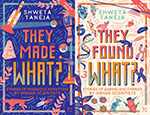
Shweta Taneja
Here’s a welcome addition to popular-science writing for children in India. Shweta Taneja, the author, is passionate about familiarizing children with scientific ideas and has been doing so effectively. She has won several awards for her books and this one has been much appreciated too.The title on the cover says: They Found What? Stories of Daring Discoveries by Indian Scientists.
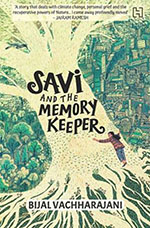
Bijal Vachharajani
Savi is fortunate to have her story authored by Bijal Vachharajani. While the former is a teenager chronologically, mentally and emotionally the writer is an amazing teenager at heart. She has breathed life into an ever bubbling, often bold, endearingly charming and off and on quirky Savi.The storyline branches into three zones, one of personal grief, another of saving trees that bond astonishingly with one another, the third of school life, friends and foes