
Apoorvanand
The Idea of a UnThe Idea of a University, edited by Apoorvanand, is a spirited defence of ‘cosmopolitan’, liberal university education and reassertion of the meaning and relevance of academic freedom in today’s troubling times. Notably, this book draws on the same title as John Henry Newman’s 1852 volume, which was a collection of his lectures on the idea of an ideal university, (that was published in the backdrop of the first Irish Catholic University, the University of Dublin, being set up).
R.K.Tiwari
There have been few academic studies that factor in election manifestos political parties frame, put out and follow once the elections are over in India. Large or small, parties frame a list of their intent, should they come to power, or share power (significant in the era of coalition politics), to be shaped as public policies to attract voters to give them their mandate.
Revati Laaul
2018
Gripping, agonizing, stomach churning. The Anatomy of Hate is all of these, while also holding up a subtle, insightful and illuminating mirror to modern-day Indian society.
Revati Laul devoted more than ten years speaking to scores of persons about the sectarian violence that engulfed Gujarat in 2002; prising out excruciating recollections, trying to make sense of the motivations of the participants and delving into what drives mob behaviour.
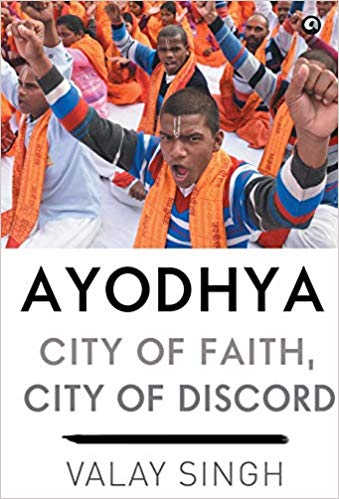
Valay Singh/Sameena Dalwai
Writings that revisit the knocking down of the Babri Masjid in Ayodhya and underscore India’s struggle to remain a secular republic are grim reminders of just how easily and repeatedly political divisiveness triumphs over constitutional values. That, to stamp out the injurious wrath of hateful agendas–-a disposition that has since seemed to have enveloped our collective psyche––it is critical to, with equal rigour, disfavour all beliefs that appeal to individuals and communities to frustrate diversity…
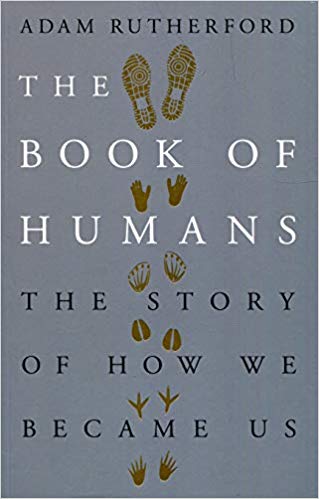
Adam Rutherford
Adam Rutherford, that prolific public intellectual of the life sciences, has now put his words where his heart has quite evidently been for a long time. In this, his 2018 book, The Book of Humans: The Story of How We Became Us (and it is perhaps aptly renamed in the 2019 USA version—Humanimal: How Homo Sapiens Became Nature’s Most Paradoxical Creature—A New Evolutionary History), Rutherford widens his remit from explaining the technical arguments and resultant ideas of evolution…
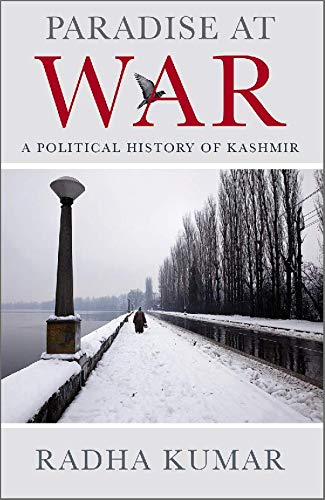
Radha Kumar
Radha Kumar’s Paradise At War is yet another addition to the large corpus of scholarship on politics As is par for the course with much of this literature, starting from a discussion on Kashmiri self-understanding of being unique and exceptional, stemming out of the region’s geographical peripherality and its relatively unbroken tradition, history, and mythology, the book moves to the post-1947 events that led to the rise of insurgency in Kashmir in the late 1980s.
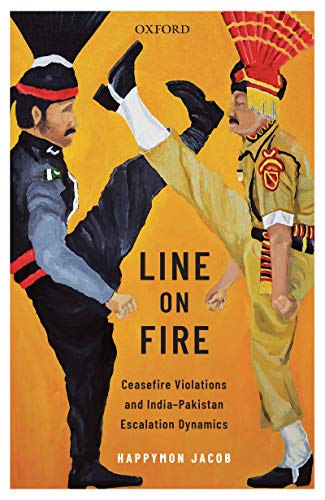
Happymon Jacob
Happymon Jacob is a rising-star, academic and journalist, a columnist with The Hindu and anchor of a web series on strategic affairs at The Wire, besides teaching at a leading international relations faculty at the Jawaharlal Nehru University. His book justifies the preceding sentence. He has taken pains in using escalation theory to interpret the data gathered on ceasefire violations since 2003 to reveal that India and the surrounding regions are sitting on a seemingly dormant, if not active, volcano.
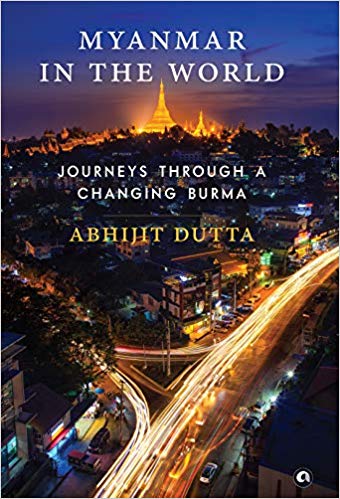
Abhijit Dutta
Not many Indian writers have written books on Myanmar in recent times touching on its political history. Amitav Ghosh’s classic Glass Palace, even if in a fictional setting, brought to us graphic pictures of colonial Burma. Sudha Shah in her book The King in Exile gave a poignant account of the troubles undergone by King Thibaw, the last King of Burma, who was deposed and exiled by the British to Ratnagiri in India, with his Queen and descendants.
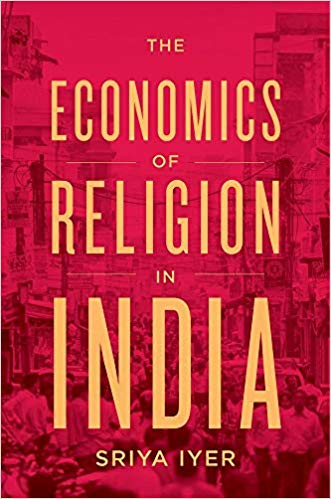
Sriya Iyer
Religion in India with all its complications has been a subject of study for social scientists from a range of disciplines including sociology, history and politics. Iyer underlines an economic approach to the study of religion which ‘involves the application of economic theory and statistical methods to evaluate the role of religion in society at both micro and macro levels’(p. 11).
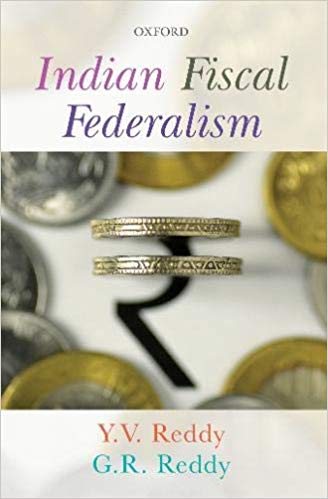
Y.V. Reddy and G.R. Reddy
It is rare to find books which are easy to read even though they are dealing with relatively non-readable topics such as Fiscal management, Institutional development and Policy formulation. This book, while it pulls no punches on these usually convoluted issues, is both lucidly simple and yet packed with information, which is presented in a very readable manner.
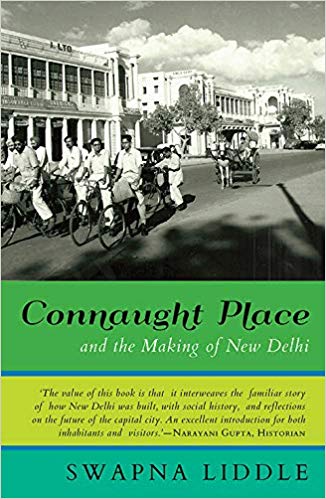
Swapna Liddle
The much-defeated citadel of Delhi was little more than desolation. The Persian ruler Nadir Shah had bled the city. And what remained had been plundered by the rapacious hordes led by the Afghan, Ahmad Shah Durrani. Delhi could barely sustain a population much less afford the patronage of the arts. By the end of the eighteenth century Delhi was no more.
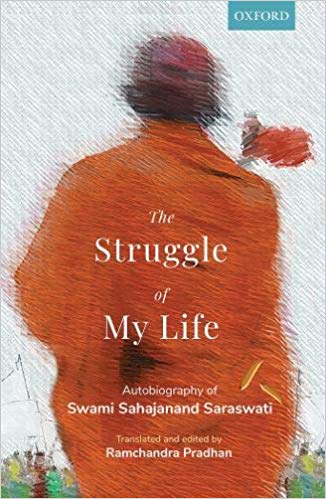
Ramchandra Pradhan
Of the seven books written by Swami Sahajanand Saraswati in the Hazaribagh Central Jail between 19 April 1940 and 7 March 1942, Mera Jeevan Sangharsh or The Struggle of My Life is the most important in terms of style, substance and historical significance. First in the series, he ‘started working on it the moment he reached the Hazaribagh jail’ (p. 355), the manuscript was completed within eight months in December 1940 and covers his recounting…
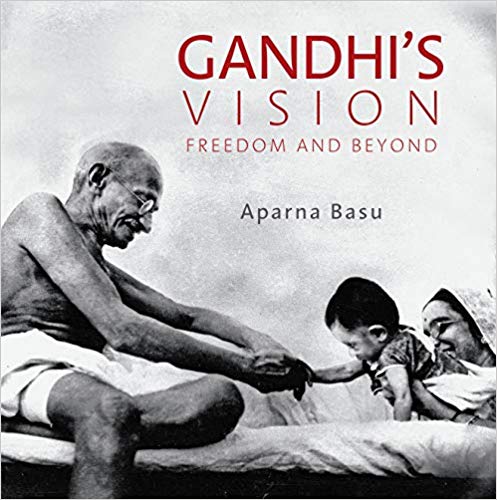
Aparna Basu
Photojournalists, press photographers, amateurs, followers and family members visually documented Mohandas Karamchand Gandhi’s life in great detail. Many of these photographs are housed in specialized archives, the National Gandhi Museum being a leading repository. Based on several photographs displayed at an exhibition organized by the National Gandhi Museum and the India International Centre and curated primarily by Aparna Basu, Gandhi’s Vision
Sibesh Chandra Bhattacharya
Few texts in history have generated as much debate around philosophical and ethical issues as did the ancient Indian text named the Mahabharata. Its huge size, encyclopaedic nature, and openness in discourse has turned the Mahabharata into an archive of diverse thoughts and viewpoints prevalent in early India, alongside the extensive period of the composition of the text, ranging over a millennium if not more.
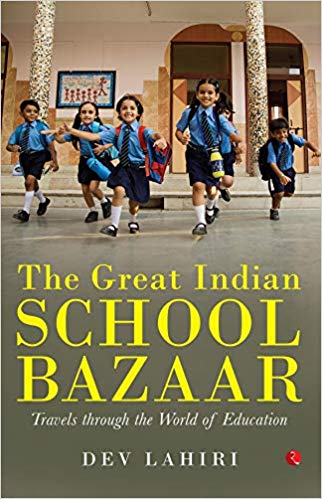
Dev Lahiri
Dev Lahiri’s book is a slim, easy read on the complex and multi-layered topic of school education in India. The author draws from his vast experience of over four decades as a teacher, principal and educator, both in India and abroad. The book is replete with real, and often funny anecdotes from his stint in various schools and his sense of humour and ‘joie de vivre’ come across in many parts of the book.
Satya Sundar Sethy
The notion of professional ethics in the realm of higher education emerges because it is being recognized that professors and instructors are the one (and in many countries the only) group of teachers who are not required to be trained, educated, certified and licensed to teach. Therefore, they clearly have no structured opportunity to learn about the professional ethics of their roles and responsibilities as teachers.

Sushila Kaushik
According to a study con¬ducted by a United Nations Commission (1980), women form one-third of the total world labour force and do most of the unpaid work. But they receive only ten per cent of the world income and own less than one per cent of the world property.
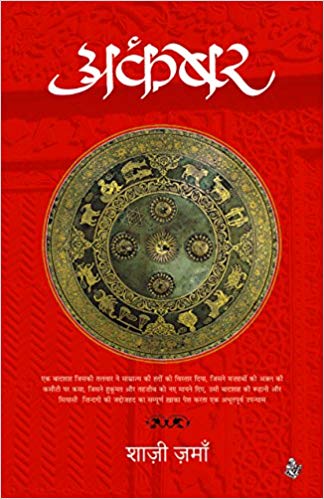
Shazi Zaman
2016
The book under review here is not just one of the many narratives available on the life of Mughal Emperor Akbar. Instead Shazi Zaman’s Akbar deftly treads on the line that demarcates historical facts and fiction. It is difficult to categorize the novel as a work of Historical Fiction, because the narrative encapsulates a vivid account of the reign of Akbar by careful amalgamation of historical facts with fanciful legends (also recorded in history).
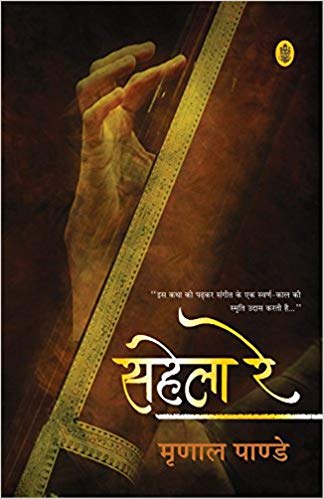
Mrinal Pande
2017
There is a relentless quest to retrieve and recreate the past by dwelling on authentic tales from history and society. The recovery of lost tradition and the emphasis on a need for female tradition in literature has been widely acknowledged. Sahela Re by Mrinal Pande is a novel that traces the tradition of women’s voices in classical Indian music.