
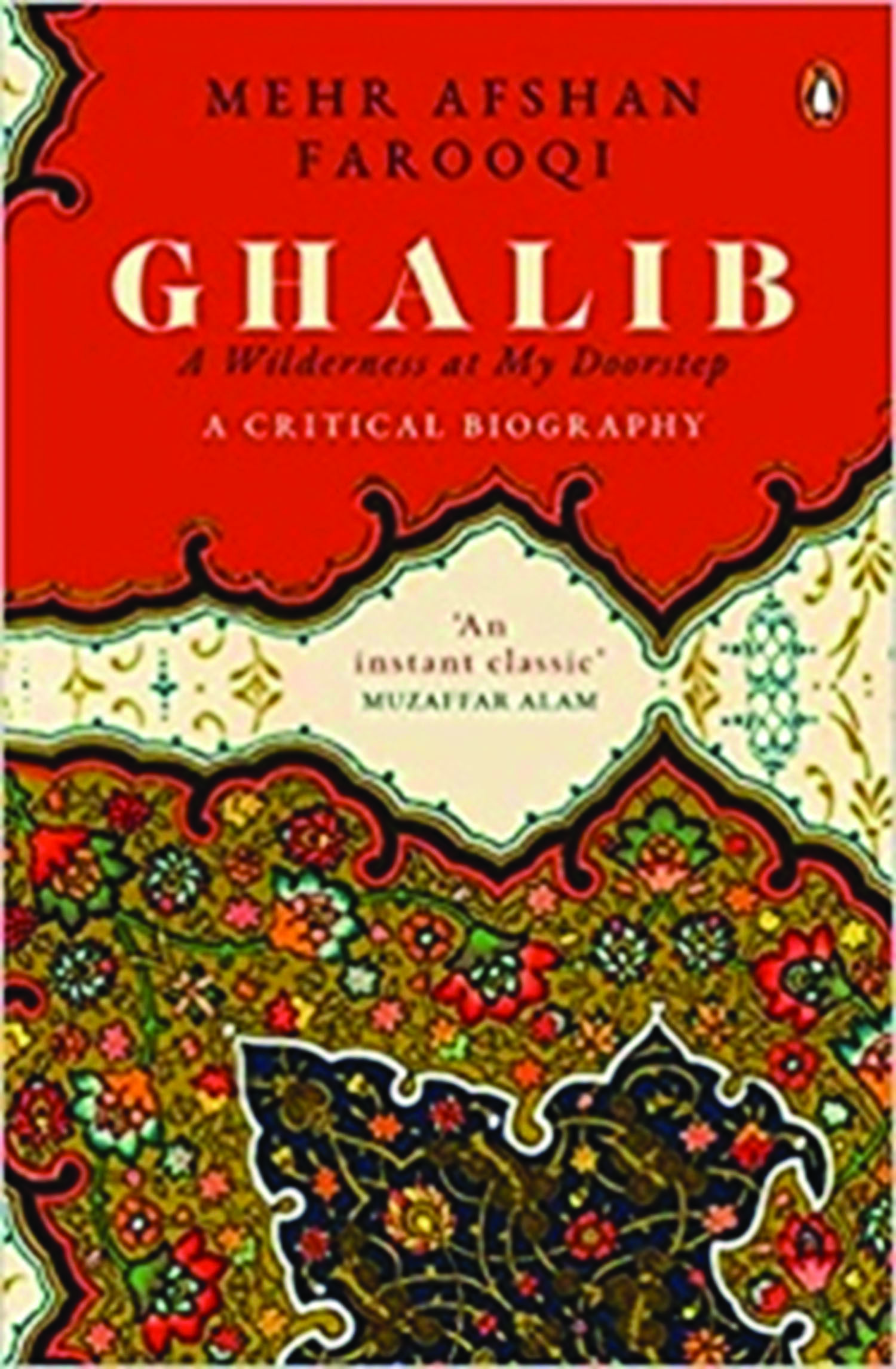
Mehr Afshan Farooqi
Literary biographies, as a genre, has remained popular in the West, covering a wide spectrum, from the purely documentary and factual to the wildly and extravagantly imaginative. The latest in the genre that created a buzz when it came out was The Dawn Watch: Joseph Conrad in a Global World by Maya Jasanoff that had as its subject Joseph Conrad, the great writer of Polish origin and stylist of the English novel.
Pia David
The book traces the journey of Jia, an immigrant of Pashtun origin living in a place that is not named. The story unravels following a family’s life story partly in England and partly in Pakistan. The predicament that is being faced by the protagonist leads her to journey on the path of reluctant self-discovery. A father murdered, a feudal lord dead, Jia Khan trained as a Barrister is compelled to face what was to be done as she belongs to a clan which has connections with a crime syndicate, a family business…
Nivedita Sen
The portrayal of children who resent getting stifled within the regimen of home and school is a recurring feature of children’s fiction in Bangla, although they are by and large unable to break free of it. In the sub-genre of domestic fantasy within it, the child tries to find an outlet from the regimen of home and school for a while, but the most radical implications of her/his breaking out of the system get contained within the predominantly middle-class worldview of the narratives. Detective stories deviate from this sub-genre umbrella inasmuch that the child gets caught or initiates an adventure in which s/he is able to realize her/his fantasy of solving a mystery.
Abir Mukherjee
2016
In 2016, the publishers Harvill Secker/Daily Telegraph announced a crime-writing competition and the winner was Abir Mukherjee, a young chartered accountant based in London, whose five-thousand-word entry has ultimately resulted in the debut novel A Rising Man. The historical whodunit spans a few days in April 1919, beginning in a diary-like form on the 9th of April to be exact. Set in Raj-era Calcutta of the 1920s decade, it features English cop Captain Sam Wyndham, and his Indian sidekick, Sergeant Surendranath Banerjee or Surrender-not, as his British superiors were wont to call him…
Pinaki Roy
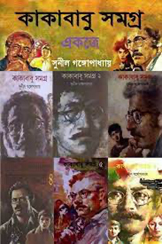
In the history of Bengali detective fiction—arguably one of the more often accessed sub-genres of popular literature in India itself—one could find the example of a gradual dwindling from something quite serious into something that is read mostly by children and young adults. When one speaks about such post-modern Bengali fictional detectives and adventurers like Satyajit Ray’s ‘Feluda (Prodosh Mitra)’, Samaresh Basu’s ‘Goyenda Gogol’, Sunil Gangopadhyay’s ‘Kakababu (Raja Roy Choudhury)’, Sayed Mustafa Siraj’s ‘Colonel Niladri Sarkar’, Suchitra Bhattacharyya’s ‘Mitin Mashi’, Shasthipada Chattopadhyay’s ‘Pandav Goyenda’ and ‘Goyenda Tatar’, Samaresh Majumdar’s ‘Arjun’, or Shirshendu Mukhopadhyay’s ‘Goyenda Baradacharan’, it reveals a list which consists of writings meant for the young adults…
Narayan Radhakrishnan
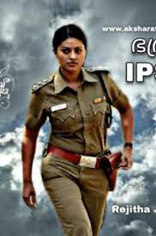
Half–a–corona. Long before ‘corona’ created mayhem across the world, Keralites were used to this phrase… ‘half-a-corona’. This phrase conjured images of a dashing sleuth—with a lighted half-a-corona cigar…the image of Detective Marksin created by ace novelist Kottayam Pushpanath. From the late sixties until his death in 2018, Pushpanath was the last word in popular detective fiction in Malayalam.Detective novels in Malayalam or Apasarpaka Kathakal as they are known are heavily indebted to Sherlock Holmes. The early creations were influenced by Holmes’s novels. Kunthalatha—the first novel in Malayalam (Appu Nedungadi—1887), though had elements of Apasarpaka in it, however, is not considered as a pure detective novel. The first attempts in this realm of writing were by OM Cheriyan and Appan Thamburan. OM Cherian’s Mister Kailey started as a series in a magazine in October 1899…
Tarquin Hall
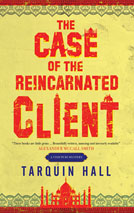
In 1911, when the British colonial government announced its decision to move the imperial capital of British India to Delhi, many received the news as a restoration of the city’s place in its natural, political location. After all, the name of ‘Dilli’ had been synonymous with the rise and fall of successive dynasties in the subcontinent. The city seemed to exert a divine will of its own; punishing menacingly, as it did with Muhammad bin Tughlaq, those who did not submit to its ordained status. In its more recent history, the city came to manifest the imperial or modernist grandeur of the likes of Shah Jahan, Herbert Baker and Edwin Lutyens and even, Jawaharlal Nehru. It is for these reasons that the conglomerate of settlements that goes by the name of Delhi, often seems to invoke a narrative of extraordinary greatness especially in its past…
Vaseem Khan
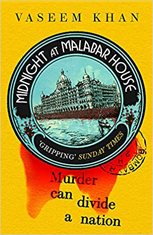
With Midnight at Malabar House, British crime writer Vaseem Khan started a new detective series. This series is set in the early years of Independence and the protagonist is India’s first female IPS, Persis Wadia. The first book in the series is set in 1949. The backdrop is Indian Independence and the painful Partition.The city of Bombay is in the midst of New Year’s Celebration, Persis Wadia is at her office at Malabar House. Sometime after midnight, Persis gets a call. One Madan Lal asks her to come over to the house of British diplomat James Herriot. On reaching there, Wadia discovers that the British diplomat has been murdered. One peculiar fact about the murder scene was the diplomat’s missing trousers. And all this happened while there was a party taking place at the house. Wadia also detected the possibility of theft…
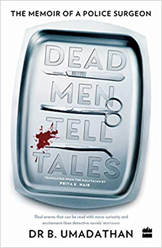
Dr B. Umadathan. Translated from the Malaylam by Priya K Nair
Umadathan’s work Oru Police Surgeonnte Ormakurippukal has been a best seller in its original Malayalam since it was first published in 2010. Umadathan wore many hats during his life. He served as a Professor of forensic medicine, he was a police surgeon, a medico-legal adviser to Kerala Police, the Principal of Government Medical College, Thiruvananthapuram, and Director of Medical Studies, Government of Kerala, just to name a few. He is widely credited with introducing the word ‘forensic’ in Malayalam, and using his medico-investigative skills to give a direction and conclusion to cases that would otherwise have seen a different conclusion…
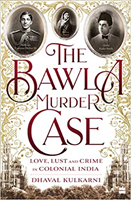
Dhaval Kulkarni
12 January 1925That Monday evening, Abdul Kader Bawla, a businessman and corporator in the Bombay Municipal Corporation, decided to go on a drive with his mistress Mumtaz Begum.In the morning, Bawla was at his office at Chach Mohalla near Masjid Bunder. Later he met with some acquaintances and relatives before visiting the civic body’s office to attend a meeting and then proceeded to his sea-facing residence near Chowpatty…
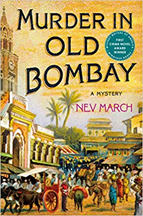
Nev March
Nev March’s debut fiction opens in late nineteenth century Bombay, one of the most important and unforgettable cities dotting the British empire. With the Sepoy Mutiny a thing of the past and the law-and-order situation at its efficient best, thanks to India being directly governed by the Crown now, Bombay seems to be in a state of quiet and calm. However, that is not quite the case as March’s 400 pages long crime novel tells us. Bombay, as we shall see, continues (as was the case during the time of the East India Company) to be home to (unsolved) crimes and violence, undetected conspiracies, mistaken and unsound prosecutions, wrongful confinements, faulty justice, erroneous (media) and damaging reportage, and many more of such typical urban maladies…
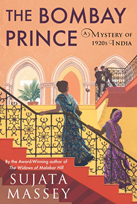
Sujata Massey
‘Humata, Hukhta, Hvarshta’, Mithan said. ‘It means good thoughts, good words, and good deeds. We think about this every day; it is a tenet of our faith.’The Bombay Prince is set in 1921 with Edward VIII, Prince of Wales and the future ruler of India coming to India, which sets off riots in Bombay as many protest against his visit. An eighteen-year-old Parsi female student Freny Cuttingmaster falls to her death from the second floor of her college. Her death occurs around the time the Prince is passing by the college. The events that it sets off and the people that get embroiled in solving/getting investigated related to the cause of death set off questions that are no longer limited to solving a murder mystery…

Anuradha Kumar
The Hottest Summer in Years keeps the reader engrossed in different threads of its plot demanding her undivided attention. The many dots in the story which the reader has to connect, together with the rich historical canvas of the novel, make this novel a kind of whodunit and a historical thriller. The dots appear both in the present and the past of Hans Gerder’s life, his first-person point of view further surrounding them with an air of mystery and suspense. In his present a complex chain of events and situations converge on an afternoon of high tea in an Indian royal household in May 1960. They include the mysterious murder of a man whom he had threatened in a fit of anger, the prying eyes of an investigating officer, curious disappearance of his diary containing confidential information, and his intimate relationship with a mother-daughter duo in the royal household…
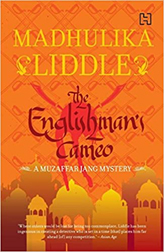
Madhulika Liddle
The Muzaffar Jang mysteries consisting of four books—3 novels and 10 stories—take place in a span of a year. Beginning in 1656, the year Jama Masjid is completed, and if we are to go by Madhulika Liddle’s narrative, the area surrounding the Masjid is already teeming with sellers, buyers, eaters, listeners, dastangos, and general busybodies. Trade flourishes: there is couture from Kashmir and traders from Surat, comestibles from Kabul, jewellery, and art from across the seas; the markets of Chandni Chowk, bazar-e musaqaf and others are as busy as today…
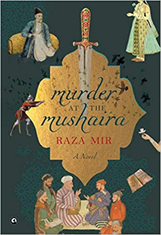
Raza Mir
Early 2021 saw the Aleph Book Company bring out a dark hued hardcover with a centrally placed Mughal motif in sandy gold. Raza Mir’s novel Murder at the Mushaira felt pleasantly hefty on store shelves.The nicely produced volume looked rich and piqued curiosity. The excerpt at the back promised to be the forerunner of a seriously good read.The author is a teacher of Management at an American University and has been a champion of Urdu. He has in the past, through his digests, regurgitated bits of poetry from Ghalib to the Progressive Writers Association. His target reader being both the yet to be initiated, as well as those of us who have over generations, forgotten the magnificence of the Urdu opus…
Nishat Zaidi
Detective fiction, like spy thrillers and crime fiction, is a genre concerned with crime, and has had its origins in the rationalist impulse of modernity. Like all crime fiction, it was used to mediate and contain the anxieties brought about by the experience of modernity. Even as serendipity as a concept might have had its origins in the Indo-Persian literary work of Khusro, Hasht Bahisht (‘The Three Princes of Serendip’) and may have travelled to Europe via translations, the detective genre was imported readymade into India. Urdu literary sensibilities, however, much like their response to modernity, resisted the European version and inflected it with their own tradition of ajaib and gharaib with emphasis on thrillers…
Peter Friedlander
I vividly remember when I was learning Hindi in Varanasi in the early 1980s being fascinated by the bookstall outside the Lalita cinema in Bhelapura. In the evenings as the light poured from the foyer windows crowds would gather around the bookstall outside the cinema.
People would browse through what was new and what was on offer, and after hovering for a while pounce on a publication and snatch it up for a quite low price mostly, and then take it away to devour later. There were all sorts of publications on offer, mostly in Hindi, Bangla, and English but also in many other regional Indian languages. The biggest and glossiest publications were probably the broadsheet newspapers that hung like banners in my memory from the opened shutters of the stall…
By Laura Brueck
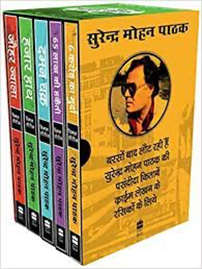
Scroll through the posts on any of a number of Facebook pages dedicated to the Hindi pulp author Surender Mohan Pathak (Surender Mohan Pathak, Surender Mohan Pathak The Legend, Surender Mohan Pathak’s Aficionados, etc.) and you will find an endless stream of photos of men: men reading, men drinking, men posing in front of their bookshelves stuffed with Pathak’s novels and memoirs, men sharing their favourite lines from a novel, men debating about who is the best ‘hero’, men in matching ‘SMP’ T-shirts linking arms at a fan ‘meet’, men smiling and laughing and crowding around Pathak at a book launch or a literary festival…
Ajay Chowdhury
2021
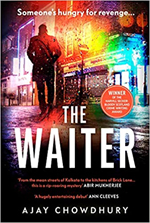
The continuing appeal of a detective novel comes from our need to know. We read detective fiction to affirm our ways of knowing as valid, rather than subjecting them to a thorough critique. A typical detective story has a crime usually seen as a symptom of evil-personhood rather than social injustice, and the detective is shown as a master of deductive reasoning. The truth in these novels may be elusive, but always worth knowing. The hero’s goal is to right the wrongs by uncovering facts. And we as readers, vicariously, live the uncovering through the eyes and mind of the detective…
A. A. Dhand
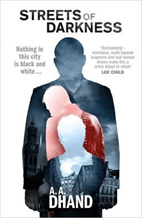
DI Harry Virdee: 6’3. Rugby juggernaut. Religious renegade. Disgraced cop. Hothead.Streets of Darkness, the first novel of the DI Virdee series, introduces us to this sociopathic maverick.In Bradford, routinely compared to Gotham City for its crime and filth, the ethnic divide runs deep. With the statistic tilting towards the ‘outsiders’, the city is a synecdoche to contemporary society, where only the trigger-happy thug lives to see a new day. Bradford has always been a cesspool of ethnic clashes—a tinderbox ready to erupt at the slightest nudge. With far too many incidents in the past for comfort, the palpable hatred is everywhere, seeping into the psyche of the residents and making them suspicious and edgy. Drugs are rampant, syndicates run open empires, survival is a luxury…