
POLITICS-India-Constitution

he book asserts that anticolonial struggle also focused on the socio-economic aspects of national life, which give prominence to the idea of centralization. Gandhi’s alternative developmentalism had a fatal weakness because he hoped to create a decentralized polity on the basis of an anticolonial movement which had a strong centralizing feature. The author also presents a critique of other aspects of postcolonial economic changes:

By Rohit De and Ornit Shani
Yet, the book’s celebration of participatory constitutionalism occasionally risks romanticizing the democratic impulse. While De and Shani acknowledge that many public demands were unheeded, their treatment of exclusion remains understated. The book might have further examined the gendered hierarchies within these publics, or the tensions between caste solidarity and universal equality.
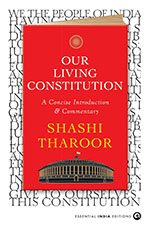
By Shashi Tharoor
The next set of chapters move seamlessly from pure constitutional discourse to institutions of civil society, judiciary and federalism in India. Chapter four reiterates the liberal individualism that led to the preference for rule of law, a centralized state, rejection of localism, rejection of separate electorates and a preference for individual representation than the group.