
Novel-In Translation-Tamil
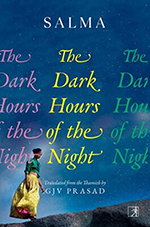
By Salma. Translated from the original Tamil by GJV Prasad
2025
Her mother, Zohra, is gentle, obedient, and conservative. Her steadfast devotion to her husband’s authority renders her incapable of crossing the boundaries drawn by patriarchy. But all women in Rabia’s familial network do not belong to the same category; some openly rebel, while others find subtler ways of defiance. Through Rabia’s gaze and the polyphony of voices that surround her, Salma constructs a vivid theatre of women, living and dying; of women who, though confined to their cloistered lives, are dreamers and rebels, defiant survivors and victims, tragic sufferers and filled with laughter and gaiety, all at the same time.

By K Bharathi. Translated from the original Tamil by T. Sriraman
Married off before she has attained puberty, the fact (among other things) that she slowly grows taller than her husband, is pretty much a cause for complaint for her mother-in-law. Her fondness and talent for music is not allowed to flourish, and the veena she brought from her maternal home upon marriage is relegated to the forgotten confines of a store-room, never to see daylight or come alive under her deft fingers ever again.
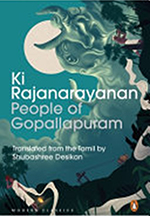
By Ki Rajanarayanan. Translated from the original Tamil by Shubashree Desikan
For me, one of the lesser problems in this translation is the tendency to annotate, to present words in the original language and give an endnote or explaining them in parenthesis inline. And I think it is perfectly alright if employed judiciously. But in the book, most often, such words from Tamil are not only explained within parenthesis in-line in the text, but also explained away in endnotes, and when it is done repeatedly on almost every page, unlike in the original, it impedes the narrative, acting as roadblocks as it were.

By Perumal Murugan. Translated from the original Tamil by V. Geetha
While translating them gives the reader unfamiliar with Tamil a sense of this, it also removes the linguistic tilt to the names. The first impression I had when reading this was a parallel to nicknames used by slave traders and white masters for their African American slaves. Using the original names would have retained the original flavour. There are many challenges a translator would face in translating Perumal Murugan, or indeed any author whose story lives in the soils of rural India and whose characters speak in unfamiliar dialects. This would involve a lot of interpreting, sometimes reading silences
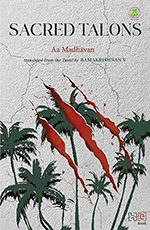
By Aa Madhavan. Translated from the original Tamil by Ramakrishnan V
2025
The novel focuses on the relationship of a few families and their landlord, the protagonist of the novel, Guruswamy—an archetype of landlords across the country in the forties. With no particular skill or ability, he is granted respect and enjoys a standing in society conferred by birth as it were. Most of the action in the novel happens in and around a small coconut grove of some two acres owned by him.
By Madhaviah Translated from the original Tamil by Meenakshi Tyagarajan Katha
2002
The novel opens in a small village in Tirunelveli district in south Tamil Nadu. Our protagonist Narayanan is a shy and sensitive young boy and his honest testimony in the court of law leads to his father Sitapathi Iyer’s imprisonment. Despite his father’s misdeeds and notoriety pushing his family into penury, his virtuous mother’s upbringing and erudite teacher Rajagopala Iyer’s guidance infuse right values in him.