Two, Heart Lamp represents a high moment in the history of Indian Literatures in English Translation (ILET, a term coined by GN Devy), paving the way for many more translations from Indian literatures. This literary honour has the power to draw more talent to the field of ILET, which is far from being a culturally valued and remunerative line of work. So, with the Booker, what had always remained a cottage industry has now gone global, becoming a corporate enterprise.
Archives
August 2025 . VOLUME 49, NUMBER 82024
What stand apart from these Ramayana- and Mahabharata-oriented versions are the Jain and Buddhist oriented Tamil epics, Silappadikaram and Manimekalai. The other distinct feature about these two works is that they portray ordinary folk as the main characters, and the ebb and flow of their fortunes. The tragedy of Silappadikaram is overwhelming in its pathos and fearsomeness.
It is no difficult task for the historian to trace the arc of colonial violence across the landscapes of the global South. The afterlives of Empire leave their marks everywhere: etched into soil, folded into language and embedded in law. The exploitation of clove trees in the Moluccas, the Indian state’s bureaucratic indifference to the Andaman and Nicobar Islands in the wake of natural disaster,
Through her study of several issues of Sarita, Mandhwani emphasizes that it was, by nature, contemporaneous, modernizing and multi-dimensional; collapsed distinctions between genders and also public and domestic spaces; commented on social and familial structures; eschewed linguistic chauvinism and a homogenized nationalistic sensibility; questioned mythic beliefs and even reconfigured practices of gendered reading by means of a range of literary, non-fictional and critical pieces and advisories.
Sweet Malida is a deeply moving and sensory offering. It gives readers an intimate look into the world of the Bene Israel, a small but ancient community in India. Zilka Joseph pays tribute to her growing up as a Jew in Mumbai and Kolkata, two very multicultural cities. Her childhood memories are intertwined with the…
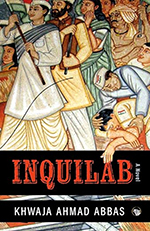
Inquilab’s narrative privileges the political movement led by Gandhi and the Congress, and evades the vast complexities of social and political turmoil that India experienced. One only has to look at similar other contemporary literary work—particularly the writings by Munshi Premchand such as Seva Sadan, Rangbhoomi,
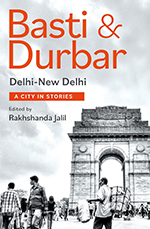
Today, that same Majnu Ka Tila, now ‘MKT’ to Gen Z, features in Ankush Saikia’s ‘Chang Town’, where Northeastern students navigate racism, longing, and identity in the capital’s northern campuses. The two stories could not be more different in form or sentiment, yet together they trace a micro-history of urban transformation: a city seen through the same coordinates, altered by time. There are many such resonances across the book. Jalil’s Introduction wisely sets them up. Stories in Urdu, Hindi, Punjabi, English and Malayalam reflect Delhi’s many avatars—as imperial capital, partition city, bureaucratic core, queer subculture, site of migration and protest.
2025
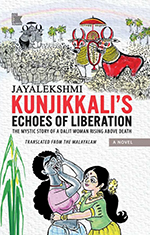
The novel portrays a sustainable regional enclave in rural Kerala, replete with natural abundance and community unity fostered by a generous, liberal and accommodating patriarch. The old-world setting contextualizes the narrative in the real world, marking the ‘dawn of the Renaissance in Travancore’
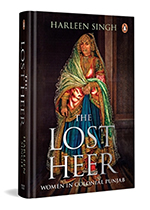
As the writer documents the various forces that are shaking the social foundations of Punjab and transforming them beyond recognition, he foregrounds the role of women as they participate enthusiastically and creatively, be it in the various reform movements like the Brahmo Samaj and Arya Samaj, or in the world of print media where they become increasingly vocal.
The domestic world Bulbul inhabits is also one of fractured solidarities. The household is run by the formidable matriarch, Dadu, and supported by Kona Das, a Dalit Hindu woman. Their presence gestures towards the overlapping hierarchies of gender, caste and religion within a supposedly homogenous Muslim household.
Though Rumi’s work is steeped in Islamic philosophy, such is the quality of his verses that they can appeal to a person holding very different religious beliefs. The recurrent Sufi idea of the merging of souls or spirits in his poetry can be interpreted in various ways. A devout Hindu can read the idea of permanence of soul and the notion of rebirth in the following verse:
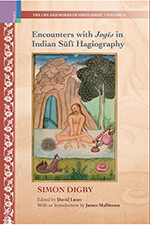
Hagiography or accounts of saints canonized by a sectarian tradition is a special kind of memory making which is much drawn upon by historians but rarely studied as a genre of history writing. Hagiographies get written when a religious sect assumes social presence and seeks popular patronage, and finds it useful to doctor the memories of saints held high in popular esteem.
The first question is, how does one contend with the past? Poems such as ‘Ooh Calcutta!’, ‘Rumination’, and ‘Bengal Presidency’ remind us critically of the evolution of the Imperial Capital from its origin in a cluster of villages—a place chosen as a trading point by Job Charnock of the East India Company in 1690. While several conjectures flourish about ‘Kalikata’ being anglicized as ‘Calcutta’, there is no certitude about this baptism. In the poet’s voice, ‘Let me be free/ To write, to rewrite History/ No. That/ cannot be’
The collection of poems is divided thematically into seven sections. Haunting, elegiac and distinctly feminist in tone, the first four sections explore the pain and trauma of oppression, loss and grief. Her poems are at once evocative, wrenching, and thought provoking. In the opening poem ‘Duhkha’, she contrasts the inability of modern medicine to heal assaults on the soul, a task that can be accomplished only by turning to nature:
Hacker writes more about her fears of stepping out—one of the less-described perspectives during the pandemic is about those who were above a certain age and considered more susceptible to the virus, and as a result, were suddenly homebound. Her poems explore this:
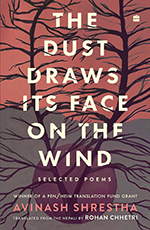
Shrestha’s lament on state sponsored violence intermingles with his inability to fall in love. In ‘Of Some Unidentified Village, Nayantara Barua’, violence is described sans metaphors: ‘The cities are being torched, the villages blazing’ (p. 71); ‘Homes uprooted, villages are torn’ (p. 73); ‘…they find Malati’s raped body left for dead’ (p. 73). The absence of metaphors evokes another sense of loss—the loss of poetry amidst brutality.
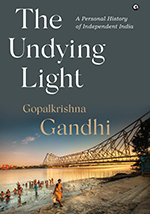
Gopal Gandhi’s account of all these changes is embedded throughout in a larger story of India and, to some extent, India’s interface with the world. His candour and even-handed descriptions remain but one misses in these somewhat dense with politics and geopolitics chapters, the eye for the quirks and curiosities of history which had made the earlier parts of this book such a compelling read.
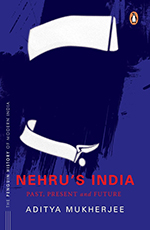
The legacy of Nehru in the economic sphere is being reversed and the poor are no longer on the radar. The rapid privatization of national assets, withdrawal of the state from education and health to benefit the rapacious private sector, the rapid informalization of labour with no trade union rights are pointers to the backslide. In the Global Hunger Index, India is ranked 111 out of 125 countries.
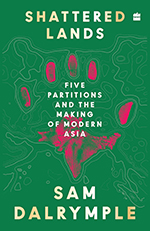
While most of the issues concerning partitions of India, Pakistan and Bangladesh have been examined extensively, it is the detailed study of the lesser-known separations of Burma and the Arabian Peninsula that makes the present work important. In a lengthy portion, the author outlines not only the socio-political conditions which led to the separation of Burma from the Indian Empire, but also highlights fascinating details pertaining to the inauguration of the new state. The challenges that emerged in the wake of this partition have been examined thoroughly in the present book
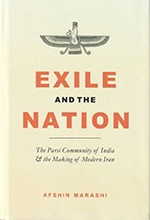
The consolidation of British power in western India in the eighteenth century and the emergence of Bombay as the preeminent urban centre of the west coast created favourable conditions for the growth of Parsi enterprise towards the end of the century. A section of Parsis, largely based in Bombay, achieved great success in commerce, industry, finance and shipping, thereby also contributing to the development of the city.
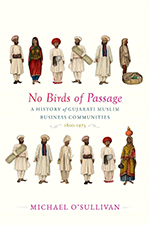
How different these Jamaats were from other entities such as the Parsi panchayat or Armenian network structured around law and custom is not very clear. The question is raised once in a while but never really fleshed out. The comparison seems warranted and even inevitable given that Parsis and Armenians also represented the ‘middle power’ that Sullivan talks about in explaining the extraordinary rise and success of these merchant communities. By middle power Sullivan means the co-functioning of the Sarkar and the Jamaat of which the communities were prime beneficiaries.
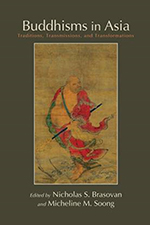
Geoff Ashton in his essay talks about the philosophical foundation of Asian Buddhism. There are many Buddhisms and in turn many Buddhist philosophies in Asia. He studies the Thai way of responding to Buddhist philosophical discourse. Ashton studies the philosophy of DT Suzuki and the philosophy of Buddhadasa for understanding socially engaged Buddhist agency.
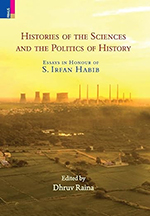
Expert bodies constituted on the cusp of Independence and its aftermath imagined a blueprint for India’s development and considered ways of harnessing human knowledge to the mission. It was recognized that the choices were not pre-determined, that there were indeed ample spaces for tapping into ‘non-mainstream pathways to S&T’.
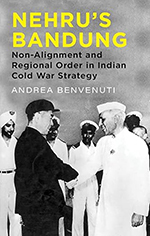
Like Nehru, Mao also came to power in 1949 convinced that he needed 15-20 years of peace in Asia to develop his own country. Mao told Stalin precisely that at their first meeting in Moscow in December 1949, and Stalin promised that he should be able to ensure that. But Nehru and Mao clearly differed on how peace was to be secured. Within six months of that conversation with Stalin, Mao and Kim Il Sung were seeking Stalin’s approval to reunify Korea by force of arms, and came close to doing so.
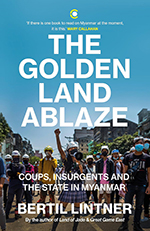
One was the reference to the strong defense mounted by Suu Kyi as the country’s then leader in December 2019 at the International Court of Justice at The Hague disputing the charge of genocide against Myanmar’s armed forces for their actions against the Rohingyas. The author notes that the people of Myanmar were full of praise for her performance, even as much of the outside world was outraged
In contrast, Jagdish Bhagwati was one of the leading global defenders of trade liberalization. While Sen worried about social justice, Bhagwati argued that open markets and rapid growth would lift all boats. His influential Planning for Industrialisation co-authored in 1970 with Padma Desai, critiqued the inefficiencies of India’s import substitution strategy and the ‘Licence Permit Raj’ that was stifling rather than promoting industrial growth. He has regularly and publicly clashed with Sen over the proper sequencing of reforms.
Part V of the book on ‘Media’ has five articles where the authors refer to themselves as ‘journalists’ rather than media persons; each piece contains fascinating details of their encounter with people and events in all walks of life, including challenges that had to be resolved internally within the organization and those encountered in the course of one’s work journey.
The book has been written taking this as the backdrop. The authors pose some questions in light of the need for understanding the initiatives taken and the strategies used in a nuanced and detailed manner. Some of these questions pertain to: what were the principles and assumptions that guided them? How was social change mediated? What contextual strategies were devised for the continuity and safety of girls’ education? And how was gender identity reconstructed?
2025
Kapur might carp at my introduction for, as she tells Saloni Mathur, ‘I describe myself quite simply as critic and curator. “Art historian” is not a correct academic description for me, and I am not comfortable with the self-attribution of a theorist. Although the term “critic” seems now reduced to the blogger or the newspaper columnist, in the early 1960s, when I was a graduate student in New York, it was starkly different.
Photography happened rather late in Rai’s life. He had started as a qualified engineer and had dabbled in a couple of government jobs, but his restless mind was in search of something else. He constantly recalls his mother’s saying in Punjabi which means, ‘If we do not work dedicatedly, we will not achieve the heights of heaven.’ Encouragement by his elder brother S Paul who was an established photojournalist and the urge to do something different brought about the change Raghu Rai was looking for.