
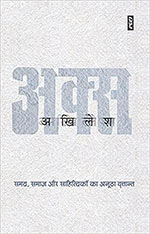
By Akhilesh
Aks by Akhilesh is a welcome addition to the vivid tradition of memoirs in Hindi literature, which boasts of works like Ghalib Chuti Sharab by Ravindra Kalia, Yaad Ho Ki Na Yaad Ho by Kashinath Singh, and Smriti-lekha by Agyeya. It is presented to the readers as an account of time, society, and literati. The memoir spreads over eleven chapters, and while remembrance is the thread that binds them together, it is the author’s take on the function and nature of memory in the chapters that truly reverberates throughout the book. He situates his memories against the contemporary paradigms of fast-paced urban lives, social media, and power politics, which, according to him, obstruct networks of memory creation by encouraging narcissism and self-focus.
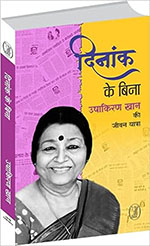
By Ushakiran Khan
e autobiographies produced in the Indian literary tradition are of different kinds and do not follow the strict definition provided by the West. Mahatma Gandhi’s The Story of My Experiments with Truth or Rassundari Devi’s Amar Jiban are not only written in different styles but also experimented with different aspects of a person’s life. Similarly, Ushakiran Khan’s life journey does not technically fall into the clear category of autobiography.
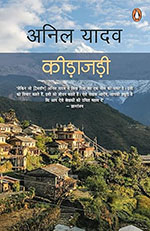
By Anil Yadav
2022
Yadav’s Keedajadi takes you for a casual stroll in the Abode of Gods (Devbhoomi) meanwhile befriending the people inhabiting the land and creates a gripping narrative around the Himalayan aphrodisiac ‘keedajadi’.
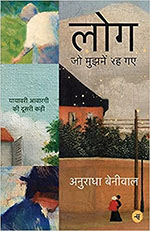
By Anuradha Beniwal
Anuradha Beniwal describes her trip to Latvia, a place that is remarkably under-explored, in the first chapter of the book. This is probably a unique choice for a travel writer. She is able to see and record aspects of daily life that are off-limits to tourists by living with a local family.
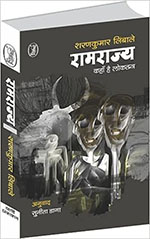
By Sharankumar Limbale. Translated from the original Marathi to Hindi by Sunita Daga
Never short of cultural-mythical euphemisms, invocations of cultural analogies in Indian politics come almost instinctually to the nativists seeking to draw an indigenous parallel to the mode of modern political governance. It serves as veritable testimony of the profound cultural complex with western political ideologies among the political conservatives, but it also reflects their deep anxiety and political will to negotiate with western political ideologies in autochthonous cultural terms.
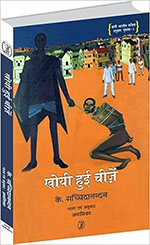
By K. Satchidanandan. Poems selected and translated from the English translation (original Malayalam) into Hindi by Anamika
2022
Anamika doesn’t like the liberties Tagore took with his own translations, but she doesn’t also mention if Satchidanandan took any. [ihc-hide-content ihc_mb_type="block" ihc_mb_who="unreg" ihc_mb_template="1" ]
Yet Jhumpa Lahiri found much to correct and improve in the original when she was translating her novel from Italian into English (as Whereabouts
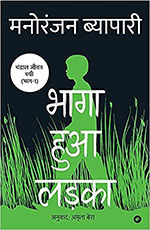
By Manoranjan Byapari. Translated from the original Bengali into Hindi by Amrita Bera
2022
With enough on this abundant earth to feed everyone for many lifetimes and when one is well fed, it is easy to forget that hunger drives the world even today. The novel opens with a chapter titled ‘Bhat’(cooked rice) in which Garib Das, father of the titular bhaga hua ladka, the runaway boy who will be born later that night, walks a long distance, hungry and weary, to ask the local well-to-do Brahmin Shivnath Bhattacharya for some rice.
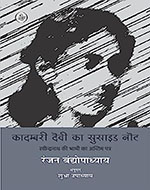
By Ranjan Bandyopadhyay. Translated from the original Bengali into Hindi by Shubhra Upadhyay
On April 19, 1884, at the age of 25, Kadambari Devi consumed a heavy dose of opium to end her life. After ingesting the drug, Kadambari fought for her life for two days before she passed away on April 21, 1884. This incident took place four months after the marriage of twenty-three year old Rabindranath in the illustrious Thakur house of Bengal.
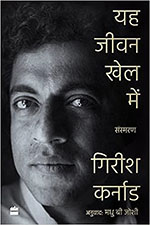
By Girish Karnad.Translated from the original Marathi into English by Srinath Perur. Translated from English into Hindi by Madhu B Joshi
I remember Girish Karnad as a character in the film Swami and that made a lasting impression on a college-going boy. The calmness and poise displayed by Karnad gave me an idea about the kind of persona he was. After Swami, I continued waiting for the movies he acted in.
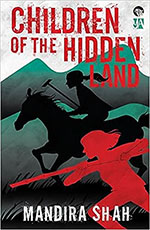
By Mandira Shah
As someone who grew up devouring adventure and mystery stories with passionate interest, I began reading this one expecting a similar roller-coaster ride that ended with the catharsis of a happy ending, suitably punctuated with nail-biting tension and thrills.
By Vishwas KS, VR Ferose, Sriram Jagannathan
A genre that is neither new to children nor young adults, visual narrative be it in comic books or full length illustrated novels feeds on generations that have grown on Amar Chitra Kathas whose reach is evident in the vast number of languages it is published in. Even in its full-length avatar with a focused lens on themes beyond the voracious need for mythology, graphic novels no longer qualify as nascent and upcoming as mainstream publishers ensure that supply meets the readers’ growing demand.
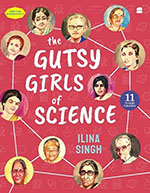
By Ilina Singh. Foreword by Eric Falt
The book is replete with wonderful anecdotes like the one of meteorologist Anna Mani from Peermade, Kerala, who at the age of eight, declined the gift of diamond earrings and requested a copy of the Encyclopedia Britannica instead!
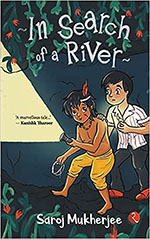
By Saroj Mukherjee.Translated from the original Hindi by Tilottama Tharoor. Illustrations by Trisha Dasgupta and Sreemoyee Ray
Rivers are an integral part of our lives. Their importance is immeasurable. No wonder our ancestors worshipped them. Moreover, rivers are intriguing. They may gush madly or flow sleepily as they meander down their course. Sometimes they are in spate, and at other times they dry up.
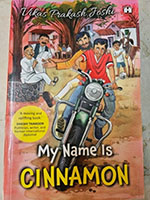
By Vikas Prakash Joshi. Illustrated by Niloufer Wadia
Roshan (Cinnamon) is a student at Diamond International School, Pune. He is the school’s U-13 goal-keeper, and we meet him pulling off heroics against their arch-rivals. We learn that he is adopted and lives with his adopted parents and has one burning desire—to meet his birth parents. The book follows Cinnamon’s life through school and him meeting his birth mother
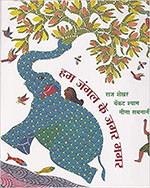
By Raj Shekhar.Illustrated by Venkat Shyam.Designed by Nina Sabnani
Gond art and a folk song sourced from a tribe in Telangana come together in a delightful picture book for children, Hum Jungle ke Jagar Magar. The three people who got together to make this book: Raj Shekhar, Venkat Shyam, and Nina Sabnani have rich experience and credentials for this kind of work. Raj Shekhar is a well-established poet and has been awarded Kavya Samman by the Hindi Academy.
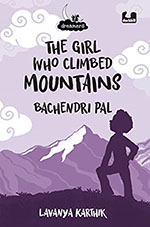
Written and illustrated by Lavanya Karthik
The story of little Bachni is true manifestation of how little girls like her grow up to become women like Bachendri Pal, who not only dare to dream but also climb mountains, and in her case, quite literally.
Written and illustrated by Lavanya Karthik, The Girl who Climbed Mountains: Bachendri Pal, a short biography
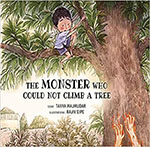
Story by Tanya Majumdar. Illustrations by Rajiv Eipe
Tanya Majmudar’s The Monster who could not Climb a Tree is a delightful story that offers an insight into a child’s world and their relationship with nature. The story is accompanied by beautiful illustrations and is suitable for children aged 7 and above.
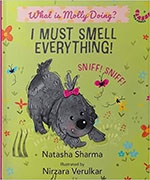
Written by Natasha Sharma. Illustrations by Nirzara Verulkar
when concepts are hardest to convey, but sink in the deepest. So, if you were faced by the challenge of explaining empathy to a five-year-old, how would you try to do it? Natasha Sharma seems to be trying to do that. Molly, ‘a mix between a cocker spaniel and something else’ explains to us how important it is for a dog to smell everything.
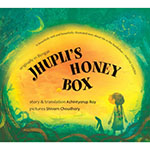
Story & translation by Achintyarup Ray.Translated from the original Bengali. Illustrations by Shivam Choudhary
2022
Jhupli belongs to the Sunderbans, and her father goes out into the forests every other day to collect honey from the forests. It is his occupation, necessary to feed his family and send his children to school, even Jhupli, a girl child. As depicted in a two-page illustration, when home, he breaks off a tiny bit from a honeycomb he had brought and gives it to Jhupli. For my father, who would have been 100 next year, it used to be roadside masala-muri, damp by his delay.
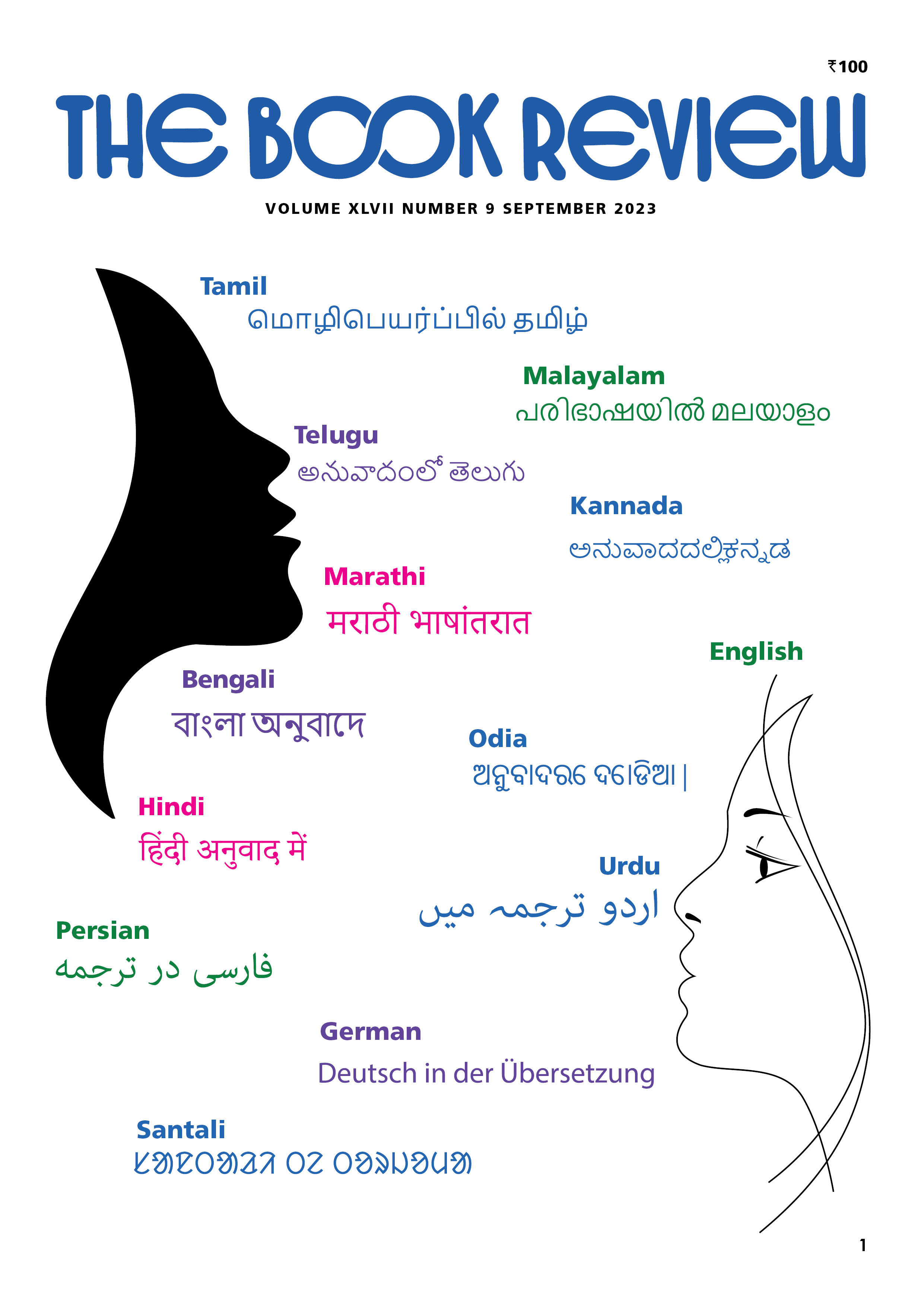
The current issue has thrown up some amazing insights into the pulsating creativity in the Indian languages. Among the books reviewed, the works of some of the greats in Indian literature like UR Ananthamurthy, Imayam and CN Annadurai are interspersed with debut novelists, short story writers and poets. Volumes of short stories, poems, novels and plays are reviewed in these pages, and the canvas is truly a wide one.