

Helen I. Safa
The book under consideration is the outcome of a panel dis¬cussion on urbanization orga¬nized in Delhi by the editor in December 1978. The first sec¬tion of the book focusses on one of the elements of the process of urbanization, viz., labour migration. The remain¬ing three sections deal with the various consequences of urbanization i.e., family and kinship in an urban setting, small scale entrepreneurs and the informal sector, and collec¬tive action and protest in the city.
R Suntharalingam
Indian nationalism, as a modern political phenomenon, is probably the single most comprehensive example of the unfolding of development encompassing the entire gamut of the social and economic life of an immensely complex nation. Throughout the colo¬nial era and since indepen¬dence, different aspects of nationalism have been high¬lighted in the actual working out of its concrete manifesta¬tion: the relationship between the ‘latent’ and the ‘manifest’ features of Indian nationalism at any given point, always being characterized by a dyna¬mic which constitutes a single thread running throughout recent history.

Mihir Rakshit
As far as research in develop¬ment economics goes, the present Indian scene is quite dismal. There cannot be more than three or four economists working in this country who have had any impact on the subject. I shall refrain from mentioning their names, not because I do not wish to give joy to them, but precisely because I want to give joy to many more.
Debabar Banerji
This book constitutes the first part of a two-volume study. Banerji is one of the few scholars who have tried to see health-related behavior and health services in the wider framework of the economic, political, demographic and social characteristics of rural populations.
Edited with an intro¬duction
Rarely in recent memory have information, ideas and scholarly acumen of such a high calibre been presented as in these two volumes. Professor Chattopadhyaya deserves ad¬ditional credit for having brought together papers that were published as early as the eighteenth century and there¬fore likely to be missed by most contemporary scholars.
Arjun Appadorai
‘Social Anthropology is concerned not with stones and bones but rather Marx and Spencer’—Isaac Schapera’s comment comes to one’s mind when reading Arjun Appadorai’s book since he is also an anthropologist with a differ¬ence. In his introduction, the author calls himself an ethno-historian and clarifies his fundamental differences with the functionalist school of Malinowski and Radcliffe-Brown who regard social struc¬ture as a mere mirror-image of culture which is defined as a set of established customs and usages.
Jan Morriss
The initial attraction of a reader to this book is its cover. The symbol of the undying Pax Britannica—the arro¬gant image of the lion trium¬phantly astride the globe, an unfurled Union Jack, backed by the imperial crown domi¬nates the front flap, announc¬ing the Spectacle of the Empire. And rarely has a title so suited the contents of a book. The varied collection of paintings and photographs, many of which have not been published before, bring alive a variety of imperial themes virtually transporting the reader back to the turn of the century when the empire was a vibrant I reality.
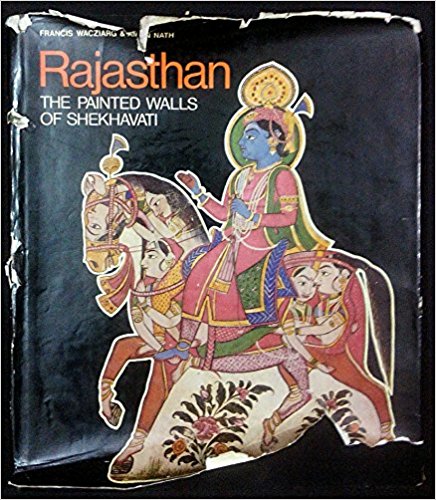
Francis Wacziarg and Aman Nath
Art has historical roots that lie outside it, and it has his¬torical consequences that again lie outside it the work of art closest to perfection is both most profoundly determined by its time and goes furthest be¬yond it into timelessness, while the imperfect work of art re¬mains caught in the spatial and temporal conditions precisely because it has been touched by them most superficially.
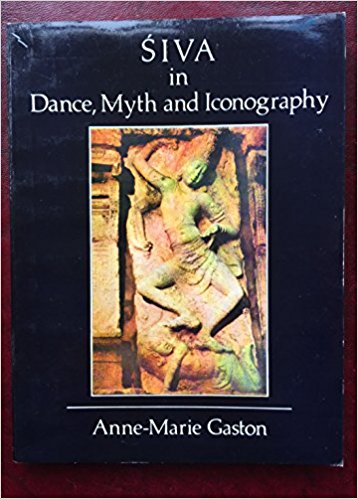
Anne-Marie Gaston
In the long tussle for supre¬macy among the main gods of the Hindu pantheon (certain¬ly not instigated by the divine personages but by their followers and worshippers), Vishnu and Siva have finally emerged as the two top con¬tenders to assume the role of the Refuge. Vishnu comes to us either as Himself with his conch and discus or in the form of Krishna and Rama. Siva remains aloof, keeping his distance as a destroyer but assuring us of a renewal of life through decay and death.
Sisirkumar Ghose
1982
Though this book is a collection of papers, including some book reviews, it has a continuity and unity of dis¬course because all the issues discussed are facets of the same fundamental problem: the predicament of man who finds the bright dreams of progress— which the Renais¬sance painted in roseate colours, the Enlightenment assumed to be inevitable, even automatic, and the industrial revolution in its first phases seemed to indicate to be just round the corner—thoroughly shattered.

Noorul Hasan
Literary critics, especially the American ‘lemon squee¬zers’, have made nimbu pani out of everything from Beowulf to Virginia Woolf. Much of the terrain between Virginia Woolf and Who’s Afraid of Virginia Woolf has similarly been squeezed—often so hard that dribbles of lemon rind have made the result pretty un-swallowable.
Sohaila Kapur
The book under review pro¬vides a series of interesting vignettes on witchcraft in Western India, mainly the coastal region stretching through Maharashtra, Goa, Kerala and Karnataka. Kapur, a journalist by profession, undertook investigative visits to various places in this region during 1978. For her it must have been a journey of adven¬ture—exciting as well as appalling.
Girja Kumar and Krishan Kumar
With the contemporary infor¬mation explosion, and in view of the growth of literacy rates around the world, the organization and dissemination of knowledge are going to be the basic functions of information scientists and librarians in the years to come. These person¬nel, otherwise generally well trained in the organi-zation of knowledge, have yet to bridge the gap between the inform¬ation in store and its ideal use by the users.

Badal Mukherji
Economics thrives on con¬troversies. The most impor¬tant of them all are related to the process of capital accu¬mulation. Inevitably the questions boil down to the theoretical framework of ana¬lysis but not without some confusion and bloodshed. With the increasing diversity of views it becomes difficult to take stock of the contributions to theories of growth and accumulation.
World Energy Conference Task Force
In 1979, when the world ex¬perienced the second oil shock, the World Energy Conference set up an Oil Substitution Task Force (OSTF) with the following objectives: (i) to identify and assess the techno¬logical, economic and other factors affecting the substitu¬tion of oil by other energy sources; (ii) to quantify the most likely amount of substi¬tution by making specific as-sumptions of price and avail¬ability of crude oil; and (iii) to study the sensitivity of oil sub¬stitution to changes in prices and availability of crude oil.

P.D. Gaitonde
The title of the book, its pre¬face, and its foreword (written by Professor V. Ramalingaswami), hold out a promise that is un¬fortunately not fulfilled in the text: At a charitable estimate, there are no more than thirty pages in this book which are concerned with what is supposed to be the primary focus of the work.
Rashmi Jain
The ‘publish or perish’ syn¬drome which is increasingly becoming the most vexed question in the academic life of the United States seems to have invaded India also. Although it is still not very clear in this country whether the number of publications of an individual scholar necess¬arily promotes his professional prospects (the growth of ‘trade unionism’ among teachers in the university system running rather counter to this develop¬ment), the fact that he appears to believe so gives credence to this formulation.
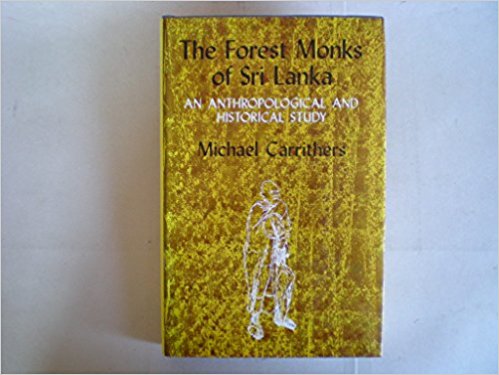
Michael Carrithers
This is a study of the hermi¬tage movement in Sinhalese Buddhism. The movement goes back to a hundred years, in the course of which different at-tempts have been made to revive the tradition of forest monks dedicated to the solitary life, to putting Buddhist pre¬cepts into practice, and to re¬forming the sangha attached to Buddhist temples.
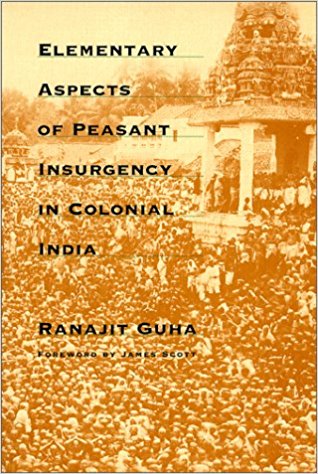
Ranajit Guha
Literature on peasantry and peasant revolts in India has grown steadily over the past fifteen years or so. Although quantitatively this development has been impres¬sive, this body of literature has only a few works which could be pointed out as noteworthy contributions in terms of quality as well as originality of new analytical insights. Since 1981 Guha has started editing a series of Subaltern Studies, of which two volumes are already out.

Elizabeth Wilson
‘Rape and domestic violence are forms of punishment’, says the author,
for women who have step¬ped out of line, and attempts to re-impose patriarchal dis¬cipline in a society which is no longer patriarchal.