
IR-Geopolitics
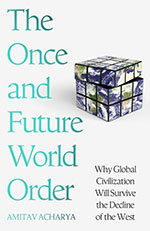
By Amitav Acharya
He suggests that with the decline of the West, other non-Western nations will be more important in the future world order, and that it will be marked by cultural and political diversity. His preferred description of the coming world order is that it will be akin to a multiplex, with multiple shows on offer, giving the audience a choice of plots, actors, directors and so on.

By Neil Shearing
As the world fractures into rival blocs, many countries like India will resist becoming a part of this rivalry between the US and China, especially as they cannot determine its outcome (p. 60). However, it will be difficult for these countries to avoid picking a side and they will be forced by their economic, financial, cultural and political ties to align with one side or the other (p. 64). He argues that India is likely to align with the US, based on the fact that the US is India’s largest export market, invests much more in India than China

Edited by Paula Banerjee
Since none of the South Asian states have signed the 1951 Convention, they never legally recognize having refugees. On the contrary, they have sought to deal with such challenges through numerous national legal frameworks. The patterns of national interest decide state responses. The European Union (EU) today is deeply divided on how to cope with the influx of people from West Asia, which is testing the principle of solidarity and making the Union look heartless and ineffective, pitting member states against each other, thereby infusing populism and anti-Islamic sentiments.