
History
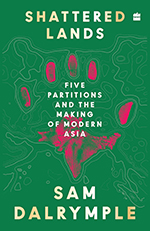
By Sam Dalrymple
While most of the issues concerning partitions of India, Pakistan and Bangladesh have been examined extensively, it is the detailed study of the lesser-known separations of Burma and the Arabian Peninsula that makes the present work important. In a lengthy portion, the author outlines not only the socio-political conditions which led to the separation of Burma from the Indian Empire, but also highlights fascinating details pertaining to the inauguration of the new state. The challenges that emerged in the wake of this partition have been examined thoroughly in the present book
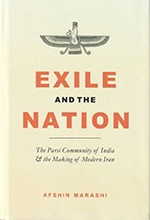
By Afshin Marashi
The consolidation of British power in western India in the eighteenth century and the emergence of Bombay as the preeminent urban centre of the west coast created favourable conditions for the growth of Parsi enterprise towards the end of the century. A section of Parsis, largely based in Bombay, achieved great success in commerce, industry, finance and shipping, thereby also contributing to the development of the city.
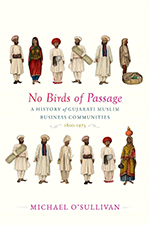
By Michael O’Sullivan
How different these Jamaats were from other entities such as the Parsi panchayat or Armenian network structured around law and custom is not very clear. The question is raised once in a while but never really fleshed out. The comparison seems warranted and even inevitable given that Parsis and Armenians also represented the ‘middle power’ that Sullivan talks about in explaining the extraordinary rise and success of these merchant communities. By middle power Sullivan means the co-functioning of the Sarkar and the Jamaat of which the communities were prime beneficiaries.

By Eugenia Vanina
Ever optimistic, Vanina records that there may be ‘differences and even conflicts, but on the majority of events and actors of the past there is usually a national agreement’ in favour of ‘mutual respect for differing feelings and affiliations’ (pp. 338-39). This is true for politics and history on an international scale.

By Rahul Markovits
Nevertheless, they were able to take advantage of the culture of ‘hospitality’ which had been encouraged by the post-1789 government policy of honouring misfortune (honore le malheur) by way of hospitality (à titre d’hospitalité), which was also decreed by the Comity of Public Safety when granting assistance to ‘Ahmad Khan Indian’.

By Ghee Bowman
The soldiers were part of the 2.5 million-strong Indian Army. They were taken prisoners, as the war progressed, in theatres in east and north Africa, the Mediterranean, Europe and on the high seas. They endured five years of incarceration. Included in them were the Viceroy Commissioned Officers (VCO), a category so peculiar to the Indian Army that the confused Germans had to enquire from the British whether they were to be treated as soldiers or officers! Another oddity was that the earliest, and often the longest-serving POWs were not even soldiers.

By Harald Fischer-Tiné
2023
Rather than limiting itself to the colonial period, the study deliberates at length the socio-economic and political conditions of the YMCA in the post-1947 era. The author highlights the role that the institution played during the Cold War period.

Edited by Partho Datta, Mukul Kesavan and Kumkum Roy
Indian towns and urbanism (by Helen Millar and AG Krishna Menon) is a synoptic view of colonial planning in the city of Calcutta (Partho Datta). Ranjeeta Dutta takes us back to the early modern Srirangam, via a text called the ‘Koil Olugu’ (‘The Koil Olugu and Srirangam in the Tamil Region’), more properly a temple history. Other accounts of pre-colonial cities and urbanisms include a discussion of Agra (Shailaja Kathuria), Jalandhar (Indu Banga) and a comparison of Calcutta and Delhi (Atiya Habeeb Kidwai).

By Mariam Dossal
Historical scholarship on Kutch is rather scanty. Although some aspects of the history of the region in the modern period have received the attention of scholars, there is hardly any work that deals with the colonial and postcolonial period as a whole. The colonial administrator LF Rushbrook Williams who held several important positions in the bureaucracy, and also wrote on historical subjects, penned a book on Kutch titled The Black Hills: Kutch in History and Legend which was published in 1958 shortly after the erstwhile State became part of Bombay Province in Independent India.

By Devasis Chattopadhyay
Piecing together evidence from their memoirs, newspapers, various journals and magazines, advertisements, burial records, building histories and street directories, the author has woven the tales of figures like Harry Hobbs, the piano tuner, raconteur and businessman; Robert Reid, the police detective; and Shirley Tremearne, ‘Law Officer—Media Moghul—Businessman in Kolkata’. The life-stories of Henry Thoby Prinsep reveal the issue of slavery and indentured labour in the city. Another figure, the American civil war hero,

By Michael D. Nichols
In the book we get to encounter many forms of Māra and many Buddhism(s) in vast temporality and diverse spatial contexts. The author proposes three features of Māra in this long history—didactic, demonizing and shapeshifting. In any given context the figure has been instrumental in communicating didactic messages of Buddhism (in plural) and to corner or criticize the other thoughts contrary to the vision of the tradition by labelling them as Māra or evil.

By Rakhshanda Jalil Roli Books, Delhi
The Loharu family as ‘the Habsburgs of north India’, whose network of alliances enabled them to be successful in their quest for social, cultural and political advancement is described in chapter five. This first part of the chapter provides details of the matrimonial alliances forged between the Loharu family and other Muslim princes in different corners of India.

By Kalpish Ratna
An even more disappointing presence, though sparse, is of the female characters. While they are hardly a part of the narrative, whenever they do appear, they seem to be objects of desire or cunning plotters hungry for power through their male counterparts.
‘The nautanki-wali’s breasts showed dark and bulbous beneath the thin pink silk of the baju. Rohidas, who could not tear his eyes away, recognized them at last for large purple brinjals,

By Manjeet Baruah
Further, in the overarching context of the structural relations of modes of production, Baruah introduces three distinct cultural forms/windows—memoirs, ballads and world views—and their articulations by the respective figures of the hunter, the peasant and the rebel to draw attention to, as mentioned earlier, the combined nature of the underlying structure of colonialism in Assam.

By Abhishek Dubey with Mahavir Rawat
As far as the Indian Paralympics is concerned, the story of country’s glorious sons and daughters resembles the socio-economic milieu of the country. The book provides a vivid description of the social background of the athletes, their rationale for choosing para sports, the physical and the emotional struggles they underwent during the course of their career. More than physical strength, it was the willpower of the para-athletes which makes their story enthralling.

Edited by Sanjukta Sunderason & Lotte Hoek
The essay explores at length the close relations between the workings of the PWA and AAWA. Besides deliberating upon the evolution and checkered history of the PWA in India and Pakistan, Ramnath also makes an attempt at studying the socio-political and cultural scenario in which the journal Lotus emerged. AAWA provided a common platform for the reunion of Progressive Writers from India, Pakistan and Bangladesh. While the journal Lotus ceased soon after the fall of the Soviet Union in the 1990s, attempts at forging an alliance between Africa and South Asia have continued unhindered.

Edited by Anshu Malhotra O
Purnima Dhavan’s ‘A Feast for the Heart and Mind: Print Culture, Polemics and Religious Debate in Punjab in the 1870s’ discusses the evolution of Islamic literature after the arrival of print in late-nineteenth century Punjab focusing on the Baran Anva, a lengthy seventeenth-century text, and Pakki Roti, a short booklet written in the nineteenth century. Focusing on Muslim Punjabis, Dhavan uses these texts to discuss printing enterprises, script, language and education in the 1870s. Going against the grain, she argues that Punjabi Muslims learnt about Islam not from Arabic or Persian, but through texts in Shahmukhi script that were in Punjabi and occasionally Urdu.

By Rahul Bhatia
Bhatia begins the book with a personal story of this transformation. He recounts how any discussion among family, friends and acquaintances over the past decade ended with Islamophobia-laced muscular Hindu interpretation of India’s past and aspiration for India’s future. To grapple with this change is to pose some version of the question, ‘Where is this poison coming from?’—as articulated, with poignancy and a tinge of bewilderment, by Nisar.

By Rosie Llewellyn-Jones
For a long time, almost till the beginning of the nineteenth century, military engineers (who began receiving formal training on a regular basis only when the Company’s Military Seminary was set up at Addiscombe in 1809) carried out the tasks of architects, civil engineers and town planners. Civil engineers as distinct from military engineers were not appointed by the Company prior to the end of the eighteenth century.

By Walter Reid
Reid implies that Churchill lost interest in India affairs thereafter. But like many historians, he fails to ask: was that not an act of gross negligence, given that War-weary Britain’s exit from India was inevitable by then? Those ‘wasted years’, with all top INC leaders held incommunicado in jail, August 1942 to May 1945, was precisely the time to prepare for the world’s greatest political carve-out. One result: Mountbatten’s frenzied, hasty actions of March-August 1947, when even the borders of the new independent states, India and Pakistan, were not publicly revealed till 17 August, two days after the Independence of India.