
Report
Peggy Mohan, linguist and historian, argued that language is a powerful way into history and not an ‘adult’ subject. Teaching ten-year-olds about migration pushed her to rethink assumptions, from why farmers migrate to how ‘surplus males’ reshape linguistic landscapes. Children’s questions about Ashokan Prakrit or Devanagari sounds have sparked some of her deepest research. She emphasized, ‘Kids don’t want to be patronized. They can do the more difficult things that sometimes we can’t do.’
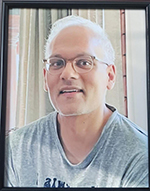
Manu was part of The Book Review family since he could read and write. He began by writing reviews as a child for the Children’s special issues. As he grew up, his intense passion for drawing led to his designing brochures and covers for The Book Review, and one of them was for the January 2016 issue when TBR turned 40. Uma had asked him a few months ago to design the cover for the January 2026 issue when TBR turns 50,
This being said, we need to think of translation differently from the dominant western paradigms, which are steeped in the grammar of “target language”, “source language”, and “fidelity”. In the multilingual, multicultural, and multiethnic milieu of India, where every individual speaks more than one language, we need to think of translation and the publishing and reviewing of translation beyond the readily available vocabulary of ethno-nationalism. In addition, there is a need to recognize translation as rooted in its moment of production, encapsulating characteristics symptomatic of history wherein, in Walter Benjamin’s words, “past comes in constellation with the present”.’