
Memoir-In Translation-Hindi

By Mahadevi Varma. Translated from the original Hindi by Ruth Vanita
Because she lived on her own terms, her poetry was reduced to autobiographical confession. The patriarchs of Hindi criticism systematically sidelined her achievement. Ramchandra Shukla allocated her a scant half-page in his history, mocking her ‘addiction’ to pain and confining her to the realm of spiritual mysticism. Hazari Prasad Dwivedi found a different route to the same patriarchal condescension, judging her talent inferior to Jaishankar Prasad’s by claiming she lacked his intellectual constitution.
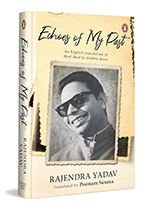
By Rajendra Yadav
While growing up, the entire locality basically acted as the perimeter of her house but now, as she rightly points out, the flat culture has made us all ‘illiberal, lonely and insecure’. Unlike Yadav’s memoir which seems like a vignette of fleeting moments trying to latch on to some significant event of his life and instead tends to seem like a quest to impose self-importance, Bhandari’s words are rooted and lay down her life bare for all of us to witness. She talks of how she got married to Yadav while studying in Calcutta but soon realized that she had to single-handedly take care of their household as he had already declared that he had dedicated his life to writing. While both of them went on to become celebrated writers, they struggled financially. She talks about writing but also yearning to write more.