
Fiction–In Translation–Malayalam

By Nirmala Thomas. Translated from the original Malayalam by Radhika P. Menon
Self-talks help Aswini get a clearer focus on her random thoughts. She voices her opinions to others without inhibition. For instance, she doesn’t care to concede and agree with everything that her friends tell her anymore. She helps Vidya, one of her friends, in finding a very crucial answer to her query about life and love. Aswini is not a weak character from the beginning, but she becomes stronger in the process. Her world is turned upside down when her meticulous timetable is disrupted with the onset of illness. After she starts to depend on herself more than friends and family, she grows sturdier in mind.

By Paul Zacharia. Translated from the original Malayalam by A.J. Thomas, Gita Krishnankutty, S. Gayatri Devi, S.P. Ramesh, Anupama Raju and the author
2026
‘A Day’s Work’ is a son’s letter to a prospective nurse for his aged mother’s 24×7 care. It is a neurotic’s over-detailed checklist, which incidentally also reflects his meticulous concern as it does the extreme demands of a nurse’s vocation. The exactness and clarity of the minute-to-minute routine, put down without apparent emotion and as if mechanically, is like a clock face that hides the force wound up in the spring.
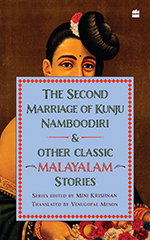
Series edited by Mini Krishnan. Translated from the original Malayalam by Venugopal Menon
The collection also contains short stories written by women writers, and here the overarching theme is the dynamics between men and women and the patriarchal attitudes which impact such interactions. The story ‘I Felt Ashamed’ by Kalyanikutty, reputed to be the first ever story written by a Malayali woman, deals with a woman’s aspiration for marrying the man she wants to, but caste restrictions prevent her and thus in her dream state, she sees the future she cannot have in real life. In ‘Witless Woman’ by M Saraswatibhai,
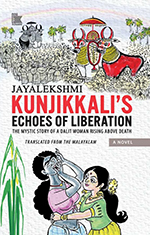
Written and translated from the original Malayalam by Jayalekshmi
2025
The novel portrays a sustainable regional enclave in rural Kerala, replete with natural abundance and community unity fostered by a generous, liberal and accommodating patriarch. The old-world setting contextualizes the narrative in the real world, marking the ‘dawn of the Renaissance in Travancore’