
Artificial Intelligence
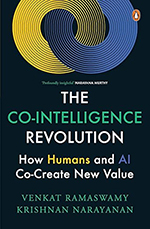
By Venkat Ramaswamy and Krishnan Narayanan
Can we reach an understanding of reality through only language models and with perhaps a little plus of something else? I would have liked the authors to have given us some overview of these and other issues, rather than simply reproducing the marketing hype of AI, particularly from those who seek continuous investments in their companies, such as Sam Altman of OpenAI. Remember how
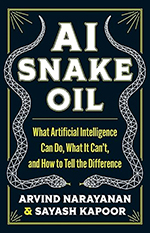
By Arvind Narayanan & Sayash Kapoor
2024
Narayanan and Kapoor urge readers to resist the temptation to think of AI systems as fundamentally ‘unknowable’, as a priori hype obstructs accountability from people making billions by deploying AI tools to predict complex social phenomena. Prediction here also suffers from what is called ‘teaching to the test’ (p. 22), where the training occurs on the same data that is later used for evaluation to achieve high-performing results.

By Appupen and Laurent Daudet
Dream Machine’s menacing quality lends itself to the realization of Hugo’s potential to tread an ethical path. He meticulously considers the implications of his actions, even at the expense of time with Anna. At this juncture, AiDA becomes more of a constant in his life than his wife. His reliance on AiDA correlates closely to his own sucking into the world of power and a willing dependence on machines while ‘Realeyes’ might be keeping a watch on him. But all is not lost yet as Hugo turns out to be a multidimensional character.
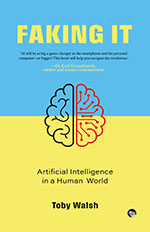
By Toby Walsh
This book’s thesis, in one line, is that Artificial Intelligence is artificial, different from human intelligence, and it is also about faking that human intelligence.